
Hamzatul Wasl vs Hamzatul Qat: Beginner Quran Guide

Hamzatul Wasl vs Hamzatul Qat is a foundational Quran-reading distinction. Hamzat al-Wasl (همزة الوصل) is a connecting Hamzah: it is pronounced when you begin from the word, but it is normally dropped when that word is connected to the word before it. Hamzat al-Qat’ (همزة القطع) is a fixed or fully pronounced Hamzah: it remains pronounced whether you start from the word or reach it through connected recitation. In many Uthmani Mushafs, Hamzatul Wasl is shown with a small waslah sign over the Alif, such as ٱ, while Hamzatul Qat is normally written as a clear Hamzah above or below Alif, such as أ or إ. Beginners should learn more than the visual sign: they need to know what happens when starting, what happens when connecting, and how to choose the correct starting vowel for Hamzatul Wasl.
What is the difference between Hamzatul Wasl and Hamzatul Qat?
Hamzatul Wasl is pronounced if you begin from the word, but its Hamzah sound is dropped when you connect from the previous word. Hamzatul Qat is pronounced in both situations. In many Quran prints, Hamzatul Wasl appears as ٱ, while Hamzatul Qat appears with a written Hamzah such as أ or إ. For example, the Alif at the beginning of ٱلْحَمْدُ is Hamzatul Wasl: if you start there, you say al-hamdu; if it follows another connected word, the opening Hamzah itself is not pronounced. By contrast, the Hamzah in a word such as أَنْعَمْتَ remains audible even when connected.
What is Hamzah in Quran reading?
Hamzah is a distinct Arabic consonant produced from the deepest part of the throat. In writing, it can appear on or around different letter carriers, including Alif, Waw, and Ya, and it can also appear independently.
For this beginner topic, the most important question is not every written form of Hamzah. It is whether the Hamzah at the beginning of a word is a connecting Hamzah that disappears in connected reading or a fixed Hamzah that remains pronounced.
The difference becomes especially clear when you compare beginning from a word with connecting into the same word from what comes before it.
What is Hamzatul Wasl?
Hamzat al-Wasl literally relates to connection. Its purpose is to make it possible to begin a word that would otherwise start with a consonant cluster that Arabic does not begin with directly.
If you begin from the word, Hamzatul Wasl is pronounced with a suitable starting vowel. If you connect from a previous word, the Hamzah itself is dropped and the sounds join directly.
Hamzatul Wasl is pronounced
When the word is your starting point, pronounce the helping Hamzah with the correct vowel.
Hamzatul Wasl drops
When the word follows another connected word, do not insert a new Hamzah sound before it.
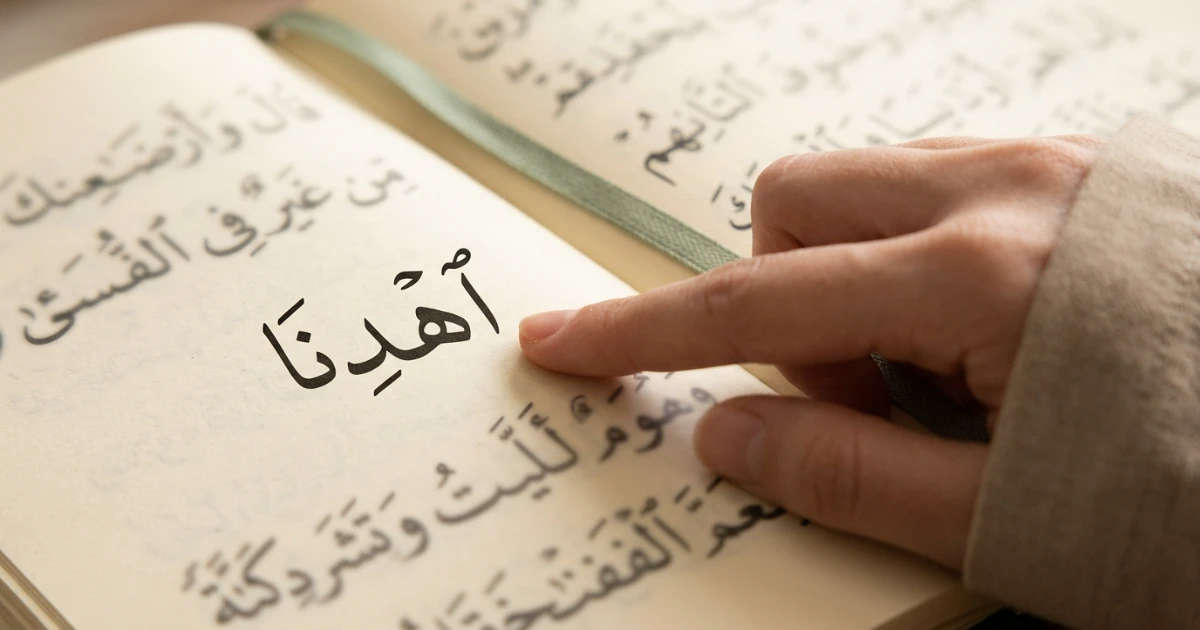
What is Hamzatul Qat?
Hamzat al-Qat’ is a fixed Hamzah. Its sound remains part of the word whether the word is read by itself or connected to something before it.
This makes its behavior easier: if you identify Hamzatul Qat, do not drop it simply because you are reading continuously.
Hamzatul Qat is pronounced
The Hamzah is part of the word and remains audible when beginning from it.
Hamzatul Qat remains pronounced
The previous word connects into the Hamzah rather than skipping over it.
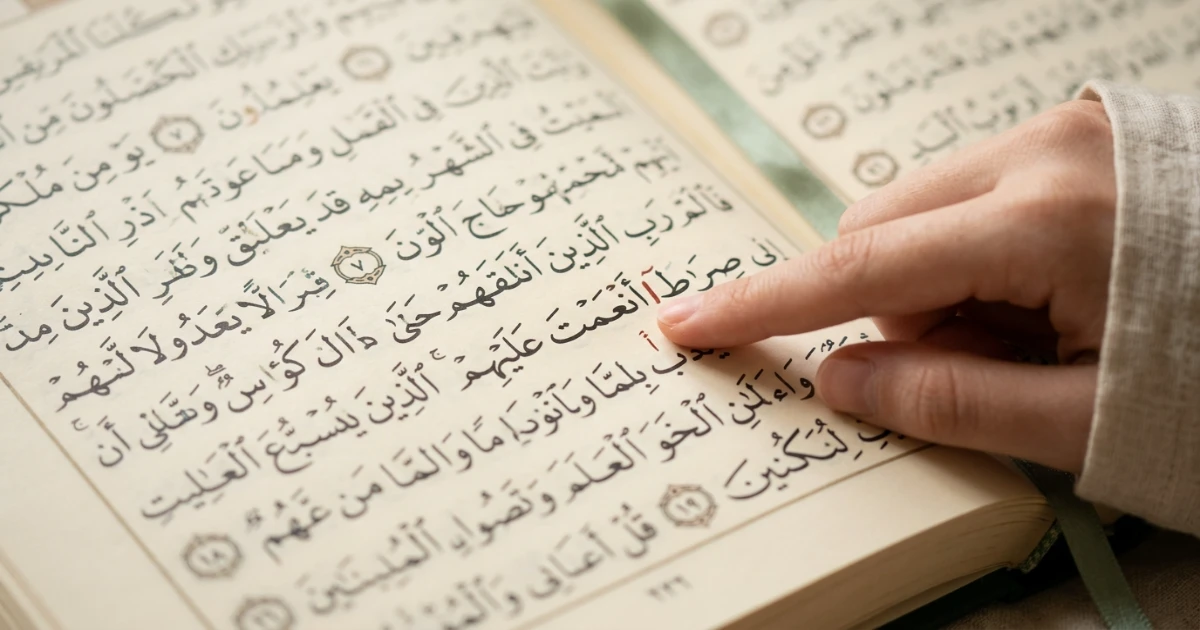
Hamzatul Wasl vs Hamzatul Qat at a glance
| Feature | Hamzatul Wasl | Hamzatul Qat |
|---|---|---|
| When starting | Pronounced | Pronounced |
| When connecting | Hamzah drops | Hamzah remains |
| Common Uthmani sign | ٱ | أ / إ |
| Starting vowel | May need to be determined | Shown as part of the word |
| Main beginner skill | Know when to drop it | Never drop its Hamzah sound |
How can beginners recognize Hamzatul Wasl in the Mushaf?
In many Madinah-style Uthmani Mushafs, Hamzatul Wasl is marked with a small waslah sign above the Alif, giving a form like ٱ. This is a useful visual clue.
Printed Arabic outside the Mushaf may use a plain Alif without this special sign. Students should therefore learn common word patterns where Hamzatul Wasl appears instead of depending only on typography.
Many Uthmani Quran prints use this sign for Hamzatul Wasl.
If the opening Hamzah drops naturally when connected, it behaves as Wasl.
The definite article ال and several verb patterns regularly use Hamzatul Wasl.
How can beginners recognize Hamzatul Qat?
Hamzatul Qat is commonly shown with an actual Hamzah sign, such as أ above the Alif or إ below it. The vowel and spelling help indicate how the word begins.
Because Hamzatul Qat remains pronounced in connected reading, its sound should still be audible even when the word is not your starting point.
Simple Quran examples of Hamzatul Wasl
These common patterns help beginners compare a fresh start with connected recitation.
| Word | If starting | If connecting | What to notice |
|---|---|---|---|
| ٱلْحَمْدُ | al-hamdu | Opening Hamzah drops | Definite article ال |
| ٱهْدِنَا | ihdinaa | Opening Hamzah drops | Verb beginning with Wasl |
| ٱسْتَغْفِرُوا | istaghfiruu | Opening Hamzah drops | Common six-letter verb pattern |
| ٱدْخُلُوا | udkhuluu | Opening Hamzah drops | Starting vowel may be Dammah |
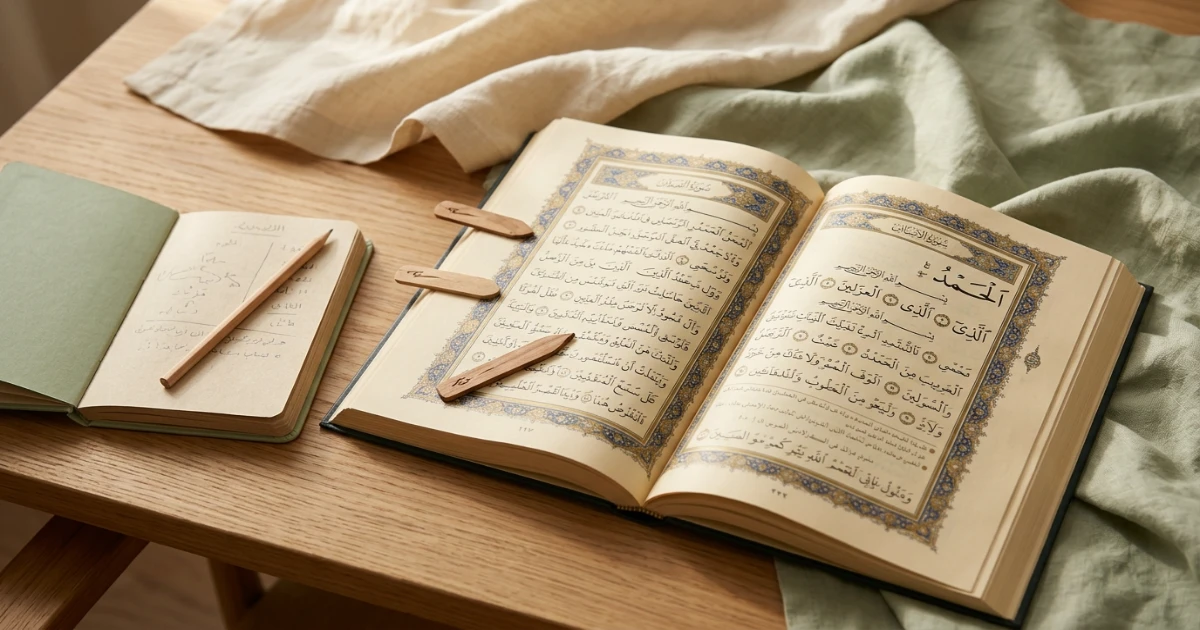
Simple Quran examples of Hamzatul Qat
Hamzatul Qat is easier to test because its Hamzah remains part of the pronunciation in both positions.
| Word | Hamzah form | At a fresh start | When connected |
|---|---|---|---|
| أَنْعَمْتَ | أ | Hamzah pronounced | Hamzah still pronounced |
| إِنَّا | إ | Hamzah pronounced | Hamzah still pronounced |
| أَعْطَيْنَاكَ | أ | Hamzah pronounced | Hamzah still pronounced |
| أَحَدٌ | أ | Hamzah pronounced | Hamzah still pronounced |
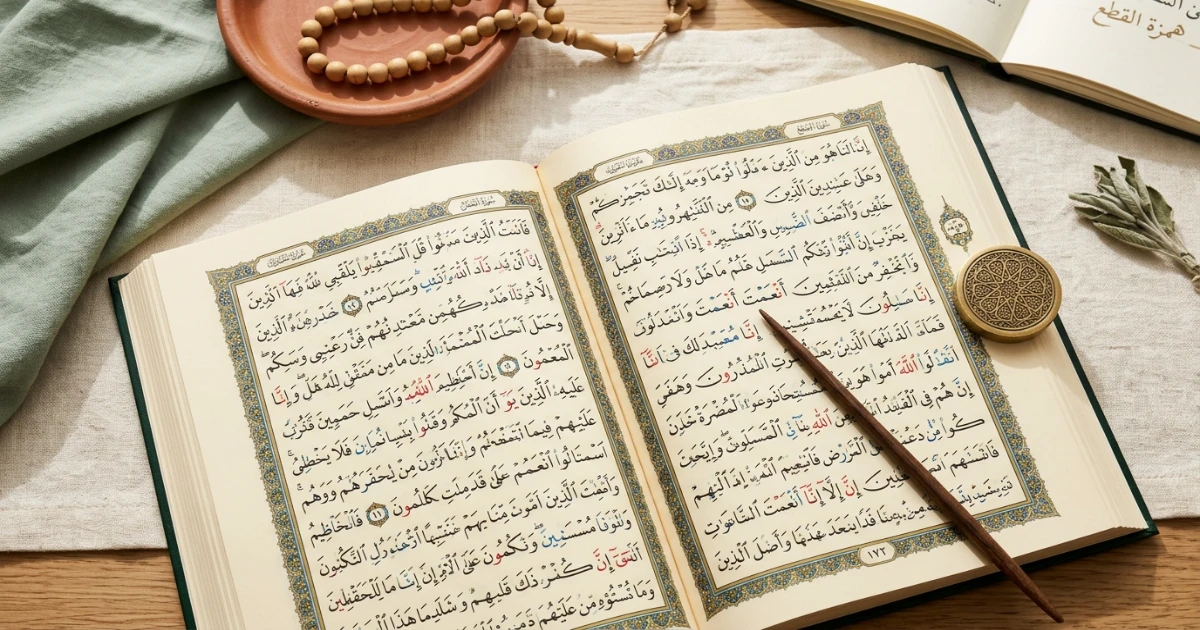
How do you know which vowel to use when starting Hamzatul Wasl?
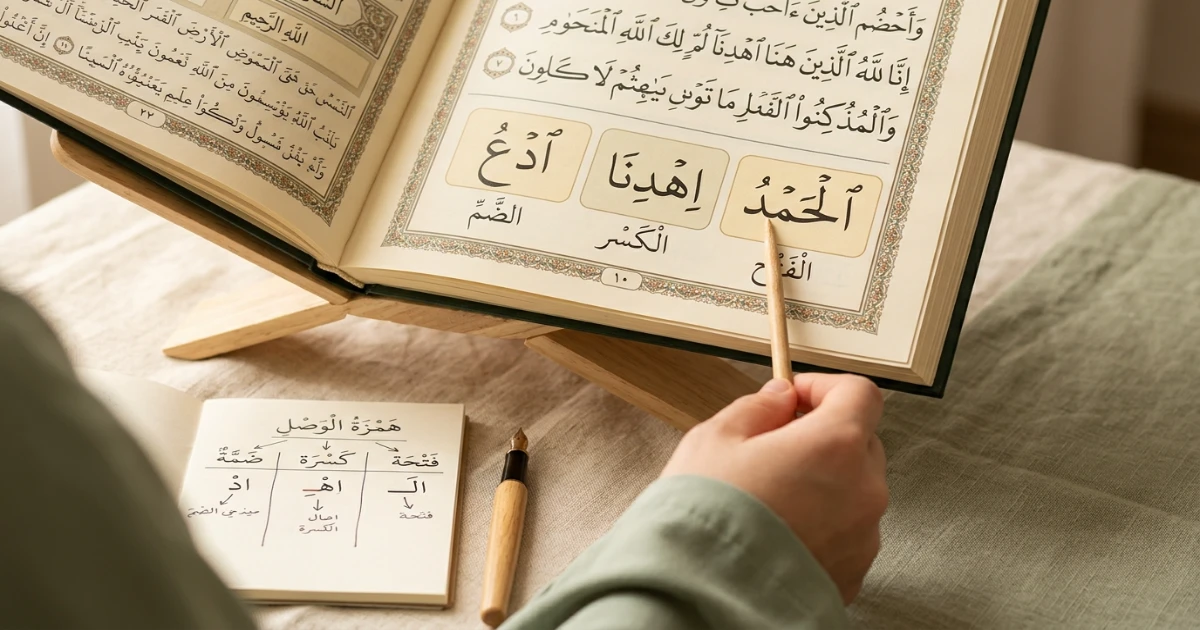
Hamzatul Wasl does not always begin with the same vowel. The starting vowel depends on the word pattern, which is why the learner must know how to begin the word when stopping before it.
The definite article begins with Fathah
When starting a word with the definite article, read al-, as in ٱلْحَمْدُ.
Many Wasl verbs begin with Kasrah or Dammah
In common beginner teaching, many forms begin with Kasrah; when the relevant third letter has an original Dammah, the start may use Dammah.
For example, ٱهْدِنَا is begun with Kasrah: ihdinaa. ٱدْخُلُوا is begun with Dammah: udkhuluu. There are grammar details and word-specific considerations behind these choices, so beginners should learn the actual start form from a teacher or correctly marked Mushaf rather than guess.
Where does Hamzatul Wasl commonly appear?
For Quran reading, it is useful to recognize recurring categories rather than memorizing every Arabic morphology rule at once.
Words beginning with “the” use Hamzatul Wasl, such as ٱلْحَمْدُ and ٱلْقَمَرُ.
A small group of common nouns use Hamzatul Wasl, including forms related to اسم, ابن, امرأة, and اثنان.
Imperatives and certain five- and six-letter verb forms commonly begin with Hamzatul Wasl.
This amount of pattern awareness is enough for a beginner Quran reader. Detailed morphology can be studied later if the learner is also learning Arabic grammar.
What happens when Hamzatul Wasl is connected?
When a word beginning with Hamzatul Wasl follows another word without a stop, the ending sound of the first word connects directly into the consonant after the Wasl Alif. The helping Hamzah used only for starting is no longer needed.
This is why a student can pronounce a word correctly in isolation but still make an error in a verse: they may accidentally insert the starting Hamzah while reading continuously.
Read it once as a fresh start and once connected from the word before it. That contrast turns the rule into a real recitation skill.
How does Hamzatul Wasl connect with Lam Shamsiyyah and Lam Qamariyyah?
The Alif at the beginning of the definite article ال is Hamzatul Wasl. If you begin from the word, you pronounce the opening al- sound. If you connect from a previous word, the opening Hamzah is dropped.
After that, the Lam follows its own rule: before a moon letter it is pronounced clearly; before a sun letter it assimilates into the next letter. One word can therefore involve both a Hamzatul Wasl decision and a Lam Shamsiyyah/Qamariyyah decision.
Common Hamzatul Wasl and Hamzatul Qat mistakes
Pronouncing Wasl during connection
The learner inserts an extra Hamzah even though the word is being joined from what comes before it.
Dropping Hamzatul Qat
The learner assumes every initial Alif disappears in connected reading.
Starting Wasl with the wrong vowel
The word is identified correctly, but the learner guesses Fathah, Kasrah, or Dammah.
Relying only on transliteration
English spellings often hide the exact Arabic Hamzah behavior.
Looking only for ٱ
Not every Arabic text uses the same Uthmani waslah mark, so pattern recognition also matters.
Confusing Alif with Hamzah
Alif can be a carrier or a long vowel; Hamzah is the consonantal sound.
Ignoring word boundaries
The rule only becomes clear when the learner knows whether they are beginning or connecting.
Studying definitions but not recitation
Knowing the terminology is not enough unless the student practises real Quran phrases aloud.
How to decide Wasl or Qat in seconds
Do you see ٱ, أ, or إ in the Mushaf?
If you begin from the word, both types are pronounced.
Wasl drops; Qat remains.
Do not assume every Wasl begins the same way.
ال and several common verb/noun patterns point to Wasl.
Confirm that the connected sound flows naturally.
A 10-minute Hamzatul Wasl vs Qat practice routine
| Minutes | Activity | What to do | Goal |
|---|---|---|---|
| 2 | Visual recognition | Find ٱ, أ, and إ in a short passage | Fast identification |
| 2 | Start practice | Begin from 3–4 Wasl words | Correct starting vowel |
| 2 | Connection practice | Read the same Wasl words from the previous word | Drop the Hamzah correctly |
| 2 | Qat contrast | Connect into words beginning أ or إ | Keep Hamzah audible |
| 2 | Fresh text | Apply both rules in an unfamiliar passage | Build automatic reading |
Why teacher feedback matters
Hamzatul Wasl is partly a reading-context skill. A student may know that the Hamzah drops in theory but still insert it when reading quickly. Another student may drop the Hamzah correctly yet choose the wrong vowel when beginning from the same word.
A teacher can correct both sides: the start form and the connected form. This is particularly useful for verbs, where the starting vowel is not always obvious to a beginner from an unmarked Arabic text.
12-point Hamzatul Wasl vs Qat checklist
Use this while reading a fresh Quran passage
- Can I distinguish ٱ from أ and إ in my Mushaf?
- Do I know whether I am starting from the word or connecting?
- If it is Hamzatul Wasl and I am starting, am I pronouncing the Hamzah?
- If it is Hamzatul Wasl and I am connecting, am I dropping the Hamzah?
- If it is Hamzatul Qat, am I keeping the Hamzah audible in both positions?
- If I start a Wasl word, do I know whether the vowel is Fathah, Kasrah, or Dammah?
- Can I recognize Hamzatul Wasl in the definite article ال?
- Can I recognize common Wasl verb patterns?
- Am I avoiding an extra pause before a connected Wasl word?
- Am I keeping Hamzatul Qat clear instead of swallowing it?
- Can I read one Wasl word both as a fresh start and in connection?
- Can I apply both types correctly in an unfamiliar Quran passage?
Learn Hamzatul Wasl and Hamzatul Qat in online Quran lessons
Noor Hafiza Academy offers live online Quran learning for children, girls, women, adults, beginners, returning readers, teenagers, siblings, and homeschool families with female Quran teachers. Learners can ask about Arabic letters, Noorani Qaida, Quran reading, Tajweed, Makharij, Hifz, and pronunciation correction according to their current level.
A beginner reading plan may include Arabic letter recognition, Harkaat, Tanween, Sukoon, Shaddah, Hamzatul Wasl, Hamzatul Qat, Lam Shamsiyyah and Qamariyyah, Madd, Qalqalah, Noon Sakinah and Tanween, and guided reading practice. Current teacher qualifications, female-teacher availability, class length, trial arrangements, fees, schedules, privacy practices, safeguarding policies, and enrollment terms should be confirmed directly.
Share the learner’s age, Quran reading level, Qaida stage, main pronunciation difficulty, preferred schedule, and whether a female teacher is requested.
FAQs about Hamzatul Wasl vs Hamzatul Qat
What is Hamzatul Wasl?
What is Hamzatul Qat?
What is the easiest difference between Wasl and Qat?
How is Hamzatul Wasl shown in the Quran?
How is Hamzatul Qat usually written?
Is Hamzatul Wasl pronounced when starting?
Is Hamzatul Wasl pronounced when connecting?
Is Hamzatul Qat pronounced when connecting?
Does every Hamzatul Wasl start with the same vowel?
Is the Alif in ال Hamzatul Wasl?
Can beginners rely only on the Mushaf sign?
How should beginners practise Hamzatul Wasl and Qat?
Master Quran word openings by knowing when Hamzah is heard, dropped, or kept in connection
Share the learner’s age, Quran reading level, Qaida stage, main pronunciation difficulty, and preferred class schedule.