
Online Quran Classes for Kids with Female Quran Teachers
Give your child a calm, structured, and encouraging start with the Quran. Noor Hafiza Academy provides live one-to-one Quran classes for kids aged 5 and above, taught by patient female Quran teachers. Children can learn Noorani Qaida, Quran reading, beginner Tajweed, short-surah memorization, daily duas, salah, and Islamic manners from home. Every journey begins with a free trial and level check, while transparent monthly plans start from $69.
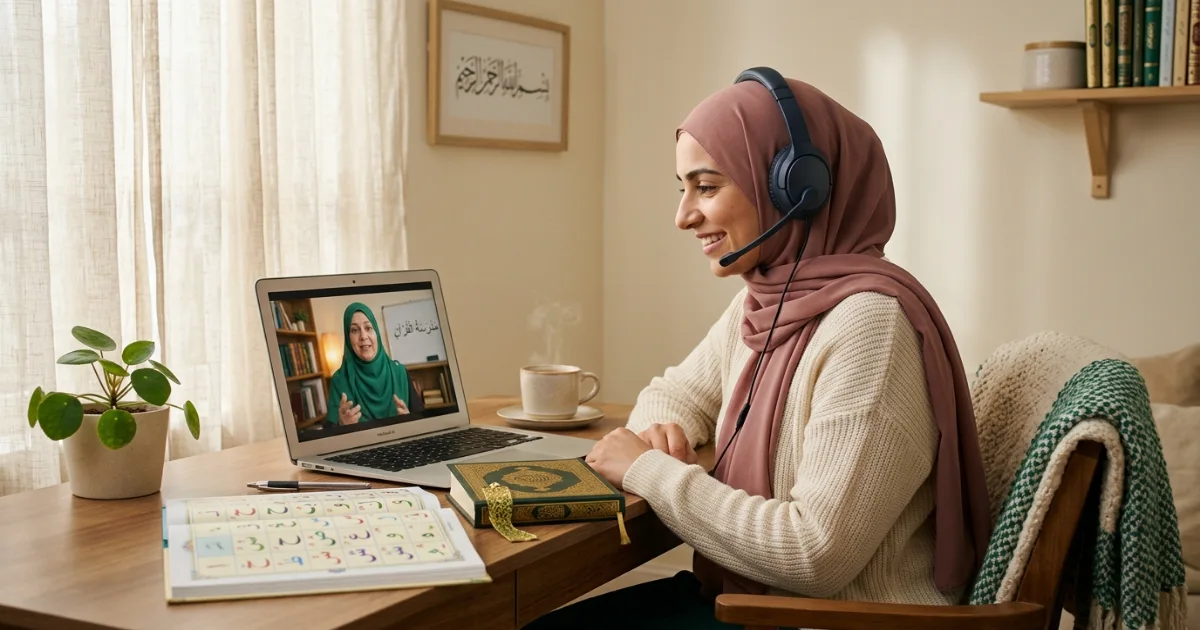
Noor Hafiza Academy offers live online Quran classes for kids aged 5+, including complete beginners, school-age children, girls, and young boys. Classes are private and taught by qualified female Quran teachers. Children can study Noorani Qaida, Quran reading, beginner Tajweed, short-surah memorization, daily duas, salah, and Islamic manners. Parents begin with a free trial class, receive a level-based recommendation, and can choose monthly plans starting from $69.
A private Quran learning path built around your child’s real level
Children do not all begin at the same point. One child may be seeing Arabic letters for the first time, another may recognize letters but struggle to join them, and a third may already read short passages but need help with fluency and pronunciation. A useful Quran program must identify these differences before lessons begin. That is why Noor Hafiza Academy starts with a free trial and level check rather than placing every child into the same lesson book and pace.
During the trial, the female Quran teacher listens carefully and observes more than reading ability. She notices the child’s confidence, attention span, willingness to repeat, response to correction, and current familiarity with Arabic sounds. This gives parents a clearer answer to an important question: should the child begin with basic letter recognition, continue Noorani Qaida, move into Quran reading, strengthen Tajweed, or begin structured memorization?
The private one-to-one format gives the teacher time to repeat a difficult sound, slow down when the child feels unsure, and move forward when the foundation is secure. Children are not compared with classmates or pressured to complete pages for the sake of speed. The goal is accurate, confident Quran learning that can be sustained week after week.
This program is especially helpful for Muslim families who cannot find a suitable local teacher, need flexible timing, prefer a female-led teaching environment, or want clear progress communication. Lessons take place from home using a standard video-call device, which removes travel and helps parents remain close to the learning process.
Do not choose Qaida, Tajweed, or Hifz by age alone. Let the free trial show what your child can already do, where mistakes occur, and which next step will build the strongest foundation.
Who is this program best suited for?
The course is designed for children who need a patient, structured, and parent-supported Quran routine.
- Children aged five and above beginning Arabic letters.
- Students working through Noorani Qaida.
- Kids who read slowly or guess unfamiliar words.
- Children who need live Tajweed correction.
- Students memorizing short surahs or Juz Amma.
- Girls and young boys who learn better with a female teacher.
- Families needing flexible online timings.
- Parents who want visible revision goals and progress updates.
Every child begins at the right learning stage
Age is only one factor. The teacher looks at reading accuracy, pronunciation, confidence, attention, and revision habits before recommending a path.
A child may work across two stages at once—for example, Quran reading with short-surah revision or Qaida with simple daily duas. The plan is adapted after the free assessment.
8 learning areas inside our Quran classes for kids
The teacher does not mix random activities. Each lesson follows a clear level-based goal while allowing enough repetition for the child to retain what was learned.
Arabic Letters
Young beginners learn letter names, shapes, beginning-middle-end forms, and clear sounds before they are expected to read full words.
Noorani Qaida
Qaida lessons cover short vowels, tanween, sukoon, shaddah, madd, joining rules, and gradual word reading with live correction.
Quran Reading
Children move from guided word reading to complete verses, developing fluency without guessing or skipping difficult letter combinations.
Beginner Tajweed
The teacher introduces makharij, heavy and light letters, ghunnah, madd, qalqalah, and stopping rules in a child-friendly way.
Short-Surah Hifz
Children memorize selected surahs using listening, repetition, word-by-word correction, and scheduled review to protect retention.
Daily Duas
Age-appropriate duas are taught with meaning and practical context, helping children use them in their normal daily routine.
Salah Basics
Students can learn wudu steps, prayer positions, essential recitations, and simple explanations of why Muslims pray.
Islamic Manners
Short lessons can include honesty, kindness, respect for parents, masjid manners, gratitude, and age-appropriate seerah.
Meet our female Quran teachers for children
Teacher matching considers certification, teaching experience, communication style, and the child’s age and current Quran level.
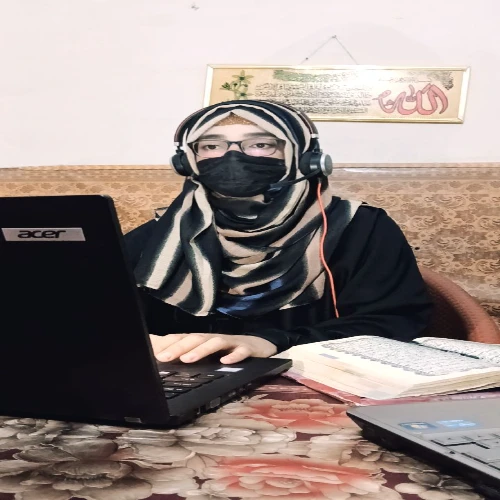
Hafiza Maryam
- Hafiza of the complete Quran
- Experienced in children’s Hifz routines
- Supports Qaida, reading, and revision
- Focuses on accuracy before speed
Ustadha Aisha
- Quranic Studies background
- Practical Tajweed correction
- Clear explanations for developing readers
- Supports confidence and fluency
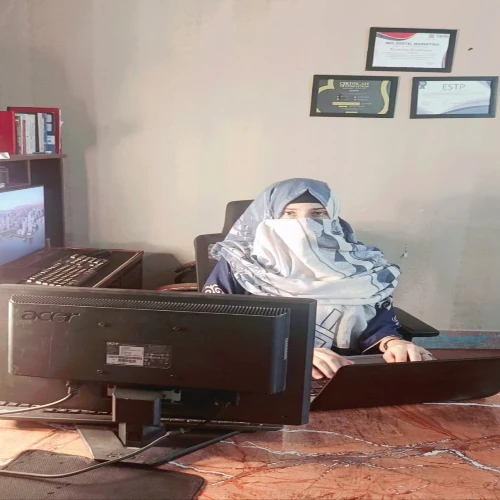
Hafiza Zainab
- Hafiza of the complete Quran
- Works with beginner children
- Uses repetition and simple explanations
- Combines Quran learning with manners and duas
Teachers are reviewed for Quran knowledge, teaching experience, communication, and suitability before student assignment. Parents receive the proposed teacher details before regular enrollment and can use the trial class to check whether the teaching style feels comfortable for their child.
A Quran routine that continues between live classes
Real progress depends on clear lesson notes, manageable home practice, and regular review—not on adding new pages every session.
Clear lesson targets
Parents can understand what the child practiced, which sounds or rules caused difficulty, and what should be revised before the next class. This prevents confusion and keeps home support focused.
- Specific page or verse targets
- Pronunciation points to repeat
- Simple next-step guidance
Revision before new work
The teacher checks earlier material before introducing something new. This is essential for Qaida, where weak letter sounds can affect later reading, and for Hifz, where new memorization must not replace old revision.
- Qaida retention checks
- Reading correction review
- Surah revision schedule
Gentle accountability
Children need encouragement, but they also benefit from a predictable routine. The same teacher, fixed weekly times, and realistic practice goals create consistency without turning Quran learning into pressure.
- Age-appropriate expectations
- Positive correction
- Parent-teacher communication
For many young learners, five to ten focused minutes between classes is more effective than one long weekly practice session. Review the exact sounds, words, or surahs listed by the teacher rather than introducing new material independently.

From free trial to weekly progress in 4 simple steps
Starting online Quran classes for your child takes only a few minutes, and no payment is required before the level check.
Share your child’s details
Send the child’s age, current Quran level, country or timezone, preferred timing, and main goal through WhatsApp or email.
Attend the free trial
A female Quran teacher gently checks letters, reading, pronunciation, memorization, confidence, and attention span.
Receive a level-based plan
The academy recommends Qaida, Quran reading, Tajweed, Hifz, Islamic Studies, or a combined plan with suitable weekly frequency.
Begin regular classes
Your child continues with a fixed schedule, the same teacher where possible, clear revision goals, and parent progress communication.
Flexible online Quran classes with clear monthly pricing
Choose a frequency that your child can sustain. More classes can support faster progress, but consistency and revision remain more important than rushing.
A gentle routine for beginners, younger children, and families balancing several weekly commitments.
- 2 × 30-minute private sessions weekly
- Dedicated female Quran teacher
- Qaida, early reading, or light memorization
- Parent-friendly revision guidance
- No registration fee · cancel anytime
The best balance for steady Qaida, Quran reading, Tajweed correction, and short-surah progress.
- 3 × 30-minute private sessions weekly
- Consistent teacher and timetable
- Revision plus new learning every week
- Regular parent progress updates
- No registration fee · cancel anytime
For Hifz, faster reading improvement, or families building a near-daily Quran routine.
- 5 × 30-minute private sessions weekly
- Structured sabaq, sabqi, and manzil support
- Frequent pronunciation correction
- Weekly revision and progress tracking
- No registration fee · cancel anytime
The free trial happens before payment. After the teacher checks the child’s level, the academy confirms the recommended program, available teacher, weekly timing, class frequency, and monthly price. Custom 45-minute sessions, sibling plans, and combined Quran plus Islamic Studies schedules can be discussed separately.
How long can each stage take?
These are general ranges for children attending consistently. The free trial gives a more accurate starting estimate.
Share two or three acceptable timing options when booking the trial so the academy can match your child with the most suitable available teacher.
There is no long-term contract. Families can confirm the teacher fit first, then continue on a monthly plan that can be changed, paused, or cancelled with notice.
A children’s Quran class should feel safe, clear, and genuinely useful
These are the practical qualities families commonly value when choosing online Quran classes for kids.
Private attention allows the teacher to correct the child’s actual mistakes instead of teaching to the average pace of a group.
Children usually progress best when they learn with the same teacher, at a predictable time, with short revision between classes and correction that is patient but specific.
A shy child should have enough time to repeat letters and ask questions without feeling compared with other students. Private lessons make that possible.
Encouragement matters, but progress also requires clear correction. The teacher explains the error, models the right sound, and lets the child repeat it properly.
Parents should know what was learned, what needs revision, and what comes next. Clear targets make home practice shorter and more effective.
Why many families prefer one-to-one Quran learning
The best option depends on the child, but private online classes offer practical advantages when individual correction and flexible scheduling matter.
| Feature | Noor Hafiza Academy | Typical Group Class |
|---|---|---|
| Teacher attention | ✓ Focused on one child | Shared across the group |
| Starting level | ✓ Trial-based placement | Often based on age or group |
| Correction | ✓ Immediate and repeated | May be limited by class time |
| Learning pace | ✓ Adjusted to the child | Set by group progress |
| Female teacher | ✓ Female-led teaching | Depends on local availability |
| Travel | ✓ Learn from home | Transport may be required |
| Parent visibility | ✓ Easier to monitor and communicate | Varies by center |
| Free trial | ✓ Available before payment | Not always offered |
How we teach children’s Tajweed and Hifz
Children need practical correction and repeated review. Rules should support recitation, not become disconnected theory.
Beginner Tajweed for Kids
Tajweed begins with hearing and producing the right sound. A child may not need long technical definitions at the start, but they do need accurate modeling, simple explanations, and repeated correction. The teacher introduces rules when they appear in the child’s actual reading.
- Clear articulation of Arabic letters
- Heavy and light sounds
- Ghunnah and nasalization
- Short and extended madd
- Qalqalah on appropriate letters
- Basic stopping and starting
- Correction inside real Quran verses
Hifz and Short-Surah Memorization
Memorization works best when new lines, recent lessons, and older surahs are all reviewed. Children should not keep adding new material while earlier memorization becomes weak. The teacher sets a realistic amount based on age, reading ability, and retention.
- Sabaq: the new portion
- Sabqi: recent memorization
- Manzil: older long-term revision
- Word-by-word pronunciation correction
- Listening and repetition before testing
- Short targets for younger children
- Parent guidance for home revision
Choose the right next step for your child’s Quran journey
The trial class helps identify the main program, while related courses can be added as the child progresses.
Questions parents ask about online Quran classes for kids
Clear answers about age, class format, curriculum, progress, trial lessons, and pricing.