Islamic Studies Curriculum for Kids: What Should Children Learn?
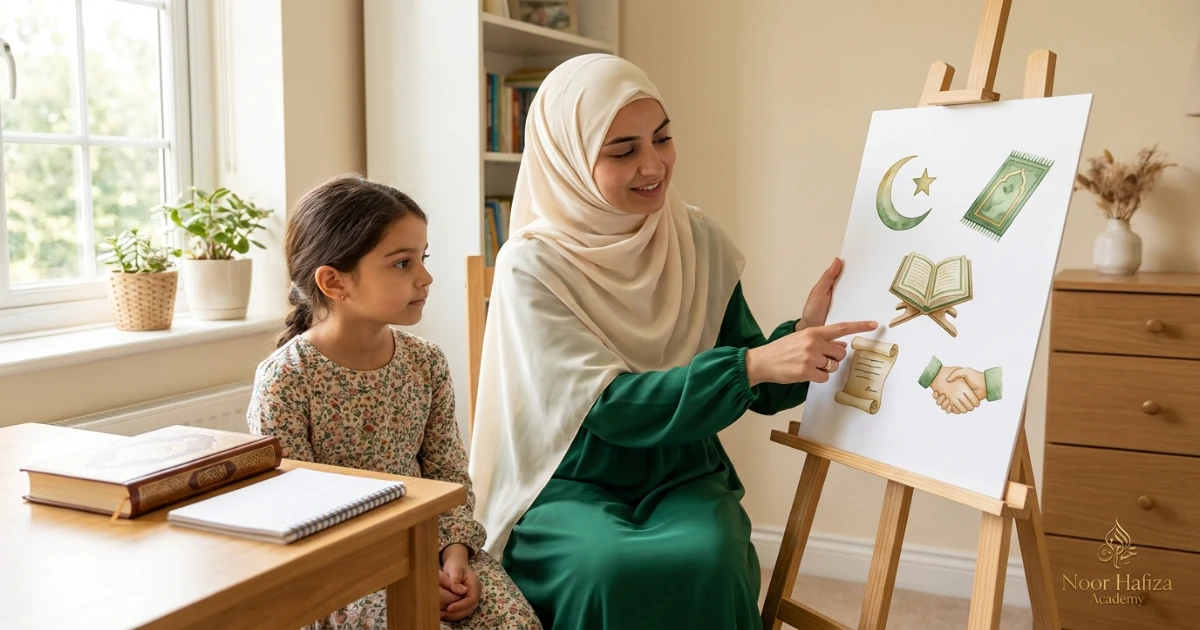
A strong Islamic Studies curriculum for kids should not be a random list of stories, duas, and facts. It should help children gradually understand who Allah is, why Muslims worship Him, how to pray and live with good character, what they can learn from the Prophet Muhammad ﷺ and earlier Prophets, how the Quran guides daily life, and how Islamic manners apply at home, school, online, and in the community. The curriculum should grow with the child: younger learners need simple beliefs, short duas, stories, manners, and worship routines; older children can add deeper Seerah, Fiqh, Hadith, responsibility, Islamic identity, and practical decision-making.
What should an Islamic Studies curriculum for kids include?
A balanced curriculum should include age-appropriate Aqeedah, the Five Pillars, Salah and basic worship, Quran learning, Seerah of Prophet Muhammad ﷺ, stories of the Prophets, Hadith, Islamic manners and character, daily duas, halal and haram at an age-appropriate level, family and community responsibilities, Islamic occasions such as Ramadan and Hajj, and practical Muslim identity. Younger children should learn through short stories, routines, simple language, repetition, and real-life examples. Older children can gradually study more detailed Seerah, Fiqh of worship, responsibility, social behavior, online conduct, evidence from Quran and Sunnah, and how Islamic principles guide choices.
Islamic Studies should build understanding, practice, and character together
Children do not need only information about Islam. They need a framework that helps them understand what Muslims believe, what Muslims do, and why those beliefs and actions matter. A child may be able to list the Five Pillars but still not know how Salah fits into the day. Another may know several Prophets by name but not understand the lessons behind their stories. A good curriculum moves beyond recall into application.
That means each topic should connect three layers: knowledge, practice, and character. When children learn about Salah, they should also practise its steps and understand its place in a Muslim’s life. When they learn honesty, they should discuss what honesty looks like at school, at home, and online. When they study Ramadan, they should understand fasting, worship, patience, generosity, and family routines.
For every Islamic Studies topic, ask: What should the child know? What should the child be able to do? What kind of character or decision should this knowledge support?
Aqeedah: what should children learn about Allah and faith?
Aqeedah should begin simply and positively. Young children can learn that Allah created them, knows them, cares for them, hears their duas, and alone deserves worship. As they grow, they can learn the meaning of Tawheed, the basic articles of faith, Allah’s beautiful names in age-appropriate ways, and the importance of worshipping Allah alone.
Allah created us
Simple language about Allah as Creator, gratitude, dua, and loving obedience.
Tawheed and worship
Allah alone deserves worship; introduce the articles of faith and basic meanings behind them.
Belief with understanding
Explore how belief shapes worship, choices, patience, gratitude, and responsibility.
Salah, Wudu, fasting, Zakah, and Hajj: teach worship practically
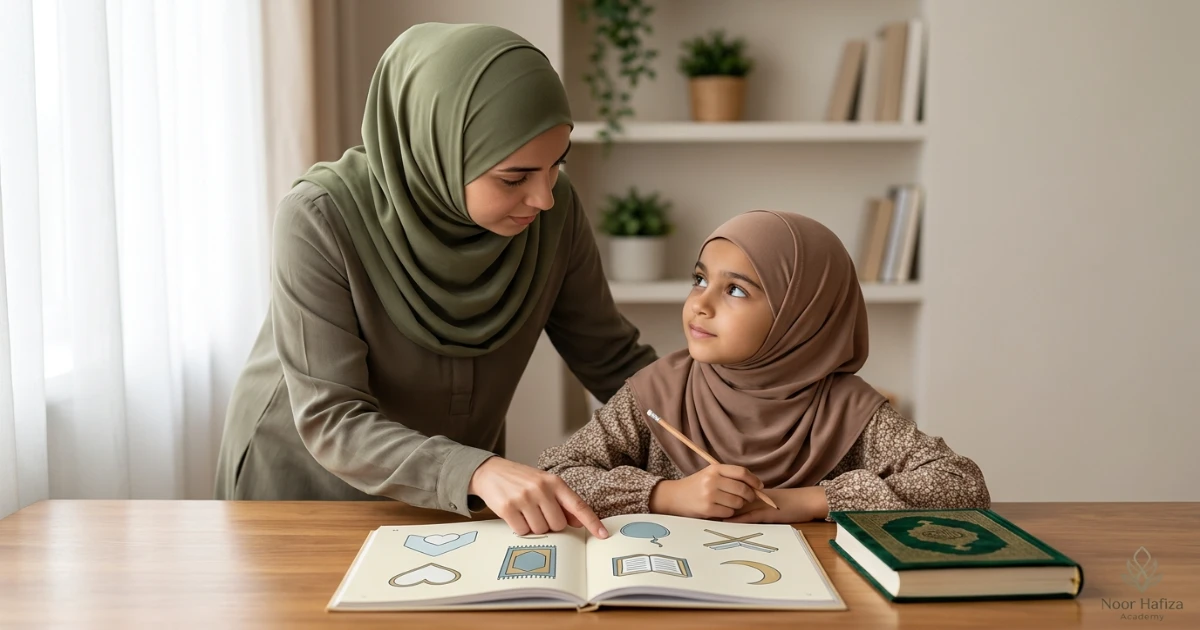
Children benefit when acts of worship are taught through practice, not only worksheets. A younger child may first learn the names of the five prayers and how Muslims prepare for Salah. Then the child can learn Wudu steps, prayer movements, short recitations, basic prayer manners, and what breaks Wudu at an appropriate level.
Ramadan lessons should include more than “Muslims do not eat during the day.” Teach intention, self-control, charity, Quran, family worship, and kindness. Hajj can be introduced through the Ka’bah, Makkah, Ibrahim عليه السلام, and the main idea of Muslims worshipping Allah together. Zakah and Sadaqah can be connected to sharing, responsibility, and caring for people in need.
Quran Studies: reading, meaning, memorization, and respect
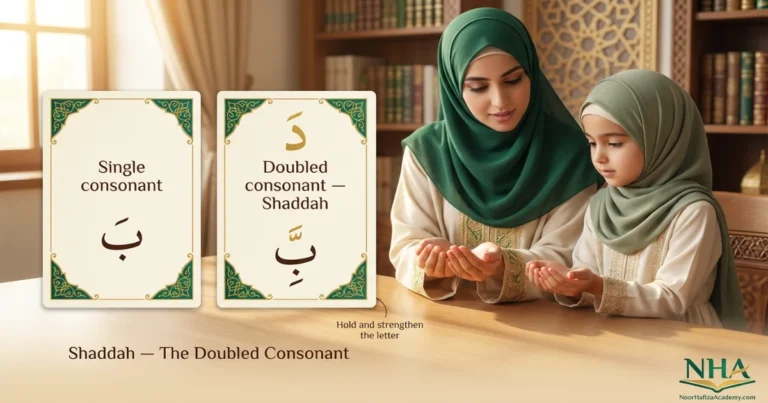
Islamic Studies and Quran class can support each other without becoming the same subject. Quran reading focuses on Arabic letters, Harkaat, joining, recitation, Tajweed, and fluency. Islamic Studies can teach what the Quran is, why Muslims respect it, how revelation came, how to behave with the Mushaf, and the main meaning of selected short Surahs.
- Why the Quran is important to Muslims.
- Basic etiquette when reading and listening to Quran.
- Short Surah meanings and key lessons.
- Selected duas and Quranic phrases used in daily life.
- Age-appropriate introduction to revelation and preservation.
- Memorization with understanding instead of sound alone.
Seerah: help children know and love the Prophet Muhammad ﷺ
Seerah should be taught as a connected life story rather than isolated events. Younger children can learn about the Prophet’s kindness, truthfulness, family, love for children, care for neighbors, and important events such as the first revelation and Hijrah. Older learners can gradually understand Makkah and Madinah periods, major challenges, treaties, community building, and lessons in patience, leadership, mercy, and trust in Allah.
Avoid reducing Seerah to dates and names. Ask what the event teaches. What did the Prophet ﷺ do when people were unkind? How did he treat family? How did he keep promises? How did he respond to difficulty? Application turns history into character education.
Stories of the Prophets: teach lessons, not only dramatic events
Children naturally enjoy the stories of Adam, Nuh, Ibrahim, Yusuf, Musa, Yunus, Isa عليهم السلام and other Prophets. The educational goal should be more than remembering who did what. Each story should support belief, patience, obedience, courage, dua, repentance, trust in Allah, or another clear lesson.
| Prophet | Child-friendly theme | Practical lesson |
|---|---|---|
| Adam عليه السلام | Creation, responsibility, repentance | People make mistakes and should return to Allah sincerely. |
| Nuh عليه السلام | Patience and obedience | Keep doing what is right even when it is difficult. |
| Ibrahim عليه السلام | Tawheed and trust | Worship Allah alone and trust Him. |
| Yusuf عليه السلام | Patience, forgiveness, family | Respond to hardship with patience and good character. |
| Musa عليه السلام | Courage and reliance on Allah | Speak truth and ask Allah for help. |
| Yunus عليه السلام | Dua and returning to Allah | Remember Allah and make sincere dua during difficulty. |
Akhlaq and Adab: Islamic character should appear in daily routines
Character education is one of the most practical parts of an Islamic Studies curriculum. Children should learn how Islamic manners apply in situations they actually face: speaking to parents, sharing with siblings, dealing with anger, telling the truth, keeping promises, respecting teachers, treating animals kindly, using devices responsibly, and handling disagreement.
Respect and responsibility
Kind speech, helping family, asking permission, gratitude, and caring for belongings.
Honesty and fairness
No cheating, respectful behavior, keeping promises, and treating classmates well.
Service and kindness
Neighbors, guests, elders, younger children, people in need, and public manners.
Digital Adab
Truthfulness, privacy, respectful comments, avoiding harmful content, and asking adults for help.
Daily duas and Dhikr: teach meaning, situation, and consistent use
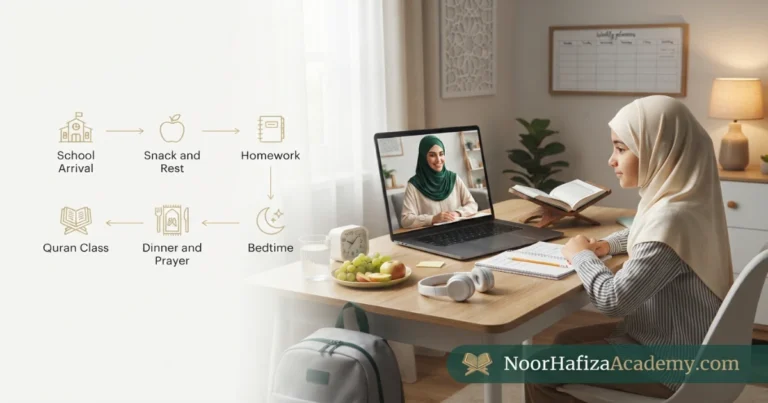
Duas should be connected to real routines. Instead of giving children a large list to memorize, choose a few they can actually use: before eating, after eating, entering and leaving the home, before sleep, waking up, entering and leaving the bathroom, traveling, and asking Allah for beneficial knowledge or protection.
Teach the Arabic carefully, a simple meaning, and when the dua is used. Review it inside the routine. A bedtime dua is more likely to become part of life when practised at bedtime than when learned only on a worksheet.
Hadith for children: choose short teachings with clear application
Children do not need a large number of narrations at once. Short, authentic teachings connected to honesty, kindness, mercy, intention, cleanliness, good speech, and helping others can support Islamic character. The teacher should explain the meaning in child-friendly language and show how it applies.
Older children can gradually learn what Hadith is, why Muslims study the Sunnah, and basic concepts about narrations without overwhelming them with advanced terminology.
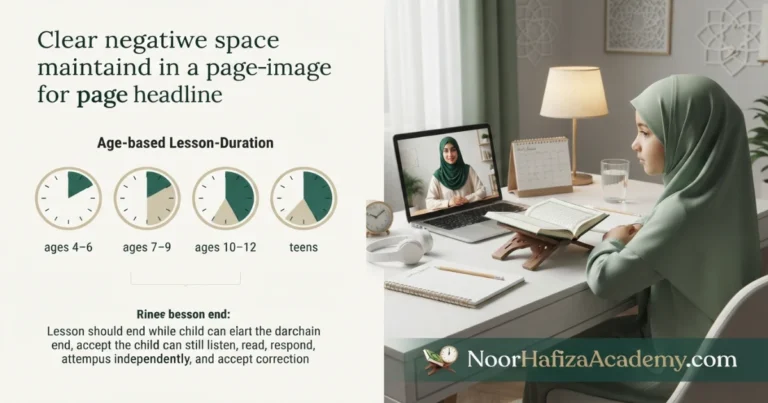
What should children learn at different ages?
| Age / Stage | Main curriculum focus | Teaching style | Expected outcome |
|---|---|---|---|
| Ages 4–6 | Allah as Creator, basic manners, short duas, Prophets’ stories, prayer names, Ramadan basics | Stories, pictures, repetition, songs without inappropriate content, role-play, routines | Positive Islamic vocabulary and simple daily habits |
| Ages 7–9 | Five Pillars, Wudu, Salah steps, short Seerah, Prophets, Akhlaq, selected Surah meanings | Demonstration, quizzes, scenarios, short writing tasks | Basic independent worship habits and understanding |
| Ages 10–12 | Deeper Seerah, worship rules, responsibility, Hadith, Islamic identity, friendships and conduct | Discussion, problem-solving, reflection, source-based learning | Better reasoning and personal responsibility |
| Early teens | Personal responsibility, puberty-related worship education, identity, ethics, social media, deeper Fiqh and Seerah | Respectful discussion, evidence, real-life scenarios, private questions when appropriate | More mature Islamic decision-making and worship ownership |
These age ranges are approximate. Reading level, maturity, prior Islamic education, family environment, and the teacher’s assessment may move topics earlier or later.
A simple one-year Islamic Studies curriculum structure
Term 1: Belief and daily worship
Allah, Tawheed, Five Pillars, Wudu, Salah basics, daily duas, and basic Islamic manners.
Term 2: Seerah and Prophets
Selected events from the life of Prophet Muhammad ﷺ, stories of earlier Prophets, patience, truthfulness, trust, and family lessons.
Term 3: Quran, character, and Muslim life
Short Surah meanings, Hadith themes, Akhlaq, Ramadan, charity, community, Islamic calendar, and age-appropriate identity topics.
Ongoing: Review and practice
Revisit duas, Salah, manners, Surah meanings, and key beliefs throughout the year rather than teaching each topic only once.
How much Fiqh should children learn?
Children should learn the practical rules they need for their current stage. Younger learners need basic cleanliness, Wudu, Salah, fasting awareness, and simple halal/haram guidance. Older children can gradually learn more detailed worship rules, especially as personal responsibility increases.
Families and schools may follow different recognized scholarly traditions on some details. Teachers should avoid turning age-appropriate lessons into arguments over secondary differences. Where a practical detail varies by school or family tradition, explain the curriculum approach respectfully and encourage parents to follow trusted scholars and teachers.
Help children understand what being Muslim means in everyday life
Islamic identity should be more than labels. Children need confidence that being Muslim includes worship, character, belonging, responsibility, and mercy. They should learn how to explain simple Islamic practices to classmates, how to respond respectfully to questions, how to keep religious commitments without being rude, and how to seek help when confused.
Older children can discuss peer pressure, social media, friendships, modesty, entertainment choices, honesty, and respect in ways that match their maturity. The goal is not fear-based teaching; it is helping them make informed decisions with Islamic principles.
How parents can reinforce Islamic Studies at home
- Ask one simple question after each lesson: “What did you learn that we can use this week?”
- Practise duas inside real routines instead of only testing memorization.
- Let children see adults prepare for Salah, read Quran, give charity, apologize, and show good manners.
- Use Seerah stories during family conversations instead of only before exams.
- Correct Islamic vocabulary gently and consistently.
- Discuss school situations through Islamic character: honesty, fairness, patience, and respect.
- Keep questions welcome, especially as children get older.
- Coordinate with the teacher when a child is confused about a belief, worship rule, or identity topic.
What makes an Islamic Studies lesson effective for children?
One main learning outcome
Children should know what they are learning and what they should be able to explain or practise by the end.
Use scenarios and demonstration
Practise Wudu, sequence Salah steps, discuss manners, match duas to situations, or retell Seerah events.
Bring old learning back
Use short retrieval questions so previous terms remain active rather than disappearing after a test.
A useful lesson can include a short introduction, one core teaching point, a story or evidence, a practical activity, a few recall questions, and one home application. Younger children need movement and variety; older learners can handle longer discussion and written reflection.
Common Islamic Studies curriculum mistakes
Too much memorization without meaning
Children can recite definitions and lists but cannot explain how they apply.
Teaching advanced disputes too early
Young children first need strong foundations, worship habits, and clear character lessons.
Stories without learning objectives
A dramatic Prophet story should still end with a clear belief, worship, or character lesson.
Worship only on paper
Children should practise Wudu, prayer sequencing, duas, and manners where possible.
No review across the year
Core concepts fade when each unit disappears after one quiz.
Ignoring the child’s real environment
School, friends, devices, family life, and community experiences should inform practical examples.
How should children be assessed in Islamic Studies?
Assessment should match the goal. If the lesson is about Wudu, practical demonstration may be more useful than a long written test. If the goal is understanding Seerah, ask the child to explain what happened and what lesson can be applied. If the goal is a dua, assess Arabic accuracy, simple meaning, and when it is used.
- Short oral questions for younger children.
- Practical demonstrations for worship topics.
- Scenario questions for manners and identity.
- Simple written quizzes for vocabulary and sequence.
- Story retelling for Seerah and Prophets.
- Reflection tasks for older children.
- Regular review rather than one high-pressure final test.
Online Islamic Studies lessons for children
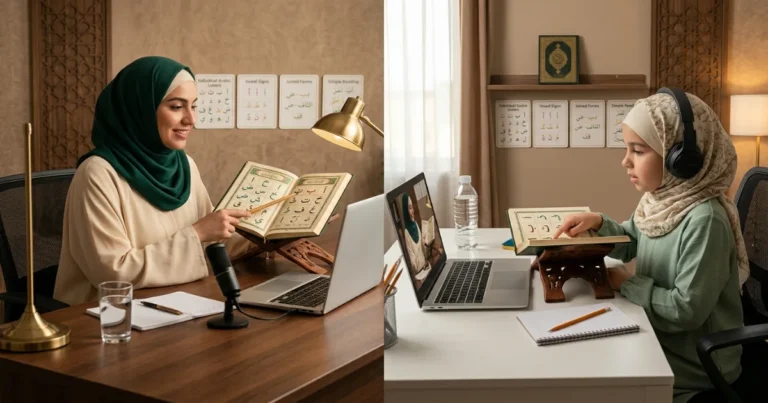
Noor Hafiza Academy offers online Quran and Islamic learning for children, girls, women, adults, beginners, and returning learners with female Quran teachers. For children, Islamic Studies can be connected to Quran reading, short Surah memorization, duas, Salah, Seerah, Prophets, Akhlaq, and age-appropriate Muslim identity.
A suitable learning plan should consider the child’s age, existing Quran level, prior Islamic knowledge, school schedule, family goals, and attention span. Current teacher qualifications, schedules, trial arrangements, fees, safeguarding practices, privacy policies, and enrollment terms should be confirmed directly.
Share the child’s age, current Quran level, Islamic Studies background, school schedule, time zone, and the areas you want to strengthen most.
FAQs about an Islamic Studies curriculum for kids
What should children learn first in Islamic Studies?
At what age should Islamic Studies begin?
What subjects are included in Islamic Studies for kids?
Should kids learn Fiqh?
How much Seerah should children learn?
Should Islamic Studies include Quran reading?
How can parents teach Islamic Studies at home?
How long should an Islamic Studies lesson be for children?
Should children memorize many Hadith?
How should Islamic manners be taught?
What should early teens learn in Islamic Studies?
How do I know if an Islamic Studies curriculum is balanced?
Give children Islamic knowledge they can understand, practise, and grow with
Build belief, worship, Quran, Seerah, character, duas, and Muslim identity in a sequence that matches the child’s age instead of treating Islamic Studies as disconnected facts.