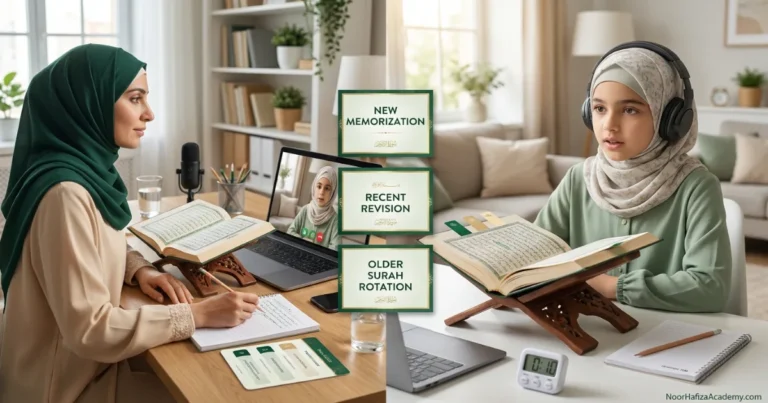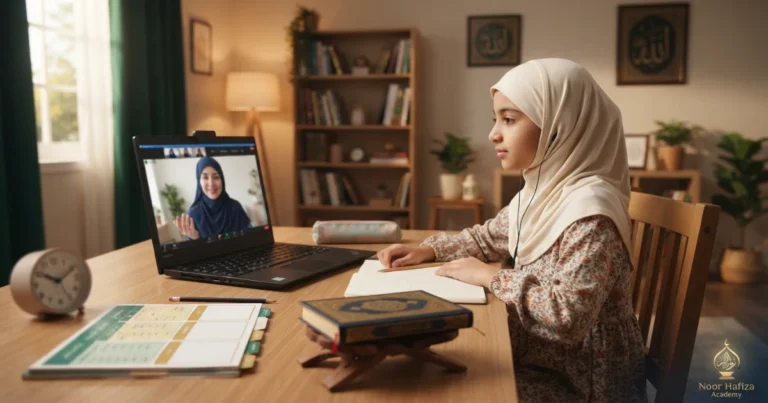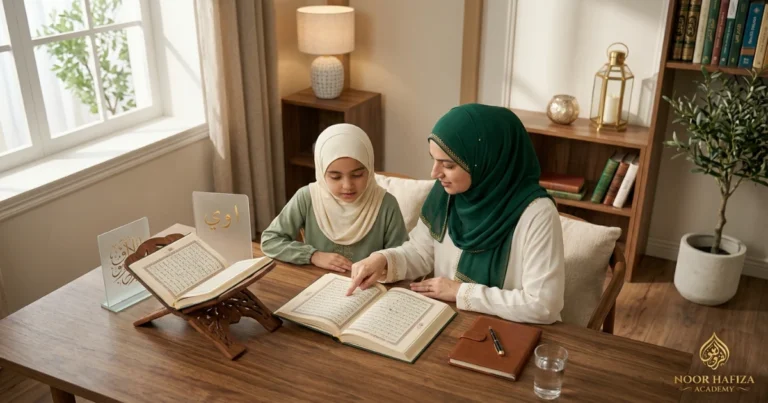
Pacific Time Online Quran Classes for California and the West Coast

Pacific Time online Quran classes can help Muslim families in California and across the West Coast build a Quran routine without commuting to a local center several times each week. Families in Los Angeles, San Diego, San Jose, San Francisco, Sacramento, Fresno, Irvine, Seattle, Portland, and other Pacific Time communities often need classes that fit after school, after work, or on weekends. Younger children may learn best in an earlier after-school window, teens may need later evenings around sports and homework, and adults may prefer mornings, lunch breaks, evenings, or weekends. Because many Pacific Time locations switch between Pacific Standard Time and Pacific Daylight Time, recurring lessons should ideally stay tied to the learner’s local Pacific Time. Current class openings, teacher assignments, lesson lengths, trials, fees, and exact schedules should be confirmed directly.
What are good Pacific Time online Quran class options?
For California and West Coast families, practical Quran class planning often starts with three windows: after school in the late afternoon, early evening after homework or dinner, and weekend mornings or afternoons. Example planning blocks might include 3:30–5:00 PM PT, 5:00–7:00 PM PT, or a Saturday/Sunday morning or afternoon slot, but these are examples for family planning—not guaranteed academy openings. Younger children often benefit from earlier times before evening fatigue, while teens and adults may prefer later sessions. Use “Pacific Time” when booking so recurring lessons remain clear through seasonal PST/PDT changes, and confirm exact teacher availability directly.
Who are Pacific Time online Quran classes for?
Pacific Time online Quran classes are useful for Muslim families who want live Quran teaching without being limited by the distance to a local masjid, madrasa, or private tutor. They can suit school-age children, teens, women, adult beginners, new Muslims, returning readers, and Hifz students who need consistent teacher feedback.
California has large and diverse Muslim communities across Southern California, the Bay Area, the Central Valley, and the Sacramento region. Families in Washington and most of Oregon also use Pacific Time, along with other Pacific Time communities in the western United States. Some states are split between time zones, so families outside California should confirm the local time used by their city rather than assuming the entire state follows Pacific Time.
Families in Los Angeles, Orange County, San Diego, Riverside, San Bernardino, and nearby communities often need classes around school traffic, homework, sports, and evening family schedules.
Bay Area and Sacramento families may need flexible online lessons that avoid long local commutes and crowded weekday evenings.
Families in Seattle, Tacoma, Portland, and other Pacific Time communities can use the same local scheduling principles for after-school and weekend lessons.
How to plan after-school Quran classes in California
California school days can end at different times depending on district, grade, after-school programs, transportation, and extracurricular activities. A class should not begin so soon after dismissal that the child must join from a car, rush through a snack, or arrive mentally exhausted.
School release
Include dismissal time, pickup, bus travel, and traffic before choosing a recurring lesson.
Reset time
Allow a short snack, bathroom break, Salah, or movement break if the child needs one.
Homework rhythm
Some children focus best on Quran before homework; others need homework out of the way first.
Bedtime
Keep younger learners away from late classes if attention and patience drop sharply at night.
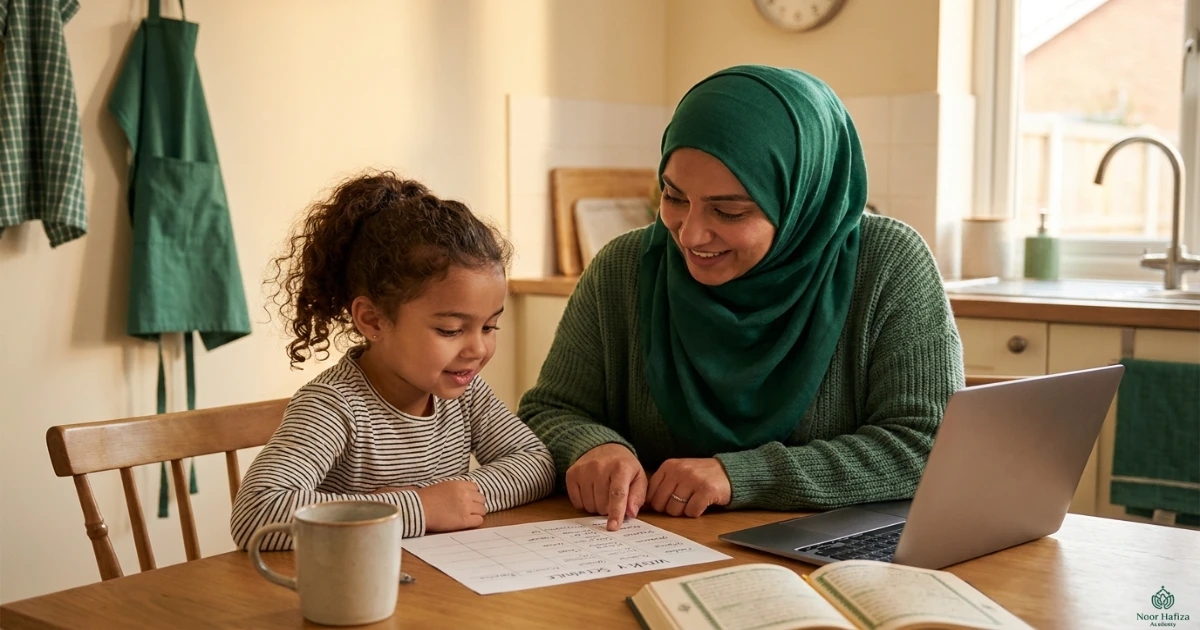
Example Pacific Time weekday class windows
These windows are examples to help families think through scheduling. They do not represent guaranteed openings.
Can work for younger children who arrive home early and focus best before dinner.
Can suit families who need a homework or rest buffer after school.
May work better for teens, college students, or adults than for younger children.
The practical question is not “Which time sounds ideal?” but “Which time can this learner attend calmly during normal school weeks?” A consistent 30-minute lesson in a workable window is usually more useful than a perfect-looking slot that conflicts every other week.
Weekend Quran classes for California and West Coast families
Weekend online Quran classes can reduce pressure on school nights. Saturday or Sunday mornings are often useful for children who learn best when fresh. Afternoon classes can work for families who reserve mornings for sports, errands, Islamic school, or family activities.
A calm morning class can work well for Qaida, Quran reading, Tajweed, or Hifz revision.
Useful when the family has morning activities but wants to avoid a late evening lesson.
Spacing lessons can reduce long gaps while avoiding two busy school nights.
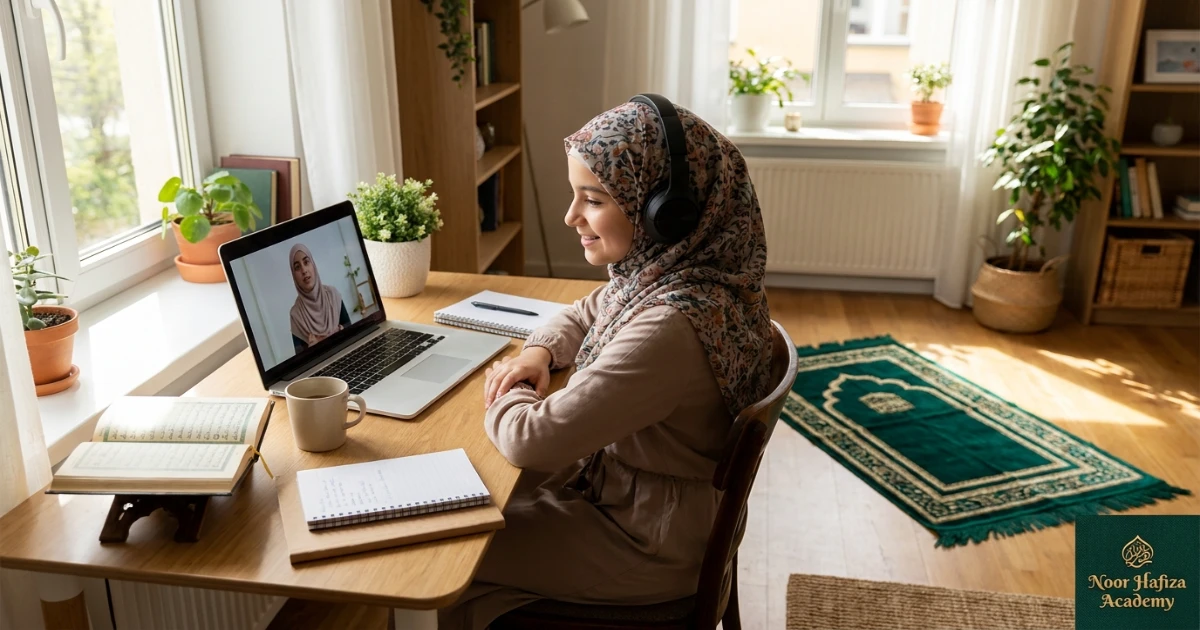
What is the difference between Pacific Time, PST, and PDT?
“Pacific Time” is the most useful general label for a recurring class because California, Washington, and most Pacific Time communities use Pacific Standard Time during part of the year and Pacific Daylight Time during daylight-saving months. Using PT avoids parents having to rename the class twice each year.
| Label | Meaning | Best use | Parent tip |
|---|---|---|---|
| PT | Pacific Time | Recurring schedule | Best general label for California and West Coast lessons |
| PST | Pacific Standard Time | Standard-time period or fixed-offset reference | Do not use PST as a year-round label when daylight time applies |
| PDT | Pacific Daylight Time | Daylight-saving period | Ask whether the booking system adjusts automatically |
This matters when the teacher is outside the United States. If the academy schedules by the student’s local Pacific Time, the parent should not need to manually recalculate an overseas teacher’s clock each season.
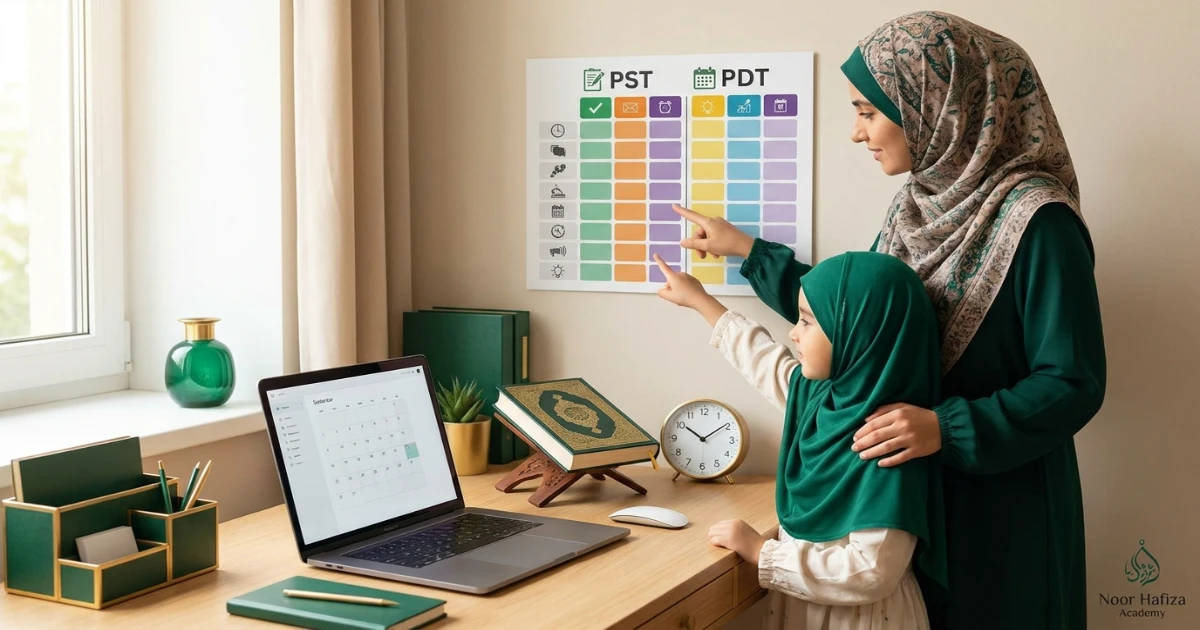
Which Pacific Time class schedule works best by age?
| Learner | Often works well | Watch for | Main priority |
|---|---|---|---|
| Ages 5–8 | Earlier after school or weekend morning | Short attention and evening fatigue | Short, predictable lessons |
| Ages 9–12 | After a short break or weekend | Homework and sports | Consistency and active correction |
| Teen | Late afternoon, evening, or weekend | Tutoring, exams, extracurriculars | A schedule the teen can manage independently |
| Adult / woman | Morning, lunch break, evening, or weekend | Work, caregiving, and family responsibilities | Low-conflict recurring time |
What can students study in Pacific Time online Quran classes?
Noorani Qaida
Arabic letters, Harkaat, joined forms, Sukoon, Shaddah, and beginner blending.
Quran reading
Accurate decoding, pronunciation, fluency, and stopping for learners moving beyond Qaida.
Tajweed
Makharij, Ghunnah, Qalqalah, Madd, Noon and Meem rules, and Waqf according to level.
Hifz support
New memorization, revision, listening checks, and retention routines tailored to the learner.
Course placement should begin with the learner’s real reading level. A child who memorizes familiar Surahs but cannot decode unfamiliar words may need reading foundations alongside Hifz rather than more memorization alone.
Female Quran teachers for California girls, women, and children
Many California and West Coast families prefer female Quran teachers for daughters, women, or younger children. This can support comfort, privacy, and age-sensitive communication for some learners.
Parents should still evaluate teaching quality separately. Look for accurate recitation, appropriate Tajweed knowledge, clear correction, patience, lesson structure, communication, and progress tracking. Current female-teacher availability in Pacific Time should be confirmed directly rather than assumed from a general program description.
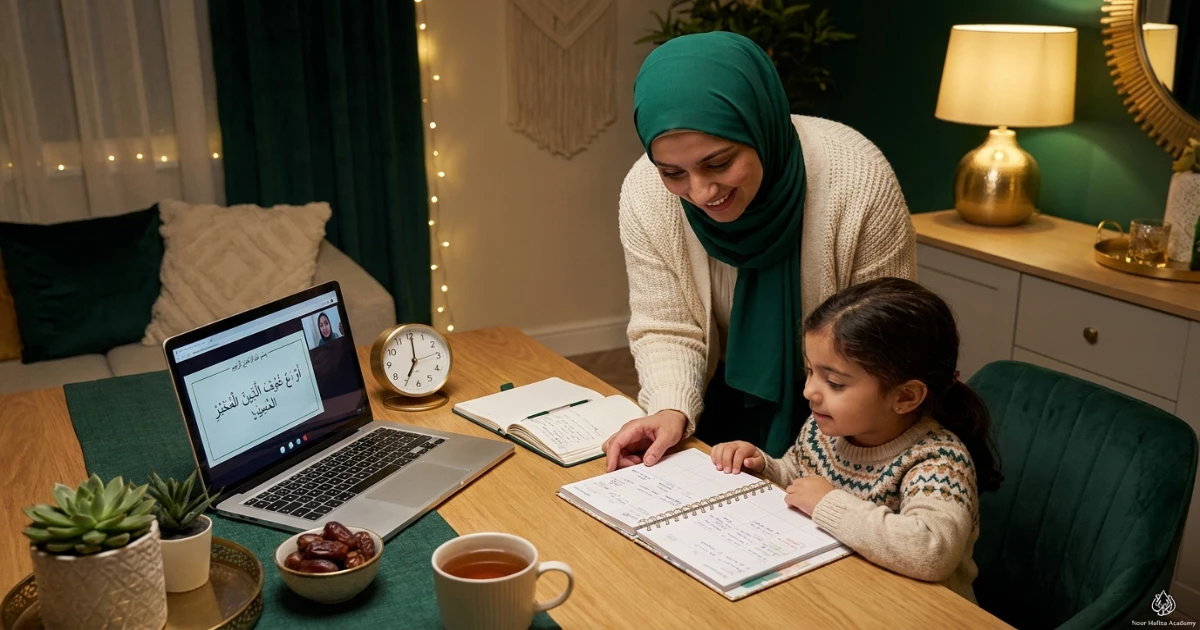
How California families can fit Quran class into a busy weekday
A recurring Quran class is easier to maintain when the household treats it as part of the normal weekly routine. The learner should know when class happens, where to sit, what book or Mushaf to bring, and what happens immediately before and after.
Finish the snack, bathroom break, device setup, and lesson materials before class begins.
Use a quiet space, stable internet, headphones when useful, and a proper desk.
Write the main teacher correction and practise it briefly on the next day.
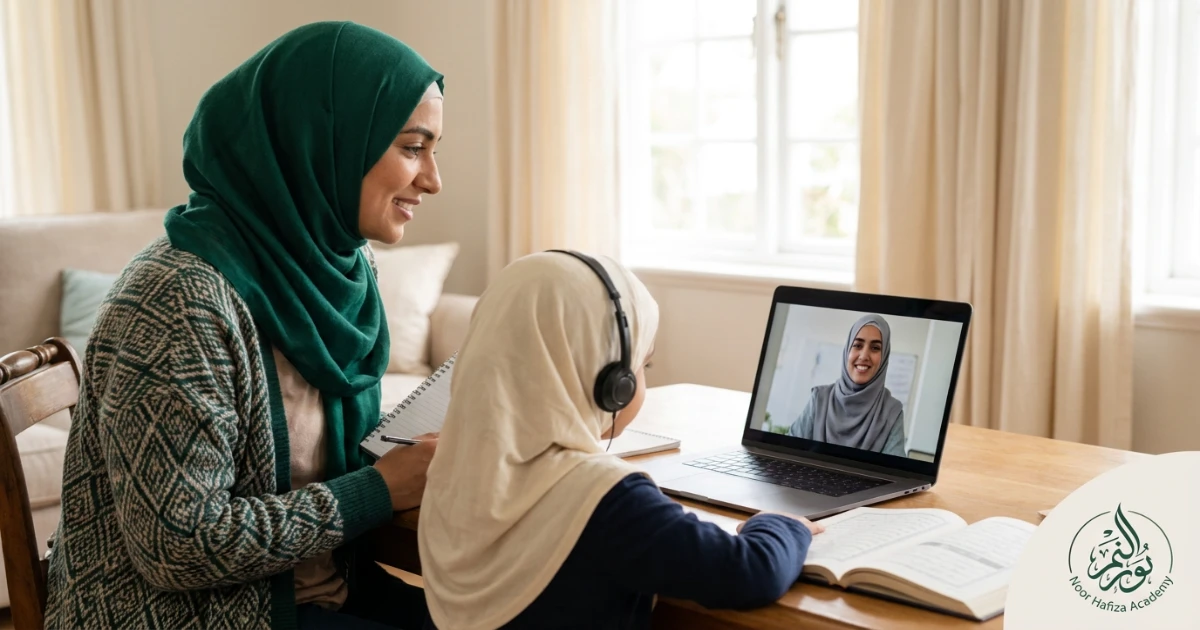
Should West Coast learners choose private or group Quran classes?
Private lessons can provide more individual recitation time, which may be especially useful for complete beginners, students with specific Makharij problems, Tajweed learners, or Hifz students needing detailed listening checks.
Small-group lessons can also work when learners are close in age and reading level and each student still receives enough recitation time. The best format depends on the learner’s confidence, attention, goals, family budget, and how much individual correction is needed.
How to evaluate a Pacific Time Quran trial class
Test teaching quality and the time slot together
- Was the teacher ready at the agreed Pacific Time?
- Was the child mentally alert at this hour?
- Did the teacher assess the real reading level?
- Were corrections specific rather than vague?
- Did the learner get enough chance to attempt independently?
- Was the audio clear enough for pronunciation correction?
- Did the class length suit the learner’s age and attention?
- Could this same schedule work during an ordinary school week?
Common Pacific Time Quran-class scheduling mistakes
Choosing a late slot for a young child
The class happens consistently, but the learner is too tired to benefit.
No school-to-class buffer
The child joins while still eating, commuting, or changing activities.
Using PST as a year-round label
The family or teacher can become confused when daylight-saving time changes.
Ignoring traffic and commute reality
California school pickup and traffic make an early class impossible on many days.
Assuming a website time is available
A general scheduling example is mistaken for a guaranteed teacher opening.
Booking around a vacation week
The schedule works temporarily but conflicts when school and activities resume.
No home-practice plan
Lessons are treated as isolated events, so the same corrections repeat every week.
Choosing for parent convenience only
The time is easy for the household but poor for the learner’s attention.
Example Pacific Time Quran-learning week
| Day | Activity | Example timing | Purpose |
|---|---|---|---|
| Monday | Live Quran lesson | After-school PT window | New correction + guided reading |
| Tuesday | Home review | 10–15 minutes | Repeat teacher target |
| Wednesday | Light Quran reading | Flexible | Maintain fluency and accuracy |
| Thursday | Second lesson or review | After school/evening | Check transfer and correct repeated errors |
| Friday | Short revision | Flexible | Keep continuity without overload |
| Weekend | Hifz / Tajweed / catch-up | Morning or afternoon | Calm review and preparation |
This schedule is only an example. The right number of lessons depends on age, current reading level, goals, attention, lesson length, and the amount of home practice the learner can maintain.
Questions to ask before booking Pacific Time online Quran classes
Use these before enrollment
- Do you schedule lessons by the student’s local Pacific Time?
- How do you handle the PST/PDT daylight-saving change?
- Which California after-school slots are currently available?
- Which weekend Pacific Time slots are currently available?
- Are female Quran teachers available for my preferred time?
- How long are lessons for my child’s age?
- Can the schedule change if school or sports change later?
- What happens if a student misses a class?
- How do you assess whether the learner needs Qaida, Quran reading, Tajweed, or Hifz support?
- What practice is expected between lessons?
- How do parents receive progress feedback?
- Can we test the proposed time in a trial class before enrolling?
Pacific Time online Quran classes for California and West Coast families
Noor Hafiza Academy offers live online Quran learning for girls, women, children, adults, new Muslims, complete beginners, and returning readers with female Quran teachers. Programs can include Noorani Qaida, Quran reading, Tajweed, Hifz support, and beginner learning according to the student’s current level.
California and West Coast families can ask about after-school, evening, and weekend Pacific Time options. Current teacher qualifications, Pacific Time availability, class length, trial arrangements, fees, rescheduling rules, privacy practices, policies, and enrollment terms should be confirmed directly before registration.
Share the learner’s age, California or West Coast city, Quran level, preferred weekdays or weekends, and the time windows that work best.
FAQs about Pacific Time online Quran classes
Are online Quran classes available for California families?
What is a good after-school Quran class time in California?
Are weekend Quran classes available in Pacific Time?
Should I say PST or Pacific Time when booking?
Do California, Oregon, and Washington all use Pacific Time?
Can girls in California study with female Quran teachers?
Are early evening classes suitable for young children?
Can adults on the West Coast take evening Quran classes?
Can beginners learn Noorani Qaida online in Pacific Time?
Can students study Tajweed or Hifz online from California?
How can I test whether a Pacific Time slot is right for my child?
What details should I send when asking about Pacific Time availability?
Find a Pacific Time Quran class that fits California life and consistent Quran learning
Share the learner’s age, California or West Coast city, Quran level, preferred weekdays or weekends, and the time windows that work best for your family.