
Back-to-School Quran Routine for Children

A back-to-school Quran routine for children should fit around real school life: early mornings, transport, homework, sports, tutoring, dinner, bedtime, and tiredness. The goal is not to squeeze a full summer-style Quran schedule into a busy term. It is to keep Quran learning steady enough that reading, Tajweed, Hifz, or Islamic Studies does not disappear when school becomes demanding. For many families, the strongest routine uses one or two fixed online lesson times each week, short home practice on school days, and a slightly longer review on the weekend. Younger children may need five to ten focused minutes at home, while older children can often manage a longer review if the timing is good. The best routine also changes when the school workload changes. Exam weeks, sports seasons, illness, and family events may require smaller targets rather than quitting completely.
What is a good back-to-school Quran routine for children?
A practical school-term routine has three layers: a fixed online Quran class, short home practice on several school days, and one weekend review. After school, allow the child time to eat, pray, rest briefly, and transition before Quran or homework. Keep weekday practice small enough that it survives busy days—often five to fifteen focused minutes depending on age and level. For Hifz, separate new memorization from revision and reduce new material during exam or activity-heavy weeks. For Quran reading or Tajweed, use short fresh-text practice and one correction target at a time. Review the plan every few weeks and adjust rather than waiting until the child becomes overwhelmed.
Why summer Quran routines often fail when school starts
During summer, children may have later mornings, fewer deadlines, and more open time. When school returns, the same Quran plan can suddenly compete with transport, homework, projects, sports, tutoring, clubs, dinner, and earlier bedtimes.
The solution is not usually to push harder. It is to redesign the routine. A school-term Quran plan should be lighter, more predictable, and easier to recover after a missed day.
Back-to-school planning should protect consistency without turning Quran learning into another source of daily stress.
Use a three-part school-term Quran routine
Live class
Choose one or two repeatable weekly lessons for teacher correction and progress checks.
Short home practice
Use small weekday sessions to keep reading, Tajweed, or Hifz active.
Weekend review
Strengthen weak material, finish missed revision, and prepare for the next week.
Flexible target
Reduce the amount during exams, sports seasons, illness, or especially heavy homework weeks.
Build a better after-school Quran routine
Many children need a short transition after school before they can focus again. Going directly from transport to a Quran lesson may work for some, but others need food, prayer, movement, or quiet first.
Let the child put away school items, wash up, eat, and decompress briefly.
Decide which comes first and keep the pattern consistent on most days.
Younger children usually learn better before late-evening tiredness begins.
There is no universal rule that Quran must always come before homework or always after it. The better order is the one that gives the child enough attention for both and can be repeated without constant negotiation.

A simple weekly Quran plan for school children
| Day | Main Quran task | Suggested intensity | Parent goal |
|---|---|---|---|
| Monday | Live class or fresh reading | Normal | Start the week clearly |
| Tuesday | Short review | Light | Protect consistency |
| Wednesday | Tajweed / Hifz correction | Normal | Use teacher feedback |
| Thursday | Short independent practice | Light | Avoid overload |
| Friday | Flexible / family recitation | Very light | Keep Quran present |
| Weekend | Longer review + catch-up | Moderate | Reset for next week |
This is an example rather than a rule. A child with two online classes may place them on different days. A Hifz student may need more frequent revision, while a beginner in Noorani Qaida may benefit from shorter but more regular practice.

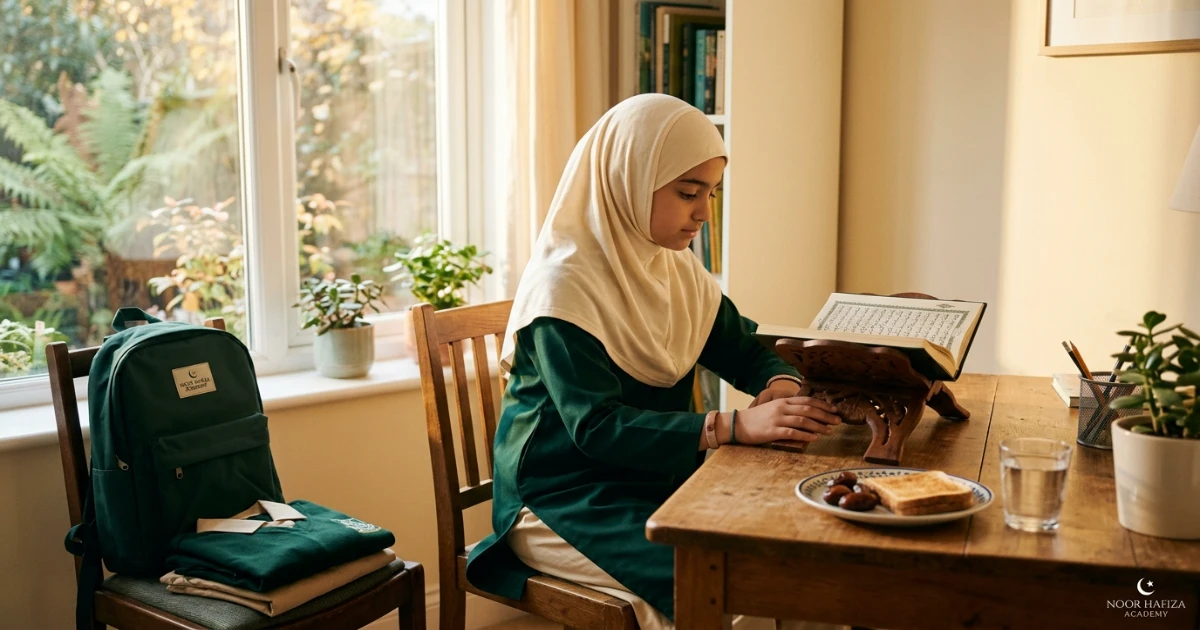
Can children practise Quran before school?
Yes, if mornings in the household are calm enough. A short five-minute reading or Hifz review can work well for children who wake early and are mentally fresh. But morning Quran should not make the child rushed, late, or sleep-deprived.
A few lines of reading or revision can fit naturally before the school routine becomes busy.
If everyone is racing to get dressed, eat, and leave, add Quran at another time.
Morning can be excellent for recalling yesterday’s Hifz or reading a short passage.
How to balance Quran learning with homework
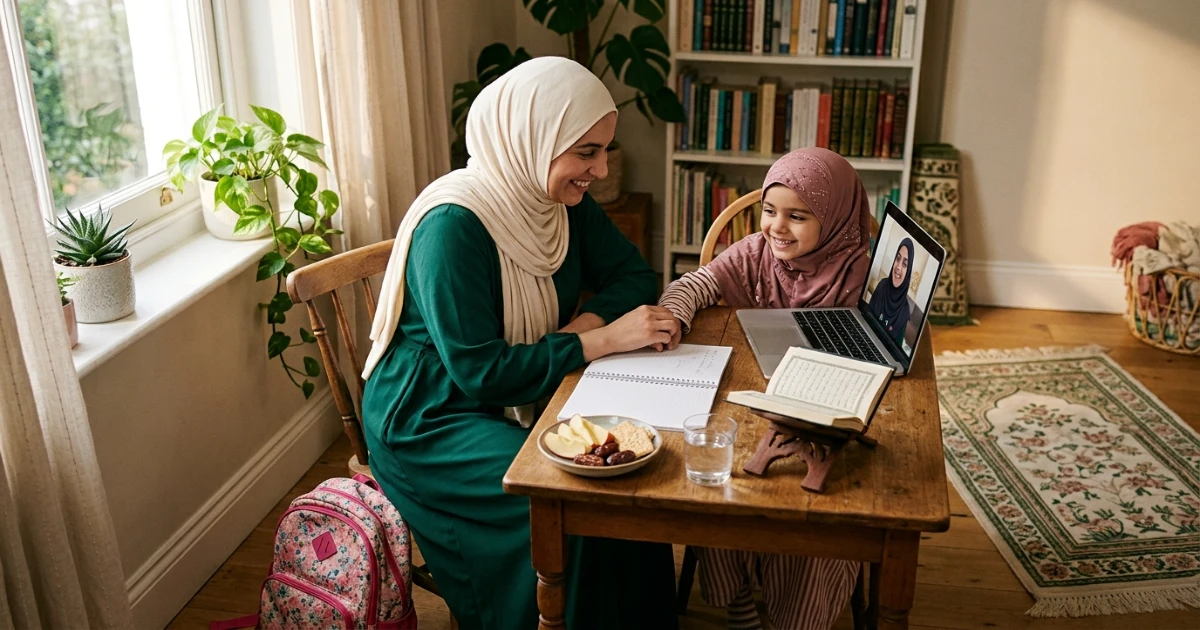
Homework can vary dramatically from day to day. A rigid Quran target that ignores school workload often creates conflict. Instead, families can use a “minimum routine” for heavy days and a fuller routine for normal days.
| School day | Quran target | Example | Goal |
|---|---|---|---|
| Light homework | Normal | 10–15 min + class | Steady progress |
| Heavy homework | Minimum | 5 min review | Keep continuity |
| Exam week | Maintenance | Short reading / Hifz revision | Avoid complete stop |
| Weekend | Recovery | Longer review | Repair weak areas |
Back-to-school Hifz routine for children
Hifz needs more than new memorization. When school starts, the most important adjustment is often to reduce the new portion before revision becomes weak.
New lesson
Keep the daily portion small enough that the child can still revise previous work.
Recent revision
Review material from recent days so it becomes stronger instead of fragile.
Older revision
Use a weekly rotation to prevent earlier memorization from disappearing.
Exam mode
Reduce or pause new memorization temporarily if school pressure is unusually high.
If the child is constantly relearning yesterday’s portion, that is a sign the new target may be too large for the school term. Retention should guide the pace.
School-term Quran reading and Tajweed practice
Children working on Quran reading or Tajweed do not need long home sessions every day. Short fresh-text practice and one correction target can be enough to keep skills moving.
Read a few lines the child has not memorized so real decoding continues to improve.
Focus on a specific issue such as Makharij, Madd, Ghunnah, or Qalqalah.
Use home practice to reinforce the exact correction from the last lesson.
Use the weekend as a Quran reset, not a punishment
A weekend review should help the child feel prepared for the next week. It should not become a two-hour catch-up session because every weekday target was missed.
Revisit what the child learned or memorized during the week.
Choose the most repeated mistake rather than trying to correct everything.
Check school events, sports, and homework-heavy days before setting Quran targets.

What if the child is tired of screens after school?
If the child spends much of the school day on a device, an online Quran class may feel like more screen time. Parents can reduce this by keeping the class focused, preparing physical materials such as a Mushaf or Qaida, and using off-screen home practice between lessons.
For example, the child can read from a physical Quran, practise a Tajweed correction aloud, revise memorization while walking around the room, or review a printed checklist. The live lesson can remain online while most home practice stays offline.
How to fit Quran around sports, tutoring, and school clubs
Many children have two or three especially busy weekdays. Instead of fighting those days, schedule the main Quran lesson on a calmer day and use a five-minute minimum routine on activity-heavy days.
| Day type | Best Quran approach | Why | Avoid |
|---|---|---|---|
| Normal school day | Class or full practice | Good routine anchor | Overloading |
| Sports day | Short review | Keeps continuity | Late-night class |
| Tutoring day | Morning or minimum routine | Protects attention | Three lessons back-to-back |
| Weekend | Longer review | More time available | Punishing catch-up |
Back-to-school Quran routine by age
| Age/stage | Home practice | Best routine style | Main parent role |
|---|---|---|---|
| 5–7 | 5–10 min | Short and visual | Set up and stay nearby |
| 8–10 | 10–15 min | Predictable checklist | Prompt and review |
| 11–13 | 10–20 min | More independent | Monitor consistency |
| Teenager | Goal-based | Collaborative planning | Respect ownership |
These times are examples, not rules. Attention, Quran level, Hifz load, school pressure, and personality matter more than age alone.
How online Quran classes can support the school routine
A fixed online class can reduce parent pressure because the teacher provides correction, assigns a clear practice target, and helps the family notice when the workload is too high.
The best school-term class does not simply continue the summer target automatically. The teacher should know that the child is back in school and adjust lesson intensity when necessary.

Common back-to-school Quran routine mistakes
Keeping the full summer schedule
The child suddenly has school plus the same heavy Quran workload and becomes overwhelmed.
Booking immediately after school
The child may be hungry, tired, or mentally overloaded.
Waiting for a perfect free hour
Short useful practice is skipped because the family cannot find a large block.
Stopping completely during exams
A tiny maintenance routine is often easier to recover from than a total break.
Making weekends punishment
The child begins to associate Quran with catching up on failure.
Ignoring bedtime
Late classes reduce focus and may affect the next school morning.
Too many goals at once
Reading, Hifz, Tajweed, and Islamic Studies all become heavy instead of balanced.
Never adjusting the plan
A routine that worked in September may not fit exam season or sports season.
12 questions to build the right school-term Quran routine
Review these before fixing the weekly schedule
- What time does the child actually get home from school?
- How much transition time does the child need?
- Which weekdays have the heaviest homework?
- Which days include sports, tutoring, or clubs?
- Is the child more focused before or after homework?
- What is the minimum Quran practice we can maintain on a busy day?
- Which day is best for the main online Quran class?
- Does the Hifz target leave enough time for revision?
- Are we protecting dinner and bedtime?
- What will we reduce during exam week?
- When will we do the weekend review?
- How often should we reassess the routine with the teacher?
Back-to-school Quran classes for children at Noor Hafiza Academy
Noor Hafiza Academy offers live online Quran learning for children, girls, teenagers, siblings, homeschool families, adults, women, beginners, and returning readers with female Quran teachers. Families can ask about Noorani Qaida, Quran reading, Tajweed, Hifz, short Surahs, and Islamic Studies according to the child’s age and current level.
A school-term plan may include one or more live lessons, short home practice, Hifz revision, teacher feedback, and a flexible weekly target that can be reduced during exam or activity-heavy periods. Current teacher qualifications, female-teacher availability, class length, schedules, trial arrangements, fees, rescheduling policies, privacy practices, safeguarding policies, and enrollment terms should be confirmed directly.
Share the child’s age, school finish time, Quran level, preferred days, homework load, activities, and whether the goal is Qaida, Quran reading, Tajweed, Hifz, or Islamic Studies.
FAQs about back-to-school Quran routines for children
How much Quran should a child study during the school week?
Should Quran class come before or after homework?
Is five minutes of Quran practice enough on a busy day?
Can children practise Quran before school?
How should Hifz change when school starts?
Should we stop Quran during exam week?
What is a good after-school Quran class time?
How can we reduce screen fatigue from online Quran classes?
How often should children review Quran on weekends?
What if sports or tutoring make weekdays very busy?
How do I know if the Quran routine is too heavy?
What should I send when asking about school-term Quran classes?
Build a school-term Quran routine that protects learning, sleep, homework, and family consistency
Share the child’s age, school finish time, Quran level, preferred days, homework load, activities, and whether the goal is Qaida, Quran reading, Tajweed, Hifz, or Islamic Studies.