Winter Break Quran Learning Plan for Families

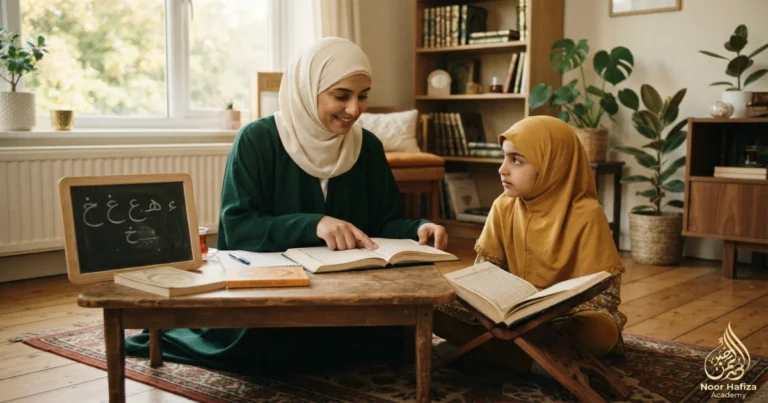
A winter break Quran learning plan gives families a chance to slow down, reconnect with Quran, and strengthen habits that may have become rushed during the school term. But the break should not become a second school schedule. Children also need rest, play, family visits, travel, and unstructured time. A practical winter Quran plan therefore focuses on a few meaningful goals: short daily reading, Hifz revision, one or two Tajweed corrections, family Seerah or Islamic Studies, and a small number of live online lessons. Families can also use the break to repair weak areas before school restarts—such as forgotten Hifz, hesitant reading, missed Qaida practice, or an inconsistent daily routine. The strongest plan is flexible: heavier on quiet home days, lighter during travel or family events, and simple enough that the child finishes the break feeling closer to Quran rather than exhausted by it.
What is a good winter break Quran learning plan for families?
Use a light three-part routine: short Quran reading most days, Hifz or Tajweed review according to the child’s level, and one family Islamic-learning activity such as Seerah, daily duas, manners, or reflection. Keep the routine flexible enough for travel and family events. On normal home days, children might do 15–30 minutes divided into two short sessions. On busy days, use a five- to ten-minute minimum routine so Quran does not disappear completely. Hifz students should prioritize revision before adding large new portions. Beginners can strengthen letters, Harkaat, joined forms, and simple reading. End each week with a short review of what improved and what should continue when school restarts.
Winter break is for strengthening, not cramming
Families sometimes see school holidays as a chance to “catch up” on everything at once. That can quickly turn Quran learning into a heavy project. A better winter goal is to strengthen one or two weak areas while keeping the child’s relationship with Quran positive.
For one child, that might mean improving reading fluency. For another, it might mean rebuilding forgotten Hifz. A beginner may need more confidence with Qaida. An older child may benefit from Tajweed correction or a short Seerah study. The goal should match the child’s current level rather than the parent’s wish list.
A child who ends winter break reading more confidently and revising consistently has made meaningful progress even without covering a large amount of new material.
A simple winter break Quran learning structure
Quran reading
Read a short unfamiliar passage to keep decoding and fluency active.
Hifz / Tajweed
Review memorization or one correction target instead of chasing volume.
Family learning
Use Seerah, duas, manners, or Islamic Studies for shared learning.
Rest & flexibility
Keep lighter days for travel, guests, outings, and family time.
A 15–30 minute winter break Quran routine
Use a small fresh passage so real reading skill continues to develop.
Strengthen one portion or one pronunciation target.
Read a Seerah story, practise a dua, or discuss one Islamic manner.
Families do not need to complete all three parts every day. A child may read and revise on one day, then read and study Seerah on another. The weekly balance matters more than perfect daily symmetry.

Winter break Quran goals by learning level
| Learner | Main winter goal | Daily focus | Avoid |
|---|---|---|---|
| Qaida beginner | Strengthen basics | Letters, Harkaat, joining | Long sessions |
| Quran reader | Build fluency | Fresh passages + correction | Only memorized Surahs |
| Tajweed student | Fix repeated errors | One rule / Makharij target | Too many rules at once |
| Hifz student | Strengthen revision | Recent + old Hifz | Large new targets |
| Islamic Studies | Connect learning to life | Seerah, duas, adab | Long lectures |

Create one shared family Quran time
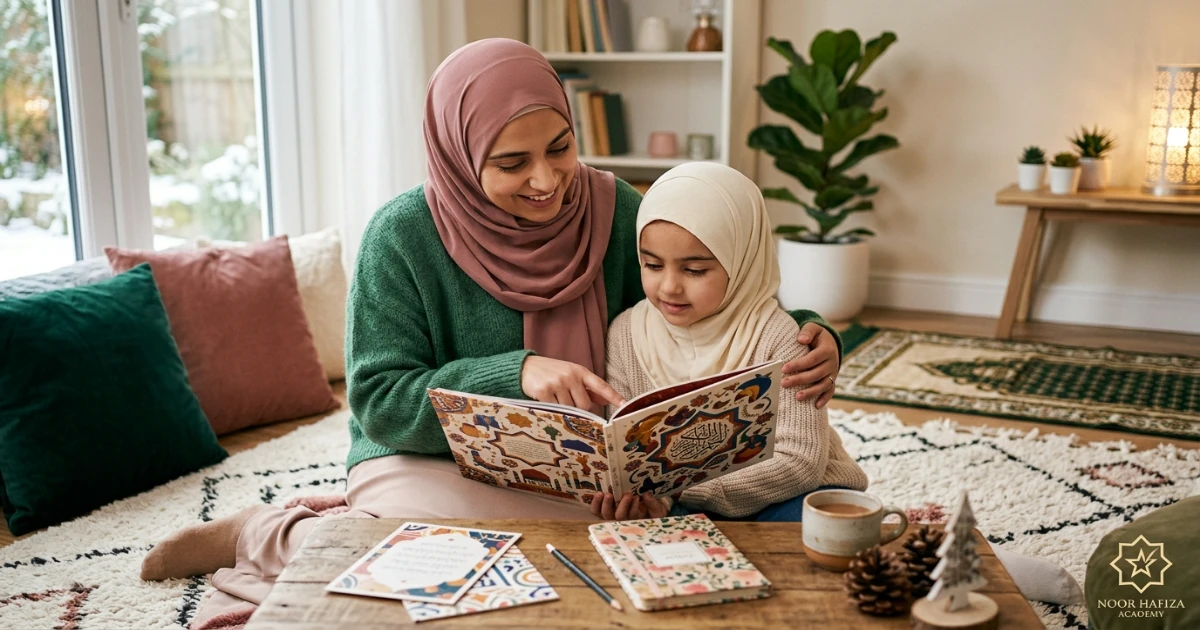
Winter break is one of the easier times to create a short family routine because school mornings and homework may be reduced. Family Quran time does not need to be long or formal.
A parent or older child can read, then younger children follow or repeat.
Ask one question about meaning, character, or application.
Choose a dua, manner, or practice the family will remember that day.
The goal is connection rather than performance. Avoid turning family Quran time into a public test where each child is corrected in front of siblings unless that is comfortable and constructive for the child.
Use winter break to repair Hifz before adding more
A school holiday can be a valuable time to strengthen memorization because children may have fewer academic demands. But this does not mean they should suddenly double their new Hifz target.
New lesson
Add a small portion only if recent and old revision are stable.
Recent revision
Review the last days or weeks of memorization carefully.
Old revision
Use a rotation to strengthen older Surahs that have become weak.
Teacher check
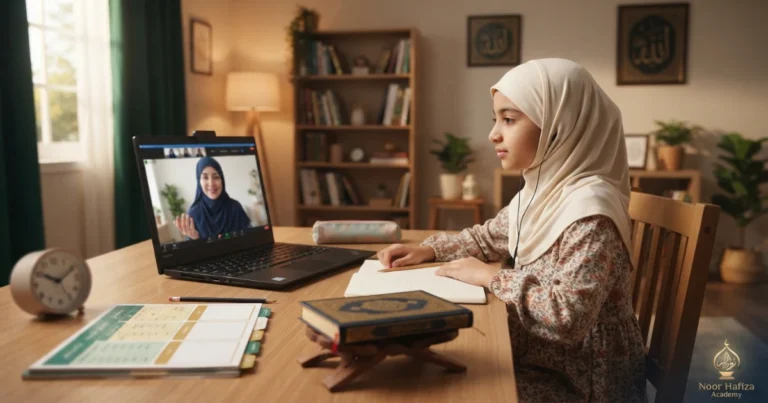
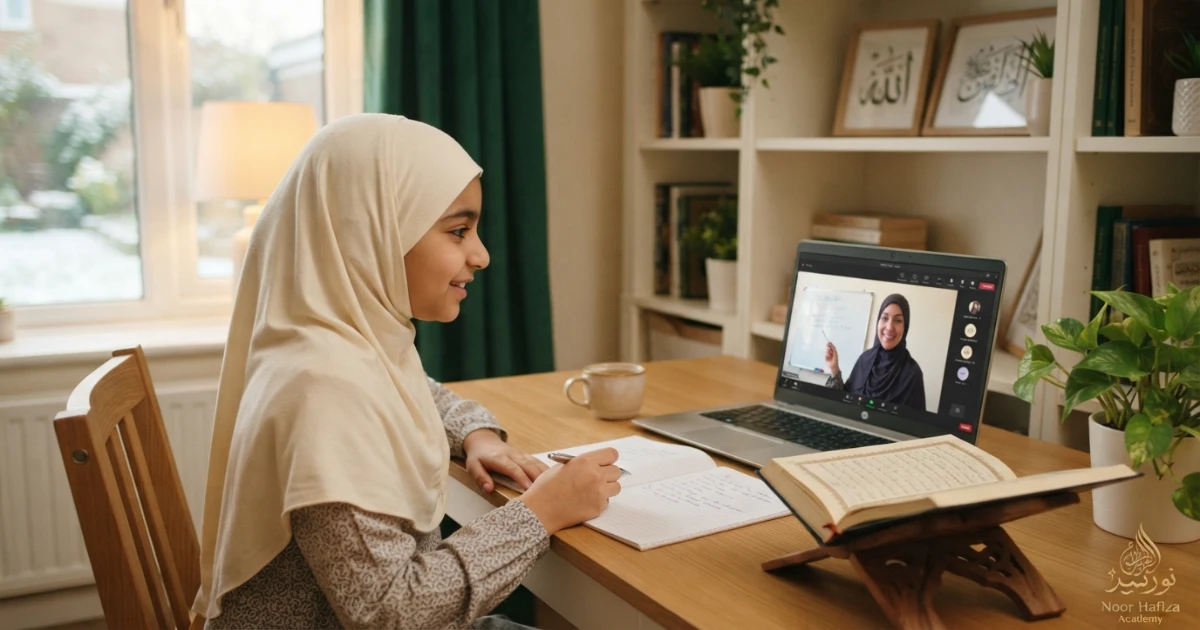
Use a live lesson to identify forgotten transitions and Tajweed errors.
If old memorization is weak, winter break is an excellent time for a revision-first period. Strengthening existing Hifz can prepare the child for better progress when school resumes.

Add Seerah, duas, and adab without overloading the break
Winter break is a good time for Islamic learning that does not feel like a worksheet. Families can choose one theme for the week rather than trying to cover a full curriculum.
| Theme | Simple family activity | Age adaptation | Keep it short |
|---|---|---|---|
| Seerah | One story + timeline point | More context for older children | 10–15 min |
| Daily duas | Learn one dua + use it | Meaning for older children | 5–10 min |
| Adab | One family behavior challenge | Reflection for teens | 5–10 min |
| Salah | Review one part / habit | Technique vs meaning | 10 min |
What should the Quran routine look like during travel?
Travel days should usually use a minimum routine. Families may be visiting relatives, staying in hotels, flying, or spending long hours in a car. Trying to maintain the full home plan can create unnecessary pressure.
Read a few lines or review a Qaida page.
Use Quran listening during suitable travel periods without replacing independent reading completely.
Review a short Surah or recent memorization without carrying extra materials.
If travel becomes especially tiring, one missed day is not a failure. Resume with a light review when the family settles again.
How to manage Quran learning for multiple children
Siblings often have different Quran levels. A family plan should therefore have a shared time but separate targets.
| Child | Shared family time | Individual target | Parent role |
|---|---|---|---|
| Young beginner | Listen / repeat | Letters / Qaida | Stay nearby |
| Developing reader | Read one passage | Fresh Quran reading | Prompt lightly |
| Hifz student | Recite memorized Surah | Revision system | Track consistency |
| Teenager | Discuss meaning | Independent study | Respect ownership |
How many online Quran classes during winter break?
The right number depends on the child’s age, program, travel plans, and current teacher schedule. Some families may keep the normal school-term schedule. Others may add a temporary extra lesson to strengthen reading or Hifz. The important point is not to increase live classes so much that the child loses the benefit of rest.
A winter break lesson can be especially useful for assessment: the teacher can identify weak reading, repeated Tajweed mistakes, forgotten Hifz, or skills that need attention before school restarts.
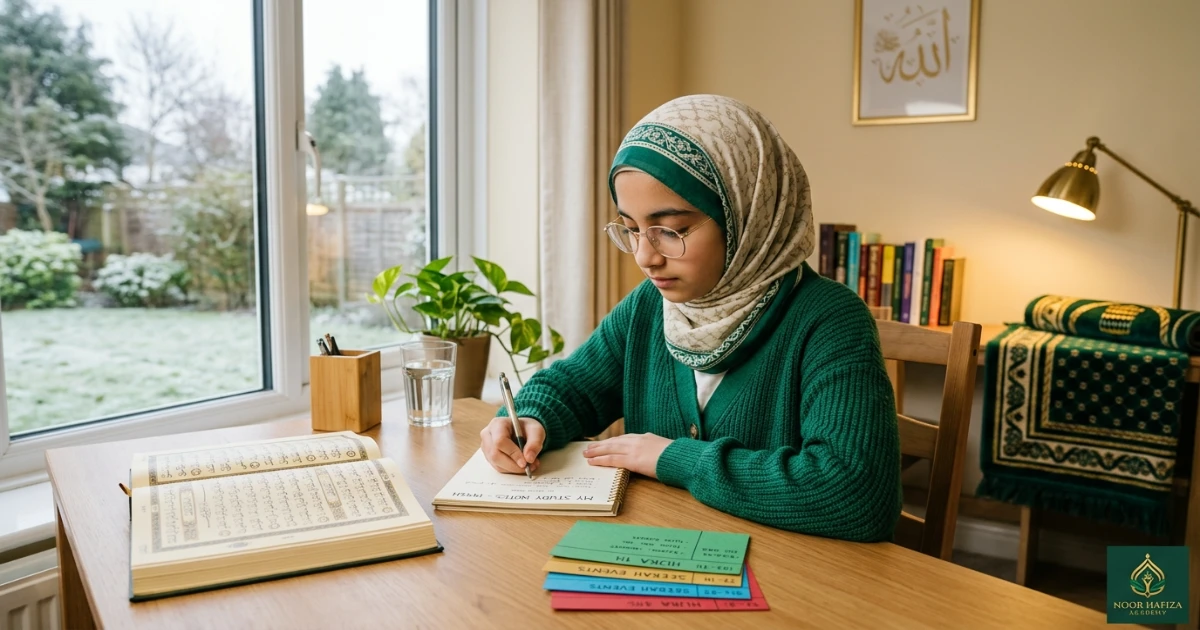
Sample two-week winter break Quran plan
| Period | Main goal | Quran task | Family activity |
|---|---|---|---|
| Days 1–3 | Settle into break | Light reading + review | Choose goals |
| Days 4–6 | Strengthen weak area | Reading / Tajweed / Hifz focus | Seerah story |
| Day 7 | Reset | Short review | Progress check |
| Days 8–10 | Continue steadily | Normal winter routine | Dua or adab |
| Days 11–13 | Prepare for school | Revision + fresh reading | Back-to-school routine |
| Day 14 | Transition | Light review | Set school-term schedule |
Do not let the winter routine disappear when school restarts
The final days of winter break should gradually return to the school-term Quran routine. If the child practised thirty minutes a day during the holiday but can realistically maintain only ten minutes during school, reduce the routine before the first school day.
Keep the strongest habit from the break. That might be five minutes of morning review, one weekend Seerah session, a better Hifz revision system, or a fixed online lesson time.
Common winter break Quran planning mistakes
Turning break into school
The family creates a long timetable and children lose the sense of rest.
Too many goals
Reading, Hifz, Tajweed, Seerah, duas, and Salah all become heavy at once.
Ignoring weak revision
New Hifz increases while old memorization remains fragile.
No travel plan
The routine collapses completely during visits or trips.
Comparing siblings
Children with different levels are expected to complete identical targets.
Using only worksheets
Islamic learning becomes academic instead of practical and family-centered.
No transition back to school
The holiday plan ends suddenly and Quran habits disappear in the first school week.
Expecting perfect daily consistency
One missed day becomes a reason to abandon the whole plan.
12 questions to build your winter break Quran plan
Use this before the break begins
- What is each child’s current Quran level?
- What is the one skill we most want to strengthen?
- How much daily time is realistic without creating stress?
- Which days will include travel, guests, or outings?
- What is our five-minute minimum routine for busy days?
- Does the Hifz student need revision more than new memorization?
- Which Tajweed correction should we focus on?
- What family Seerah, dua, or adab theme will we choose?
- How many live online lessons fit the break comfortably?
- How will siblings use shared family Quran time?
- What habit do we want to keep when school restarts?
- When will we review the plan and adjust it?
Winter break Quran classes for families at Noor Hafiza Academy
Noor Hafiza Academy offers live online Quran learning for children, girls, teenagers, siblings, homeschool families, adults, women, beginners, and returning readers with female Quran teachers. Families can ask about Noorani Qaida, Quran reading, Tajweed, Hifz, short Surahs, Seerah, daily duas, Islamic manners, and broader Islamic Studies according to age and level.
A winter break plan may include a temporary focus on reading fluency, Hifz revision, Tajweed correction, or Islamic Studies, followed by a lighter school-term routine. Current teacher qualifications, female-teacher availability, class length, schedules, trial arrangements, fees, rescheduling policies, privacy practices, safeguarding policies, and enrollment terms should be confirmed directly.
Share each learner’s age, Quran level, current goal, travel dates, preferred class days, and whether the focus is Qaida, Quran reading, Tajweed, Hifz, Seerah, duas, or Islamic Studies.
FAQs about winter break Quran learning plans
How much Quran should children study during winter break?
Should children take a complete break from Quran during school holidays?
What should a beginner practise during winter break?
What should a Hifz student do during winter break?
Can winter break be used to improve Tajweed?
How do we keep Quran learning going during travel?
Should siblings have the same winter Quran plan?
How often should families do Seerah or Islamic Studies during winter break?
Can children take extra online Quran classes during winter break?
How should the winter Quran plan change before school restarts?
What if we miss several winter Quran days?
What should I send when asking about winter break Quran classes?
Use winter break to strengthen Quran habits while protecting the rest, family time, and joy children also need
Share each learner’s age, Quran level, current goal, travel dates, preferred class days, and whether the focus is Qaida, Quran reading, Tajweed, Hifz, Seerah, duas, or Islamic Studies.