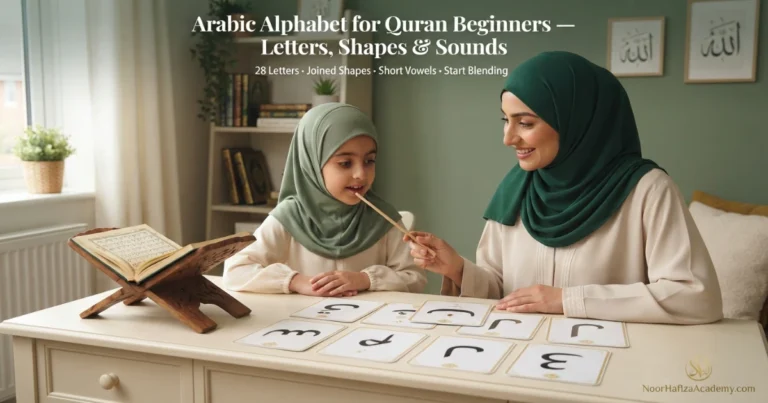
Idgham With Ghunnah vs Without Ghunnah

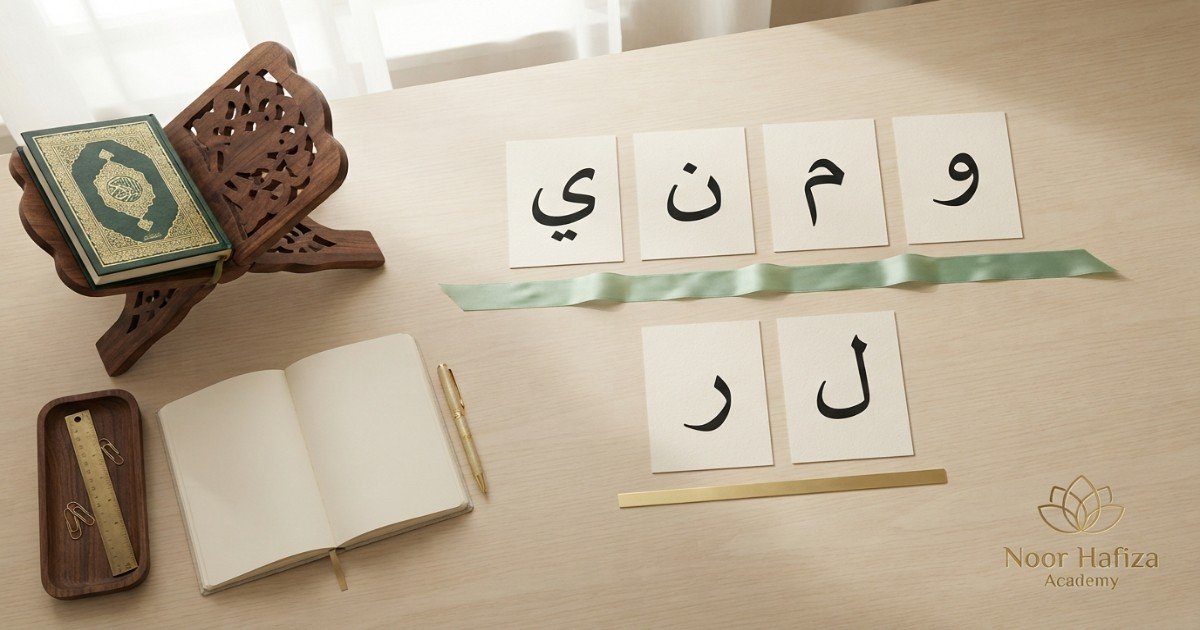
Idgham with Ghunnah vs without Ghunnah is one of the most important distinctions in the Noon Sakinah and Tanween rules. Both types are forms of Idgham, meaning the Noon Sakinah or Tanween sound merges into the next letter. The difference is what happens to the nasal Ghunnah. With ي ن م و, the merge carries a controlled Ghunnah, commonly taught as about two counts. With ل and ر, the Noon/Tanween merges directly into the next letter without holding that nasal Ghunnah. All six letters are commonly remembered through يرملون (Yarmaloon), but beginners should split the group immediately into ينمو for with-Ghunnah and ل ر for without-Ghunnah. This guide compares the two rules side by side, explains how each should sound, shows practical patterns, and gives a simple method for avoiding the most common mistakes.
What is the difference between Idgham with Ghunnah and without Ghunnah?
Idgham with Ghunnah happens when Noon Sakinah or Tanween is followed by ي ن م و. The Noon/Tanween merges into the next letter while a nasal Ghunnah is held, commonly about two counts. Idgham without Ghunnah happens before ل or ر. The Noon/Tanween still merges, but the reader does not hold the same nasal Ghunnah. The easiest memory system is: all six Idgham letters are يرملون; the four with Ghunnah are ينمو; the two without Ghunnah are ل ر.
Both are Idgham—but the sound is different
Beginners sometimes think “Idgham” is one single sound. It is better to think of it as one rule family with two main pronunciation types in the Noon Sakinah and Tanween chapter. In both types, you do not pronounce a full separate Noon and then start the next letter. The Noon/Tanween is merged into the next letter. What changes is whether a held nasal Ghunnah remains during that merge.
Once you recognize the next letter, the answer is usually immediate.
The six Idgham letters and their two groups
These six letters form the well-known mnemonic يرملون. The most useful next step is to split them into two smaller groups.
Idgham with Ghunnah
Ya, Noon, Meem, and Waw. The Noon/Tanween merges into the next letter while a controlled nasal Ghunnah remains.
Idgham without Ghunnah
Lam and Ra. The Noon/Tanween merges directly into the next letter without the held nasal Ghunnah used in the first group.
What is Idgham with Ghunnah?
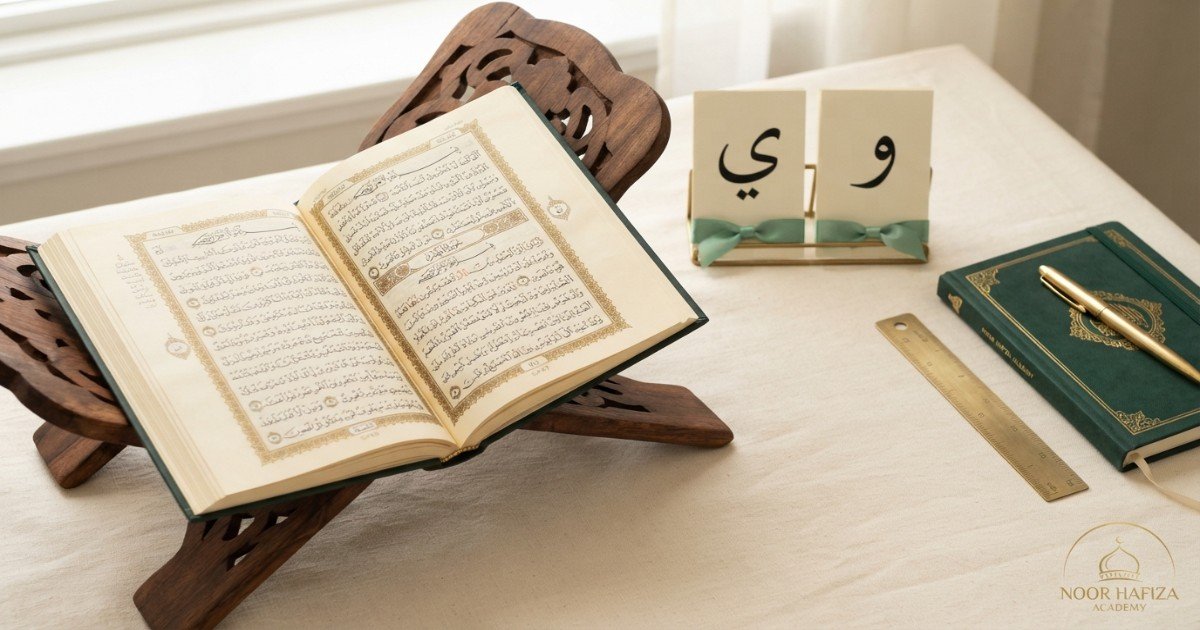
Idgham with Ghunnah, or Idgham bi Ghunnah, happens when Noon Sakinah or Tanween is followed by one of four letters:
The Noon/Tanween merges into the next letter and the reciter maintains a nasal Ghunnah during the transition. In common beginner instruction, this Ghunnah is held for about two counts.
Merge into Ya with Ghunnah.
Merge into Noon with Ghunnah.
Merge into Meem while maintaining Ghunnah.
Merge into Waw with controlled Ghunnah.
What is Idgham without Ghunnah?
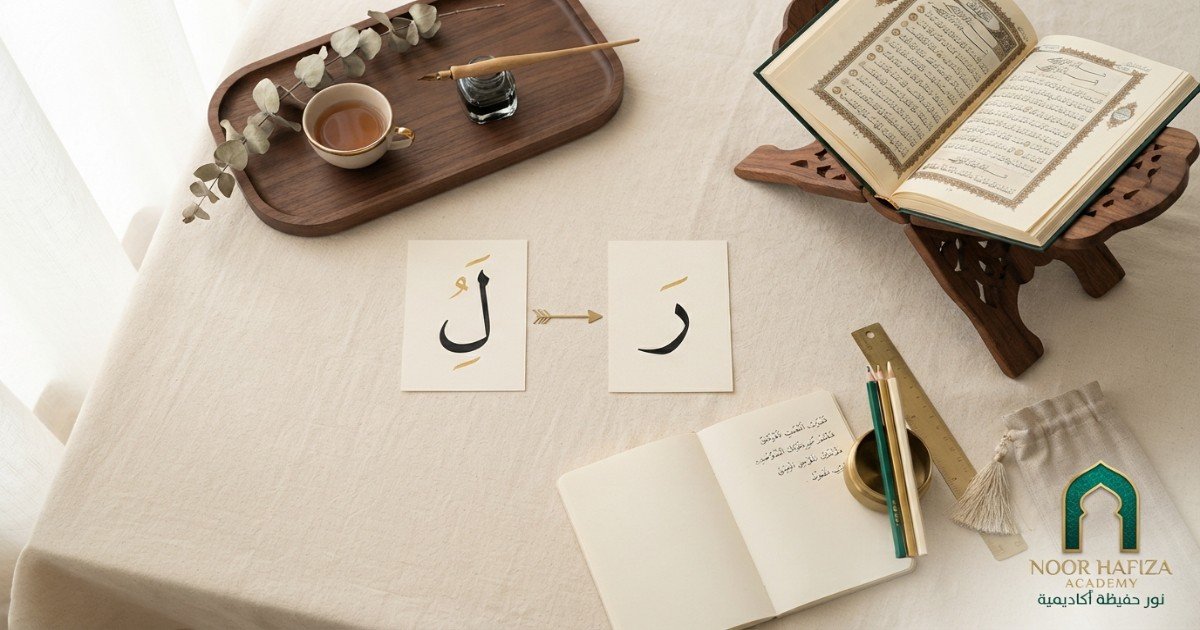
Idgham without Ghunnah, or Idgham bila Ghunnah, happens when Noon Sakinah or Tanween is followed by Lam (ل) or Ra (ر).
Here, the Noon/Tanween merges directly into Lam or Ra without holding the two-count nasal Ghunnah used in the ي ن م و group. The learner should hear the Lam or Ra clearly rather than a lingering “n” sound.
The difference is not whether merging happens; the difference is whether the held Ghunnah accompanies the merge.

Idgham with Ghunnah vs without Ghunnah at a glance
| Feature | With Ghunnah | Without Ghunnah |
|---|---|---|
| Letters | ي ن م و | ل ر |
| Mnemonic | ينمو | Lam + Ra |
| Main action | Merge Noon/Tanween | Merge Noon/Tanween |
| Held nasal sound | Yes | No held Ghunnah |
| Common timing | About two counts | Direct transition |
| Common mistake | Too much/too little Ghunnah | Adding nasal hold |
How should Idgham with Ghunnah sound?
The Noon/Tanween should not sound as a complete separate “n.” Instead, the sound flows into the following Ya, Noon, Meem, or Waw while the Ghunnah remains audible. The Ghunnah should be controlled: not rushed away and not stretched into an exaggerated hum.
Let the Ghunnah carry the merge.
Do not insert a pause between the words.
The Noon should not be completed before the next letter begins.
How should Idgham without Ghunnah sound?
With Lam or Ra, the Noon/Tanween merges directly into the following letter. The learner should not hold the same nasal Ghunnah used with Ya, Noon, Meem, or Waw.
Do not keep a lingering “n” sound before Lam.
Move into Ra without the held nasal Ghunnah.
Direct merging does not mean pausing or rushing.

How the rule works with Noon Sakinah and Tanween
The same two Idgham types apply whether the trigger is Noon Sakinah or Tanween. The written sign changes, but the decision process is the same.
| Trigger | Next letter | Rule | What to do |
|---|---|---|---|
| Noon Sakinah | ي ن م و | Idgham with Ghunnah | Merge + nasal Ghunnah |
| Tanween | ي ن م و | Idgham with Ghunnah | Merge + nasal Ghunnah |
| Noon Sakinah | ل ر | Idgham without Ghunnah | Direct merge |
| Tanween | ل ر | Idgham without Ghunnah | Direct merge |
Why Idgham normally happens across two words
For the standard Noon Sakinah and Tanween Idgham rule, the Noon Sakinah or Tanween is normally at the end of one word and the Idgham letter begins the next word. This matters because Noon Sakinah followed by Ya or Waw inside the same word is not automatically read with Idgham in the well-known exception words. Instead, the Noon remains clear; this is commonly taught under Izhar Mutlaq.
Do not apply Idgham blindly inside one word
Check the word boundary before merging.
Remember the common exception words
Often-taught examples include الدنيا, بنيان, صنوان, and قنوان.
Simple comparison patterns for beginners
| Pattern | Type | Sound | Main cue |
|---|---|---|---|
| نْ + ي | With Ghunnah | Merge + nasal hold | Ya ∈ ينمو |
| نْ + م | With Ghunnah | Merge + nasal hold | Meem ∈ ينمو |
| ٌ + و | With Ghunnah | Tanween merges with Ghunnah | Waw ∈ ينمو |
| ٍ + ن | With Ghunnah | Tanween merges with Ghunnah | Noon ∈ ينمو |
| نْ + ل | Without Ghunnah | Direct merge into Lam | No held nasal sound |
| ً + ر | Without Ghunnah | Direct merge into Ra | No held nasal sound |
Why beginners mix the two Idgham types
They memorize يرملون only
Knowing all six letters is not enough; the six must be split into two sound groups.
They assume “Idgham = Ghunnah”
Lam and Ra prove that Idgham can happen without the held nasal sound.
They over-hold Lam and Ra
A nasal hold is added where the rule calls for direct merging.
They pronounce a clear Noon first
Both types are merging rules, so a complete separate Noon is incorrect.
They ignore the next letter
The rule type is determined by what follows Noon Sakinah or Tanween.
They practise only mnemonics
Recognition must transfer to actual Quran reading, not remain a memory exercise.
How to choose the correct Idgham type in seconds
Look for Noon Sakinah or one of the Tanween signs.
Identify the first letter that follows.
If not, this is not the standard Idgham trigger.
Merge with the controlled nasal hold.
Merge directly into Lam or Ra.
Apply the rule without pausing to name it aloud.
How long is the Ghunnah in Idgham with Ghunnah?
In common beginner Tajweed instruction, the Ghunnah for Idgham with Ghunnah is held for about two counts. These counts are relative units of recitation, not fixed clock seconds. With Lam and Ra, do not hold that two-count nasal Ghunnah; the merge should move directly into the following letter.
Written rules can tell you when to use Ghunnah, but live teacher feedback helps you hear how much is enough.
How both Idgham types differ from Izhar, Ikhfa, and Iqlab
| Rule | Main action | Ghunnah? | Trigger group |
|---|---|---|---|
| Izhar | Pronounce Noon clearly | No extra held Ghunnah | 6 throat letters |
| Idgham with Ghunnah | Merge | Yes | ي ن م و |
| Idgham without Ghunnah | Merge | No held Ghunnah | ل ر |
| Iqlab | Convert toward hidden Meem | Yes | ب |
| Ikhfa | Conceal Noon | Yes | 15 letters |
Why teacher feedback matters for this comparison
The difference between the two Idgham types is mostly auditory. A student may understand the chart perfectly but still hold too much Ghunnah with Lam, rush the Ghunnah with Waw, or pronounce a clear Noon before Ra. A teacher can compare the sounds back to back so the learner hears the contrast directly. Repeating short paired examples also helps the ear recognize when nasal resonance should remain and when the merge should move directly into Lam or Ra.
12-point Idgham with/without Ghunnah checklist
Use this while reading fresh Quran text
- Can I identify Noon Sakinah and Tanween?
- Is the next letter one of يرملون?
- Can I split يرملون into ينمو and ل ر?
- If the next letter is ي ن م و, am I using Ghunnah?
- Is the Ghunnah controlled rather than exaggerated?
- If the next letter is ل or ر, am I avoiding the held nasal Ghunnah?
- Am I merging instead of pronouncing a full separate Noon?
- Am I checking the word boundary before applying standard Idgham?
- Can I recognize the same rule with Tanween?
- Can I hear the difference between with-Ghunnah and without-Ghunnah examples?
- Can I apply both types without naming them first?
- Can I find both types correctly in an unfamiliar Quran passage?

Learn both Idgham types in online Tajweed lessons
Noor Hafiza Academy offers live online Quran learning for children, girls, women, adults, beginners, returning readers, teenagers, siblings, and homeschool families with female Quran teachers. Learners can ask about Noorani Qaida, Quran reading, Tajweed, Makharij, Hifz, and pronunciation correction according to their current level.
A beginner Tajweed plan may include Izhar, Idgham with Ghunnah, Idgham without Ghunnah, Iqlab, Ikhfa, Meem Sakinah, Qalqalah, Madd, Ghunnah, Waqf, and guided recitation. Current teacher qualifications, female-teacher availability, class length, trial arrangements, fees, schedules, privacy practices, safeguarding policies, and enrollment terms should be confirmed directly.
Share the learner’s age, Quran level, Tajweed background, pronunciation difficulty, preferred schedule, and whether a female teacher is requested.
FAQs about Idgham with Ghunnah vs without Ghunnah
What is Idgham with Ghunnah?
What is Idgham without Ghunnah?
What are the Idgham with Ghunnah letters?
What are the Idgham without Ghunnah letters?
How many total Idgham letters are there?
How long is the Ghunnah in Idgham with Ghunnah?
Do Lam and Ra use any held Ghunnah?
Do both types still merge the Noon or Tanween?
Does standard Idgham usually happen across two words?
What is the easiest way to remember the two groups?
What is the most common beginner mistake?
How should beginners practise the difference?
Master Idgham by hearing the difference between a merge with Ghunnah and without Ghunnah
Share the learner’s age, Quran level, Tajweed background, main pronunciation difficulty, and preferred class schedule.