How to Prepare for Your First Online Quran Class
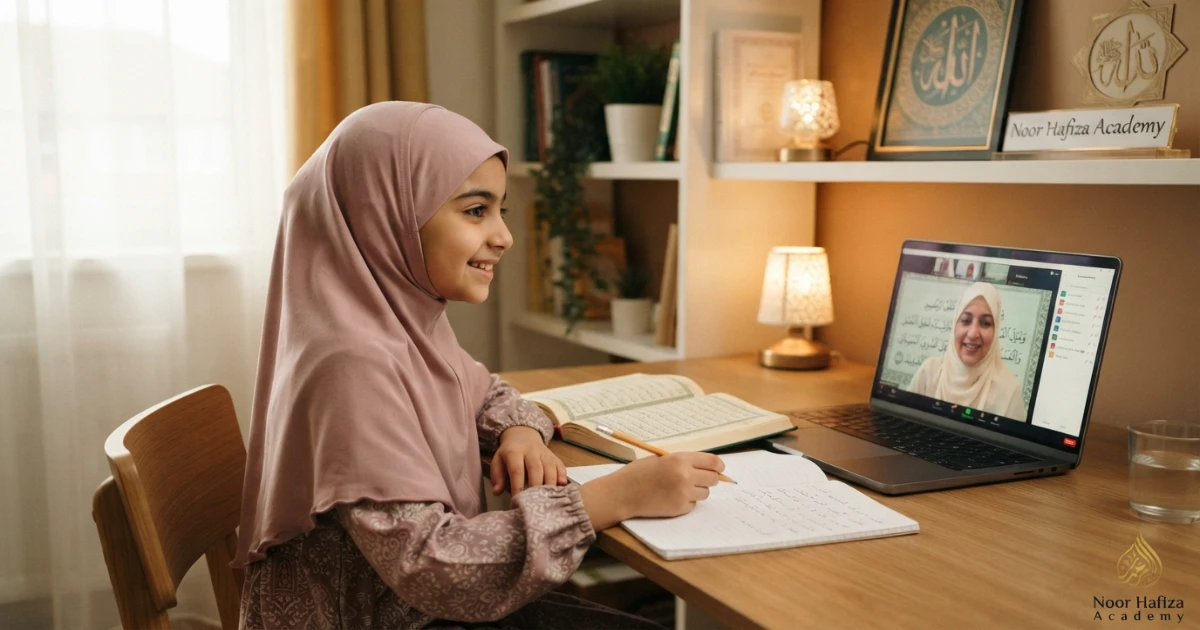
Preparing for your first online Quran class is mostly about removing avoidable stress. You do not need advanced Arabic, perfect Tajweed, expensive equipment, or a long list of materials. You need a working device, stable internet, clear audio, the Quran or Noorani Qaida if you already use one, a quiet study space, and a basic idea of your goals. For children, parents can help by testing the device, opening the meeting link, preparing the correct book, and explaining that the first lesson is not an exam. For adults, new Muslims, returning readers, and complete beginners, the teacher may spend part of the class listening to a short reading sample, checking Arabic letters or pronunciation, asking about past experience, and deciding what level to begin from. A good first class should leave you with a clearer plan, not pressure to perform.
How should you prepare for your first online Quran class?
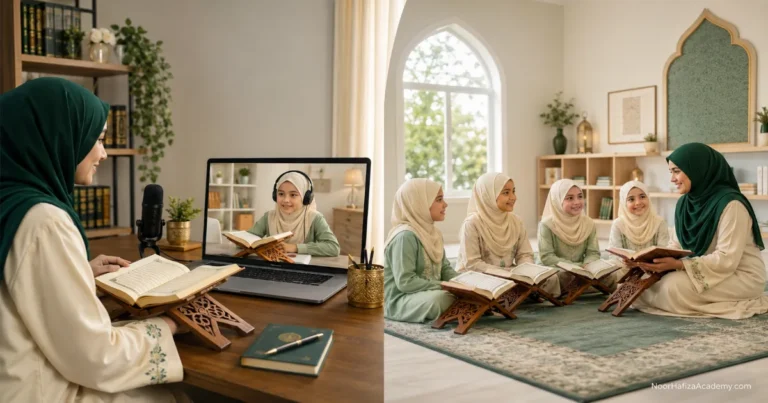
Before your first online Quran class, test the device, internet, microphone, and camera if used; prepare your Quran, Noorani Qaida, notebook, and pencil; choose a quiet, well-lit place; and join around five to ten minutes early. Be ready to explain your current level and what you want to improve. A beginner may be asked to identify Arabic letters or read simple words. A returning reader may be asked to recite a short passage. A Tajweed student may be checked for repeated pronunciation or rule errors. Parents should tell children that the first class is a friendly assessment, not a test. After class, write down the teacher’s main feedback, homework, and the next learning goal.
Your first online Quran class preparation checklist
The easiest way to feel prepared is to handle practical details before the lesson begins. Most first-class stress comes from avoidable issues such as a microphone that does not work, a child who cannot find the Qaida, or a parent trying to locate the meeting link after the teacher has already joined. A small amount of preparation allows the teacher to spend class time on the learner rather than troubleshooting.
Test the technology
Check the meeting app, microphone, speaker, camera permissions, charger, and internet connection.
Prepare the material
Keep the Quran, Qaida, notebook, pencil, and any prior lesson material beside the learner.
Choose the study space
Use a quiet desk or stable area with enough light and as little household interruption as possible.
Know the goal
Think about whether the priority is reading, Tajweed, Hifz, short Surahs, or restarting after a gap.
What usually happens in a first online Quran class?
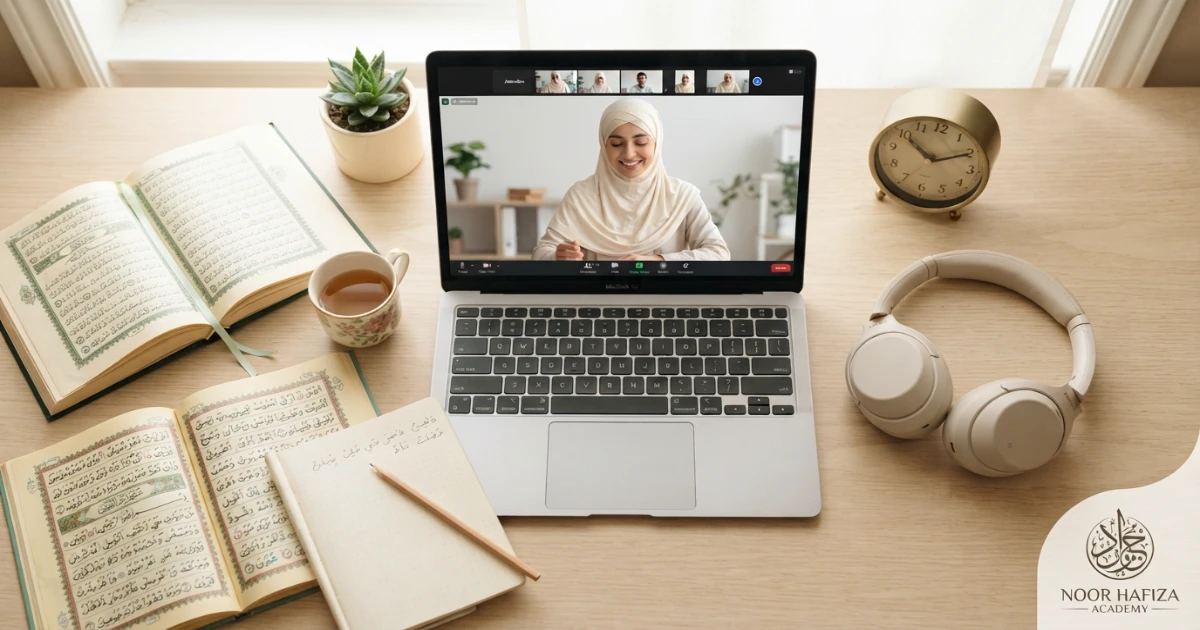
A first class may be part introduction, part assessment, and part teaching. The exact structure depends on the academy and learner, but a useful first lesson generally helps the teacher understand what the student already knows and what should happen next. The teacher may begin with a few simple questions, then ask the learner to read, listen, repeat, or recite a familiar passage. The goal is not to expose mistakes for their own sake; it is to identify the first useful teaching target.
The teacher learns the student’s age, Quran background, goals, and previous learning experience.
The learner may read letters, Qaida combinations, a short passage, or a familiar Surah.
The teacher demonstrates how pronunciation, Tajweed, or reading errors will be corrected.
Teacher and learner identify the first priority instead of trying to improve everything at once.
The student receives a short assignment or review target for the next lesson.
The family confirms whether the chosen lesson time feels realistic and sustainable.
How the teacher may assess your Quran level
The first assessment should match the learner. A complete beginner should not be asked to perform advanced Tajweed. A strong reader should not automatically be sent back to the alphabet without evidence of a foundation problem. Good placement saves time and helps the learner feel that the course is relevant.
| Learner | What may be checked | What the teacher learns | Possible next step |
|---|---|---|---|
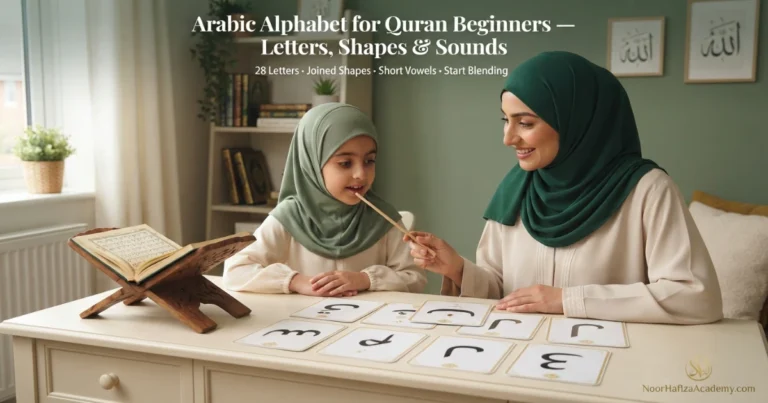
| Complete beginner | Arabic letter recognition | Whether to start from alphabet or Qaida | Letter/sound foundation |
| Qaida student | Harkaat, joining, Sukoon, Shaddah | Where decoding becomes unstable | Targeted Qaida review |
| Quran reader | Short unfamiliar passage | Fluency, Makharij, Waqf, repeated errors | Reading + Tajweed plan |
| Hifz student | New and old memorization | Retention and pronunciation quality | Sabaq/revision structure |
Prepare a calm study space before the lesson
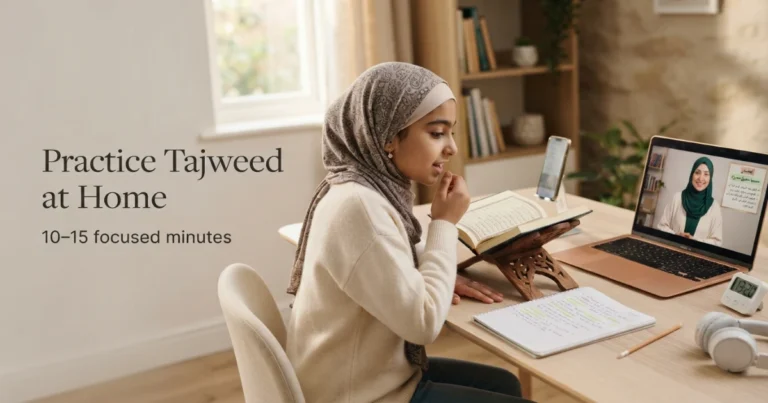
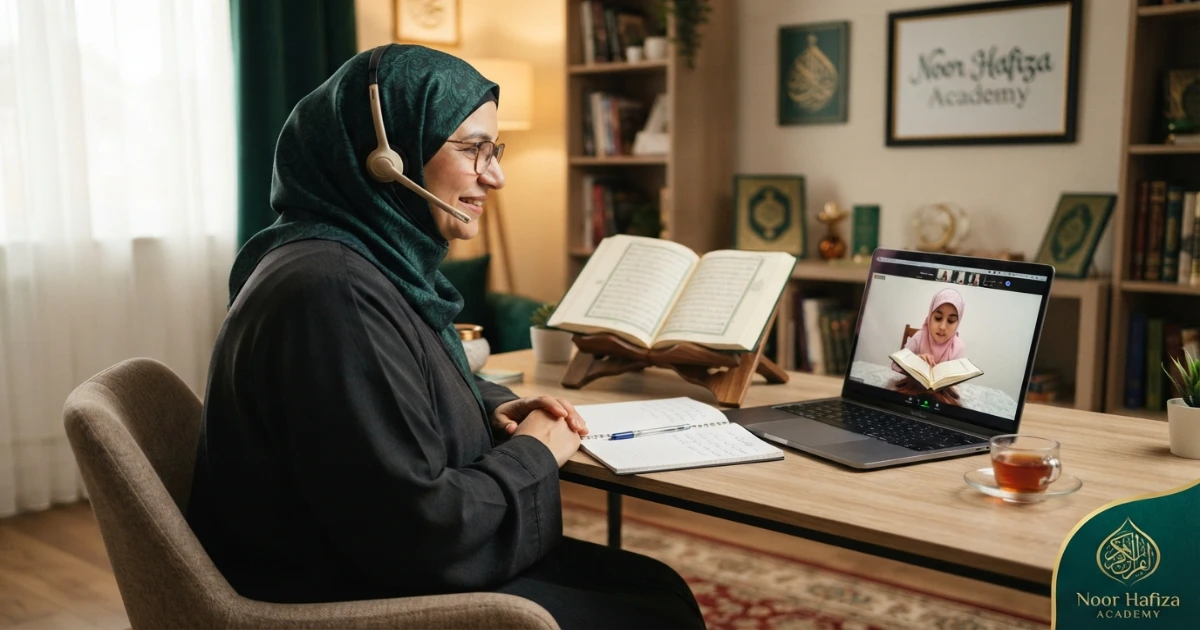
The first lesson feels easier when the learner is not balancing a phone in one hand, searching for a pencil, or listening to a television in the next room. The study area does not need to be a dedicated classroom. A desk, dining table, or quiet corner can work if the device is stable and distractions are controlled.
Use a desk, stand, or secure position so the screen does not move while the learner reads.
Keep the Mushaf or Qaida ready and easy to see without blocking the camera.
Move away from television, kitchen traffic, conversations, and sibling play when possible.
If several family members study online at the same time, separate the rooms or use headsets where practical so teachers can hear recitation clearly.
How parents should prepare a child for the first Quran class
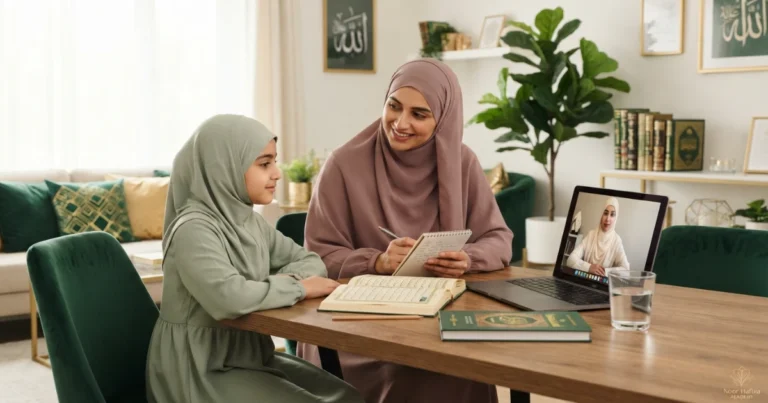
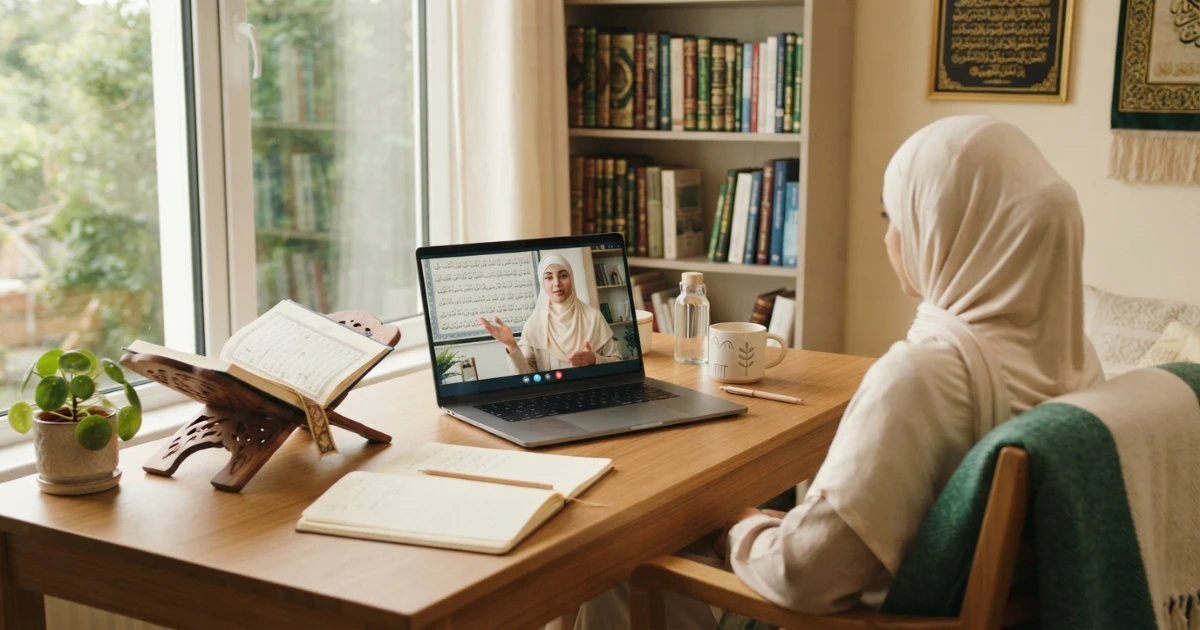
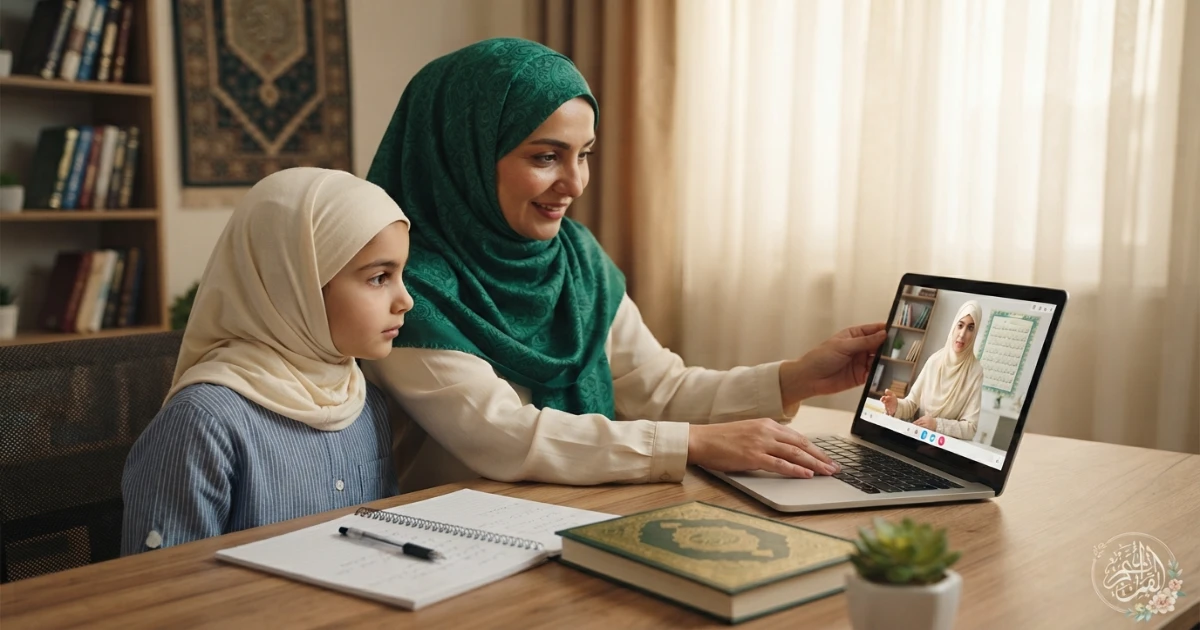
Children often take emotional cues from parents. If the parent describes the first class as a serious test, the child may become anxious before meeting the teacher. A better explanation is that the teacher wants to hear how the child currently reads so the lessons can start at the right place. Keep the explanation short and calm.
Explain simply
Tell the child who the teacher is and what will happen without giving a long speech.
Prepare early
Open the device and lesson material before the scheduled time.
Avoid over-coaching
Do not rehearse answers so heavily that the teacher cannot see the child’s real level.
Stay nearby if needed
Young children may need parent help with technology, but let the teacher interact directly with the learner.
How adults, new Muslims, and returning readers can prepare
Adults sometimes feel embarrassed about starting from the alphabet, returning after years away from Quran reading, or making pronunciation mistakes in front of a teacher. The first lesson should establish the current level without shame. Honest placement is faster than pretending to be more advanced and then struggling in every later class.
If you know no Arabic, say so clearly. If you can read but do not know Tajweed terminology, say that. If you memorized Surahs by listening but struggle to decode Arabic text, tell the teacher. Accurate information helps the teacher choose the right starting point.
A first class is most useful when the teacher can see the real problem, whether it is letters, fluency, Makharij, Tajweed, Hifz retention, or confidence.
Decide what you want from online Quran classes
You do not need a perfect long-term plan before the first lesson, but it helps to identify the main reason for enrolling. The teacher can then turn a broad wish such as “I want to improve my Quran” into a measurable first goal.
Learn to read
Start from Arabic letters, Qaida, or Quran reading depending on the assessment.
Improve Tajweed
Correct pronunciation, Makharij, Madd, Ghunnah, Qalqalah, or Waqf.
Memorize Quran
Build a realistic Hifz and revision routine with teacher listening.
Build consistency
Create a regular Quran routine after a long gap or repeated starts and stops.
What should you have beside you during the first lesson?
| Item | Why it helps | Required? | Tip |
|---|---|---|---|
| Quran / Mushaf | Reading assessment and recitation practice | Often useful | Use the edition you normally read unless told otherwise |
| Noorani Qaida | Beginner assessment | If applicable | Confirm the teacher’s preferred edition |
| Notebook | Record corrections and goals | Recommended | Keep notes simple |
| Headphones | Clearer sound in a noisy home | Optional | Use only if comfortable |
| Previous progress notes | Shows prior level or curriculum | Optional | Useful when changing teachers |
Questions you should ask in the first Quran class
The first lesson is also your chance to understand the teacher’s method. A student or parent should leave knowing what the teacher noticed, what course track is appropriate, and what happens next.
Ask these before the class ends
- What level do you think I should start from?
- What are my one or two biggest reading or Tajweed weaknesses?
- Which course track fits me best right now?
- How long should I practise between lessons?
- Which Quran or Qaida edition should I use?
- Will you give specific homework after each class?
- How do you track reading, Tajweed, or Hifz progress?
- How often will goals be reviewed?
- What should I prepare before the next lesson?
- How do you handle missed classes or technical problems?
- What is the expected class length for my age and level?
- How can I contact the academy if the schedule needs to change?

Mistakes to avoid before your first online Quran class
Joining exactly on time
A small microphone or login problem immediately makes the learner late.
Trying to appear more advanced
The teacher gets an inaccurate picture of the learner’s real starting level.
No Quran or Qaida ready
Class time is lost finding the correct book or page.
Using a noisy room
Pronunciation correction becomes difficult because the teacher cannot hear clearly.
Parent answering for the child
The teacher cannot assess what the child can do independently.
Expecting a full curriculum in one class
A useful first lesson may focus mainly on assessment and a small correction.
Choosing a bad schedule
The teacher fit is judged when the real problem is that the learner is exhausted at that hour.
Leaving without next steps
The student does not know what to practise or what the next lesson will focus on.
What should you do after your first online Quran class?
Record the most important pronunciation, reading, Tajweed, or Hifz target.
Make sure the recurring time, meeting link, and teacher assignment are clear.
Use the teacher’s assigned lines or drill instead of creating a new study plan yourself.
Parents can also ask the child how the class felt: Was the teacher easy to understand? Did the lesson feel too easy or too difficult? Was the time of day workable? This feedback should be considered alongside the teacher’s professional assessment, not used as the only measure of quality.

How to decide whether the first class is a good fit
Look beyond whether the teacher was “nice”
- Did the teacher assess the learner rather than assume the level?
- Were corrections specific and understandable?
- Did the learner get enough time to attempt independently?
- Was the teacher patient without lowering standards?
- Did the class feel appropriate for the learner’s age?
- Was the lesson time realistic for attention and family routine?
- Did the teacher explain the next learning goal?
- Did the student or parent understand what to practise next?
Preparing for your first Noor Hafiza Academy online Quran class
Noor Hafiza Academy offers live online Quran learning for girls, women, children, adults, new Muslims, complete beginners, returning readers, teenagers, siblings, and homeschool families with female Quran teachers. Learners can ask about Noorani Qaida, Quran reading, Tajweed, Hifz support, and Islamic Studies according to their current level and goals.
Before the first lesson, families should confirm current teacher availability, meeting platform, class length, Quran or Qaida requirements, camera expectations, trial arrangements, fees, scheduling, privacy practices, safeguarding policies, and enrollment terms directly.
Share the learner’s age, current Quran level, previous experience, goals, preferred schedule, and whether a female teacher is requested.
FAQs about preparing for your first online Quran class
What do I need for my first online Quran class?
Should I study before my first Quran lesson?
Will the first class include a Quran reading test?
What if I know no Arabic at all?
What if my child is nervous?
Should parents stay during the first online Quran class?
How early should I join the class?
Do I need a webcam for the first class?
What should I ask the Quran teacher in the first lesson?
How do I know if the teacher is a good fit?
What should I do after the first Quran class?
Can the first class be a trial lesson?
Prepare calmly, arrive ready, and let your first Quran class reveal the right next step
Share the learner’s age, current Quran level, previous experience, main goals, preferred schedule, and whether a female teacher is requested.