Quran Classes for New Muslims: Where Should a Beginner Start?
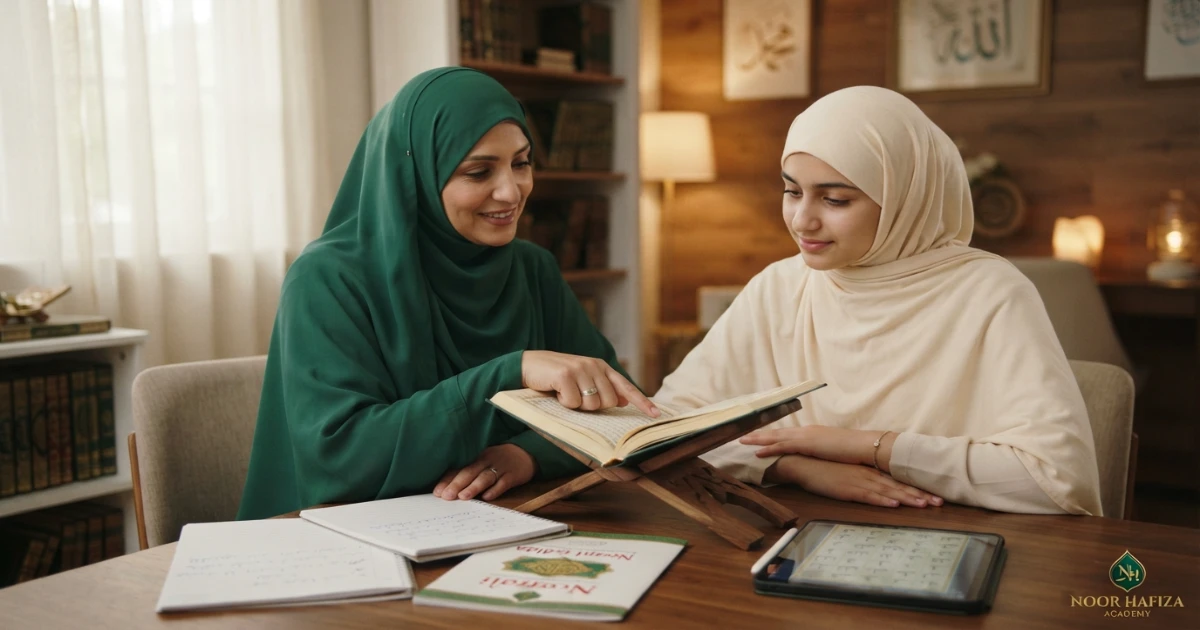
Quran classes for new Muslims should begin with clarity, not pressure. Some beginners cannot yet recognize Arabic letters. Others can read Arabic from childhood, speak Arabic, or already know a few Surahs. The right starting point therefore depends on the learner. A complete beginner may begin with Arabic letters and Noorani Qaida while also learning short prayer recitations by listening and repetition. A learner who can already decode Arabic may begin with controlled Quran reading and basic Tajweed. New Muslims should not be expected to understand every rule before reading or memorize large portions immediately. The strongest first course is one that gives a clear level assessment, respectful correction, manageable practice, and visible progress.
Where should a new Muslim begin Quran classes?
A new Muslim should begin with a simple level assessment. If the learner cannot recognize Arabic letters, start with letter sounds, basic Arabic reading, and a beginner text such as Noorani Qaida while also learning essential prayer recitations and short Surahs by listening and repetition. If the learner already reads Arabic, begin with a short familiar and unfamiliar Quran passage to identify pronunciation, fluency, stopping, and Tajweed needs. The first course should focus on accurate reading and confidence rather than advanced terminology or large memorization targets. One or two live lessons each week with a qualified teacher plus 10 to 15 minutes of short home practice can be enough to establish a sustainable beginning. New Muslims should also be given room to ask basic questions without embarrassment.
New Muslims may begin Quran learning at very different levels
The phrase “new Muslim” describes a person’s stage in Islam, not necessarily her Quran reading level. One convert may have never seen Arabic script before. Another may speak Arabic but never learned formal Quran recitation. Someone from an Arabic-speaking family may recognize every letter. Another learner may have studied Islam for months before taking shahadah and already know Al-Fatihah or short Surahs.
For that reason, a good Quran academy should not automatically place every new Muslim on the first page of a beginner book. The teacher should first find out what the learner can already recognize, read, pronounce, remember, and understand.
That question leads to a respectful plan based on ability rather than labels.
The learner’s immediate religious needs also matter. Someone learning the words required for prayer may need guided listening and pronunciation while her reading foundation is still developing. This does not mean skipping reading instruction. It means the plan can have more than one short beginner track at the same time.
What should happen in a beginner Quran level assessment?
A beginner assessment should be calm, private, and short. The learner should not feel as though she is being tested on Islam. The teacher is simply deciding where Quran instruction should begin.
Learning history
Has the learner ever studied Arabic script, Quran reading, Arabic language, or short Surahs?
Letter recognition
The teacher checks whether Arabic letters are recognized in isolated and joined forms.
Sound production
A few sounds are heard to identify whether pronunciation needs beginner support.
Reading sample
If the learner can read, she attempts a short familiar and unfamiliar passage.
Prayer recitation
The teacher asks which short recitations or Surahs the learner is currently practising.
Practical goal
The learner chooses a realistic first target such as reading letters, Al-Fatihah, or short Quran reading.
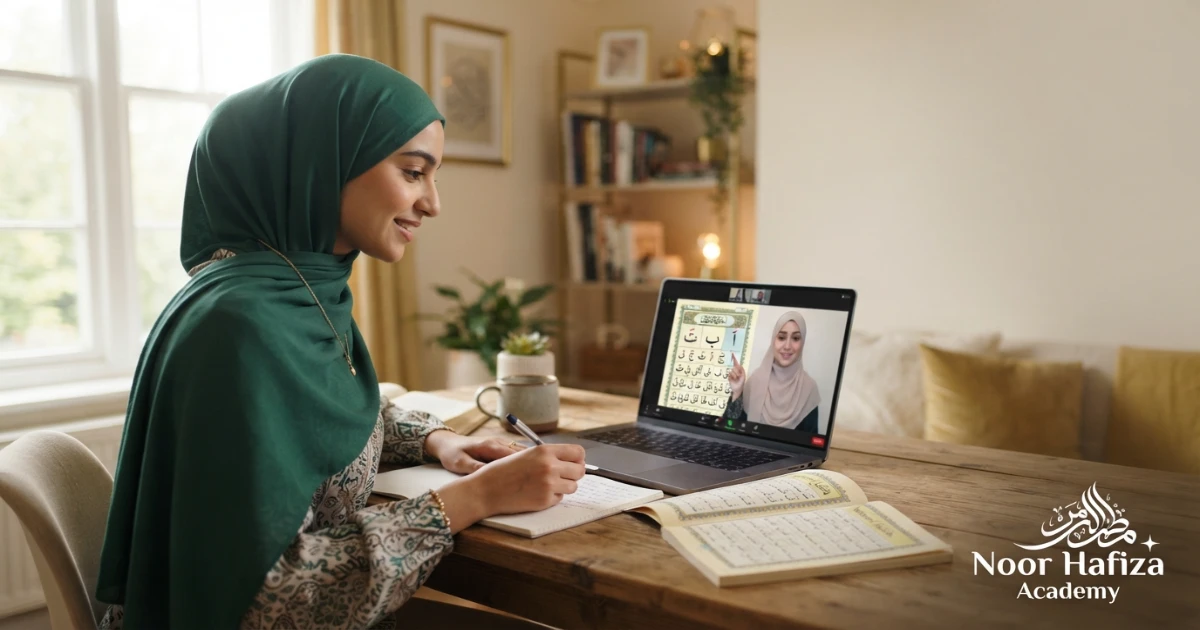
If I cannot read Arabic, where should I start?
A learner who cannot yet read Arabic should begin with the script and sound system rather than trying to memorize long Quran passages visually. The first goal is not to learn Arabic grammar. It is to recognize the letters and symbols required to decode Quran words.
| Foundation | What the beginner learns | Teacher checks | Do not rush to |
|---|---|---|---|
| Arabic letters | Letter names, shapes, and basic Quran sounds | Recognition in mixed order | Long words before letters are stable |
| Joined forms | How letters change shape inside words | Recognition at beginning, middle, and end | Memorizing page order |
| Short vowels | Basic vowel marks and short sounds | Mixed letter-vowel combinations | Stretching every vowel |
| Sukoon and shaddah | Closed consonants and doubled sounds | Fresh examples | Fast reading |
| Long vowels | Basic difference between short and extended sound | Simple timing consistency | Detailed advanced rule terminology |
| Blending | Combining symbols into complete words | Unfamiliar word decoding | Page completion without independence |
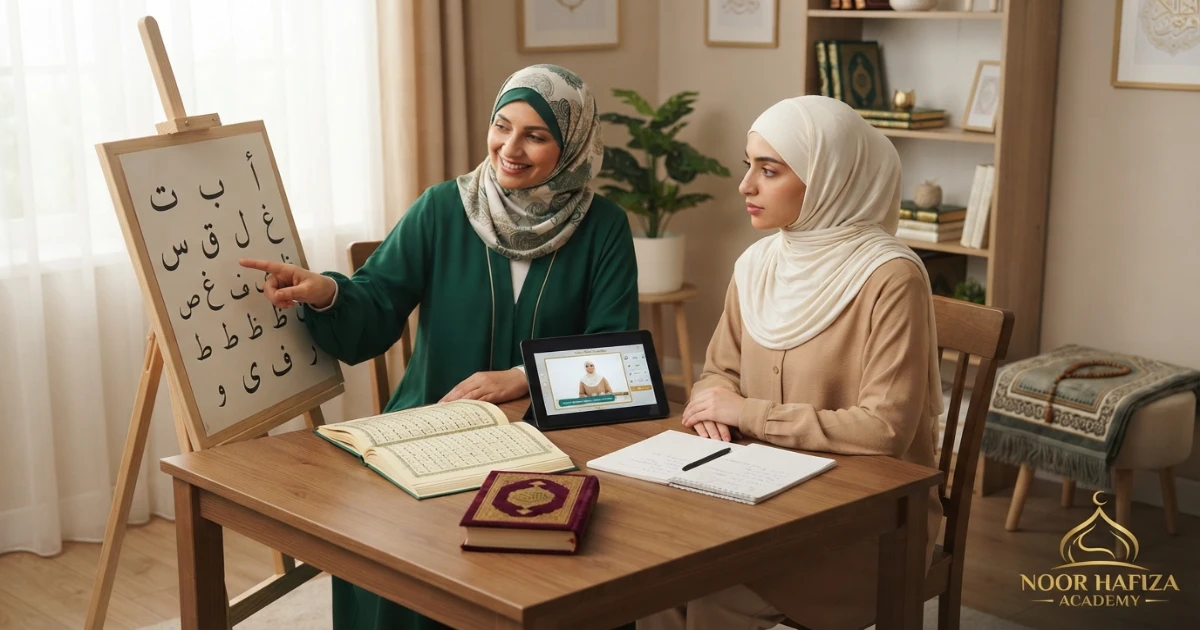
What should the first Quran lessons for a new Muslim include?
The first lessons should feel manageable. A teacher may combine foundational reading with selected recitations that support the learner’s immediate practice of Islam. The exact order can vary.
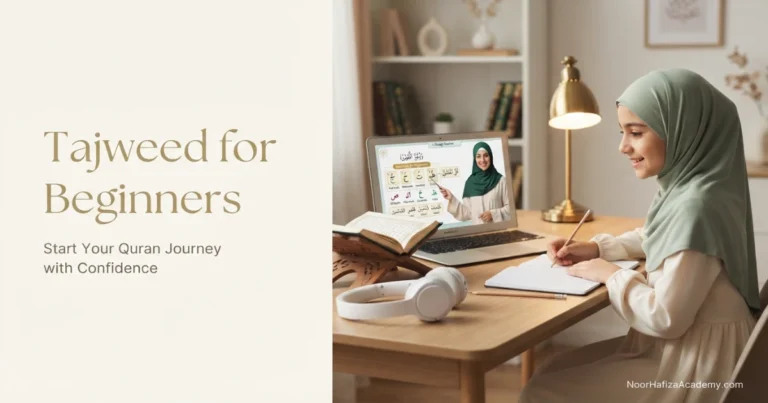
Learn the Arabic reading foundation or repair the specific foundation that is missing.
Practise Al-Fatihah and other short prayer recitations with guided listening and repetition.
Add selected short Surahs gradually with accurate pronunciation rather than large memorization targets.
Move into controlled Mushaf reading when letter recognition and blending become stable.
A beginner does not need to wait until she can read the entire Quran before learning Al-Fatihah orally. At the same time, memorizing by sound should not become a permanent substitute for learning to read if Quran reading is the goal.
Should Al-Fatihah be a priority for a new Muslim?
Al-Fatihah is commonly one of the earliest recitations new Muslims begin learning because of its role in Salah. A Quran teacher can help with pronunciation, listening, phrase-by-phrase repetition, and gradual memorization. Personal questions about prayer obligations, timing, accommodations, or what applies while a person is still learning should be discussed with a trusted qualified scholar or local imam.
The learning approach should remain practical. A teacher may divide the Surah into short sections, model one phrase, let the learner repeat, and revisit it frequently. Trying to correct every fine Tajweed issue in the first session can overwhelm a new Muslim. The first priority is controlled, understandable pronunciation and steady improvement.
The teacher can refine subtler Tajweed points gradually as confidence and reading ability develop.
How should new Muslims learn short Surahs?
Short Surahs can provide manageable memorization goals and strengthen familiarity with Quran recitation. They should be learned with accurate listening, repetition, and review rather than rushed for quantity.
Listen first
Hear a clear model from the teacher before repeating difficult words.
Divide the passage
Learn one small phrase at a time rather than repeating an entire Surah inaccurately.
Understand basic meaning
A brief translation or explanation can help the learner connect with what she is reciting.
Review daily
Short daily repetition usually supports retention better than one long weekly session.
Test without the model
The learner should eventually recite without immediately copying audio.
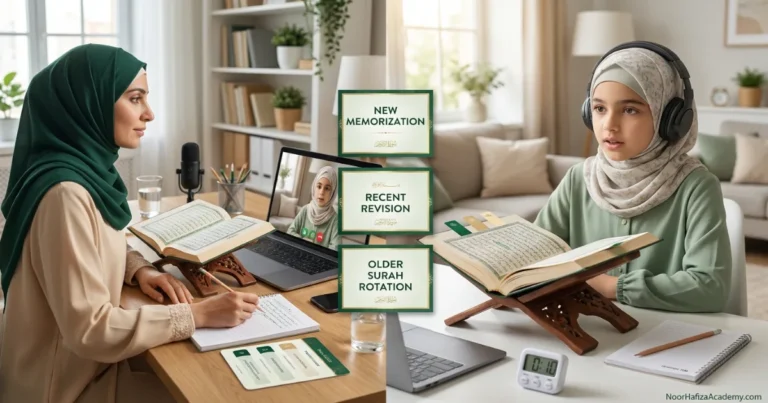
Keep old Surahs active
New memorization should not make earlier Surahs weak.
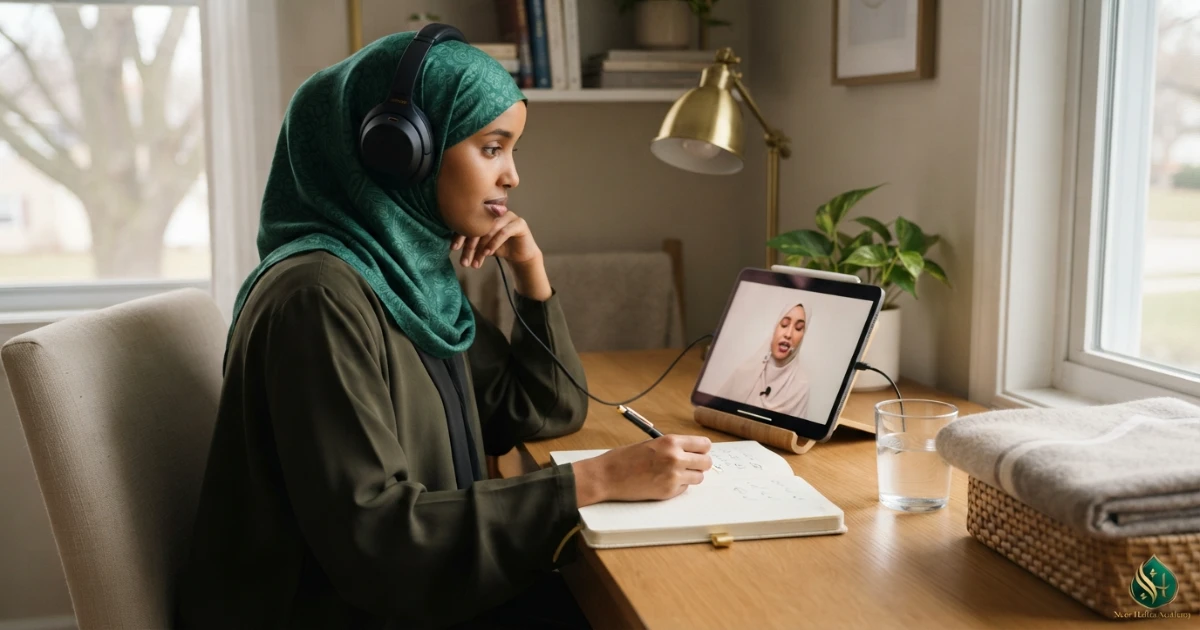
Should a new Muslim learn Tajweed immediately?
Basic pronunciation should begin from the start, but advanced Tajweed terminology does not need to dominate the earliest lessons. A beginner should first learn the sound patterns that directly affect reading.
| Beginner stage | Useful Tajweed focus | Leave for later | Progress evidence |
|---|---|---|---|
| Learning letters | Clear distinction between similar basic sounds | Long rule lists | Letters remain distinguishable |
| Learning Qaida | Short and long vowels, sukoon, shaddah, simple articulation | Advanced classification | New combinations are read accurately |
| Reading Quran | Common connected rules, Makharij, stopping, timing | Rare exceptions before foundations are stable | Corrections transfer into fresh passages |
| Developing fluency | Consistency and phrase-level application | Speed for its own sake | Smoother accurate recitation |
What kind of Quran teacher is best for a new Muslim?
A teacher for new Muslims needs more than accurate recitation. She should know how to teach adults who may have no Arabic background and may be learning several aspects of Islam at the same time.
Beginner experience
The teacher should know how to teach letter recognition and pronunciation without assuming prior knowledge.
Respectful communication
Basic questions should be welcomed without embarrassment, sarcasm, or assumptions.
Clear explanations
The teacher should avoid unnecessary Arabic terminology when a simple explanation will work.
Accurate correction
She should model sounds clearly and help the learner retry independently.
Realistic homework
The learner should receive a small task that fits work, family, and the emotional load of new learning.
Healthy boundaries
Quran teaching should stay within the teacher’s knowledge, with personal religious rulings referred appropriately.
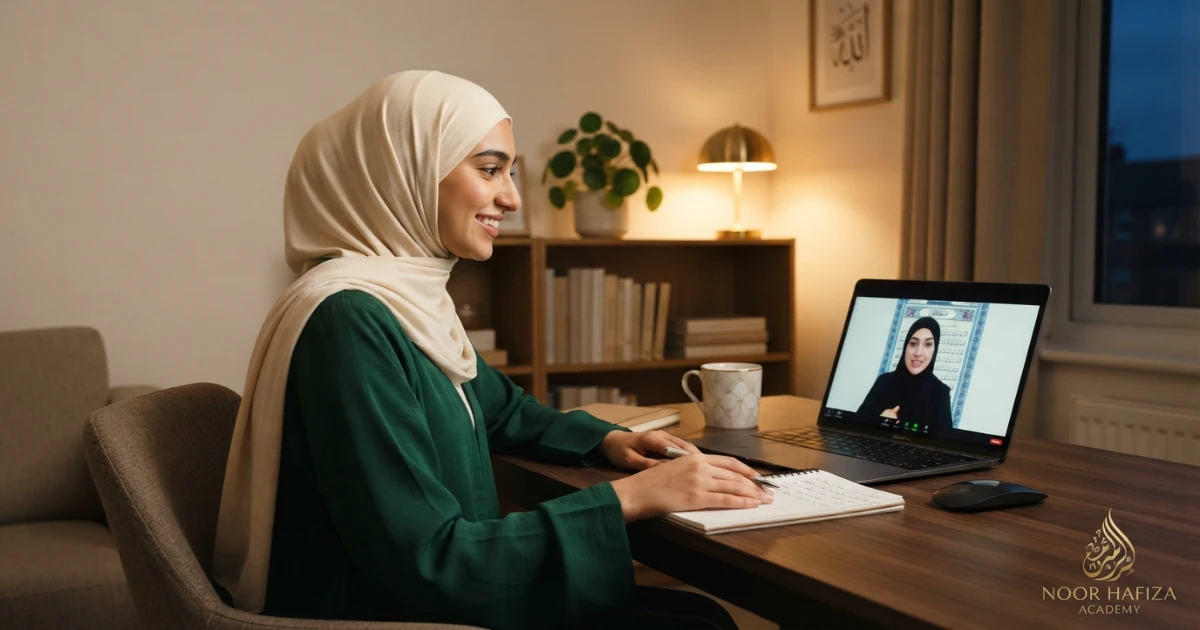
Are one-to-one Quran classes better for new Muslims?
One-to-one classes are often helpful at the beginning because the teacher can slow down, repeat a sound, answer personal beginner questions, and adjust the lesson immediately. A group class can still be useful when students are at a similar level and the environment is supportive.
| Factor | One-to-one | Small beginner group | Best question to ask |
|---|---|---|---|
| Pace | Fully adapted to one learner | Shared pace | Are all learners at a similar reading stage? |
| Pronunciation correction | More individual listening time | Less time per learner | How much individual recitation will I get? |
| Questions | Private and flexible | Shared discussion may help | Can I ask basic questions without feeling rushed? |
| Confidence | Can reduce embarrassment | Peer support can normalize struggle | Which format helps me participate? |
| Schedule | Often more flexible | Usually fixed | Can I attend consistently? |
A beginner Quran study plan for the first month
The first month should establish confidence and routine rather than cover a large amount of material. A learner may move faster or slower depending on prior Arabic experience.
| Week | Main goal | Home practice | Teacher review |
|---|---|---|---|
| Week 1 | Assessment and first foundation | 10 minutes on letters or assigned reading plus one prayer recitation | Confirm starting level and first correction |
| Week 2 | Recognition and pronunciation | Short mixed exercises and one short memorized phrase | Check independent recognition and sound clarity |
| Week 3 | Blending or controlled Quran reading | Short unfamiliar examples plus review of Al-Fatihah or short Surah | Track prompts and recurring errors |
| Week 4 | Consolidation and next step | Repeat strongest exercises and one small new target | Compare baseline, confidence, and next milestone |
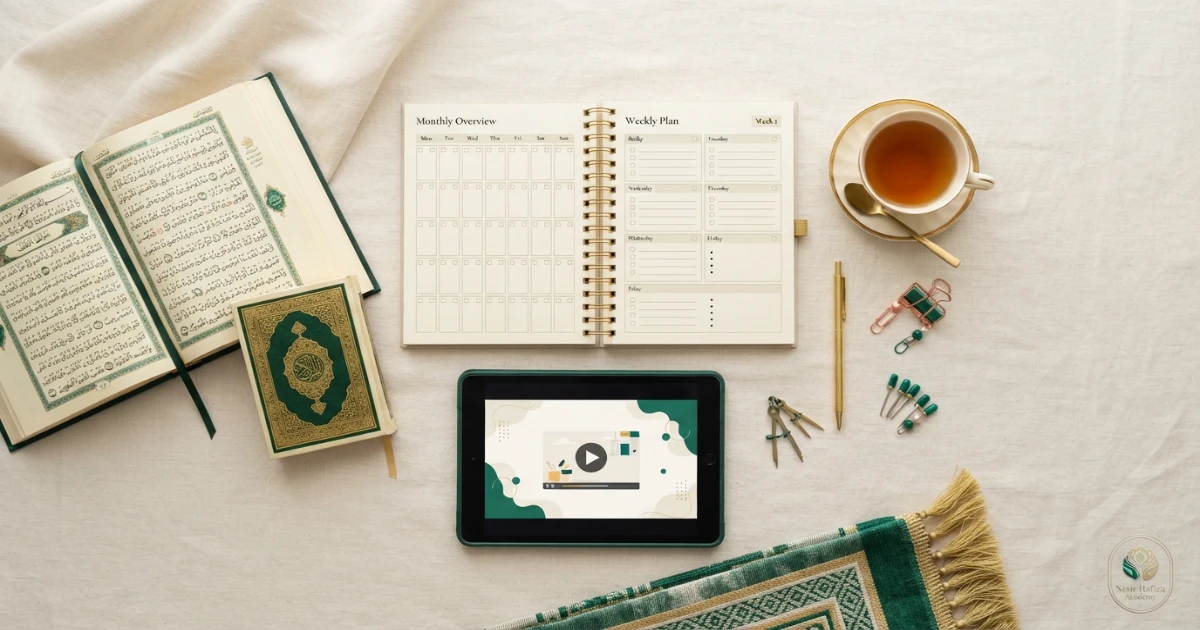
How much should a new Muslim practise Quran each day?
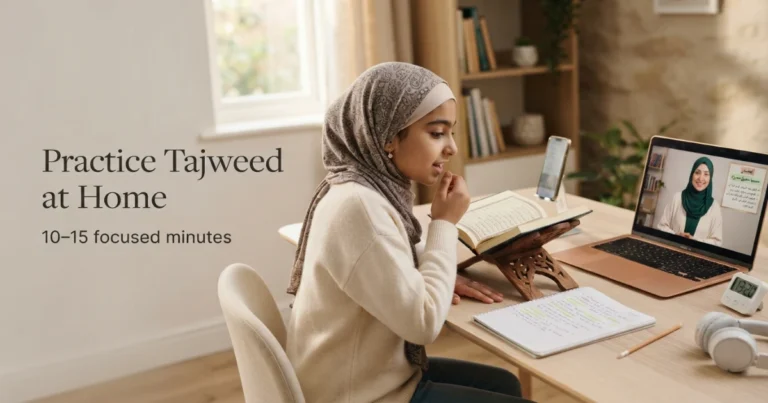
Ten to 15 focused minutes can be a useful starting point for many adults. Some learners may do less at first. The important point is that practice is accurate and repeatable.
A simple 12-minute beginner routine
- Two minutes: review the teacher’s current letter, sound, or reading target.
- Four minutes: read or identify the assigned examples without listening first.
- Three minutes: repeat difficult words or sounds carefully.
- Two minutes: practise Al-Fatihah or a short assigned Surah phrase.
- One minute: note one question for the next lesson.
A learner who becomes tired or confused should stop before practising errors repeatedly. Short accurate practice is more valuable than long frustrated repetition.
Should a new Muslim study Quran meaning while learning to read?
Yes, learning meaning can support connection and understanding, but reading skills and meaning do not need to progress at exactly the same speed. A person can read a translation while learning Arabic letters. She can learn the broad meaning of Al-Fatihah while still working on pronunciation.
The teacher should distinguish recitation instruction from detailed tafsir or religious rulings. Simple meaning can support learning, while deeper interpretation should come from reliable qualified sources and teachers.
Common mistakes new Muslims should avoid in Quran study
Trying to learn everything at once
Arabic grammar, Tajweed, Hifz, translation, and many Islamic subjects can become overwhelming without priorities.
Feeling embarrassed about basics
Not knowing Arabic letters is a learning starting point, not a reason to avoid class.
Memorizing only by audio forever
Listening is useful, but it should not permanently replace reading instruction when the goal is Quran literacy.
Rushing pronunciation
Fast repetition can strengthen wrong sounds before the learner can hear the difference.
Choosing a teacher who assumes prior knowledge
The learner may feel lost when basic terms and reading symbols are never explained.
Large homework targets
New Muslims may already be learning prayer, beliefs, community routines, and family changes; Quran homework should be manageable.
Comparing with lifelong Muslims
Different learners have different language backgrounds and years of exposure.
Depending on random online clips
Mixed teaching methods and pronunciation models can create confusion without a consistent teacher.
What progress looks like for a new Muslim Quran student
The learner identifies more letters, symbols, or words without teacher help.
Pronunciation, vowels, shaddah, sukoon, and word forms become more reliable.
The learner can attempt new material before listening to the teacher.
The learner asks questions, attempts unfamiliar words, and recovers from mistakes more easily.
A good academy should explain the learner’s current level, strongest skill, priority weakness, home assignment, and next milestone. The guide on how online Quran academies track student progress explains what useful progress reporting should include.
Questions a new Muslim should ask before joining Quran classes
Use these questions during a trial or enrollment discussion
- Do you teach adults who have never read Arabic before?
- Will you assess my actual reading level before choosing a course?
- Can I learn prayer recitation while I am still learning Arabic letters?
- Do you offer female Quran teachers for women?
- How do you teach pronunciation without overwhelming beginners?
- Do I need Noorani Qaida, or can I begin direct Quran reading?
- How much home practice will I need each day?
- Can I ask basic Islam-related learning questions during class?
- How do you separate Quran teaching from personal religious rulings?
- How will you track my progress?
- What happens if the teacher or class level is not a good fit?
- What are the current fees, trial terms, privacy, and rescheduling policies?
Online Quran classes for new Muslim women and beginners
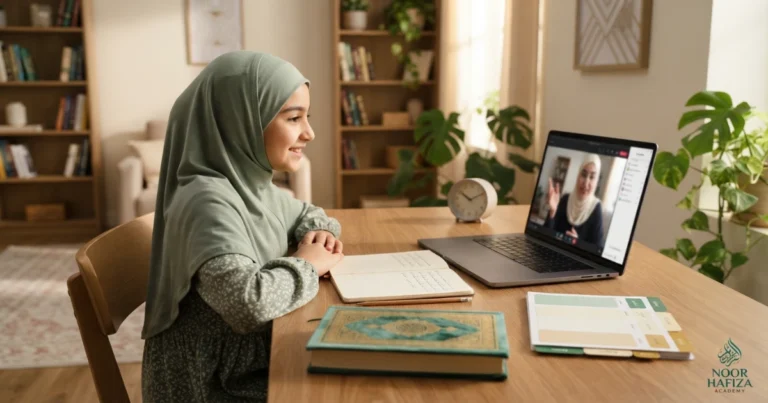
Noor Hafiza Academy offers live online Quran learning for women, sisters, girls, adults, complete beginners, returning readers, Tajweed students, and Hifz learners with female Quran teachers. New Muslim learners can begin with a private level assessment and discuss whether they need Arabic letter foundations, Noorani Qaida, Quran reading, pronunciation support, basic Tajweed, short Surahs, Hifz, revision, or Islamic Studies.
Learners can share whether they can recognize Arabic letters, whether they already know Al-Fatihah or any short Surahs, their preferred language, time zone, schedule, and immediate goal. Current female-teacher qualifications, availability, programs, schedules, trial arrangements, fees, privacy practices, policies, and enrollment terms should be confirmed directly.
Share whether you can read Arabic, which short Surahs you know, your preferred schedule, time zone, and whether your first priority is letters, prayer recitation, Quran reading, or Tajweed.
FAQs about Quran classes for new Muslims
Where should a new Muslim start learning Quran?
Do I need to know Arabic before learning Quran?
Should a new Muslim learn Al-Fatihah first?
Do I need Noorani Qaida as an adult convert?
Can I learn Quran online as a new Muslim?
How much Quran should a beginner practise each day?
Should I learn Tajweed from my first lesson?
Can a new Muslim woman learn with a female Quran teacher?
Can I learn short Surahs before I can read Arabic?
Is one-to-one Quran learning better for converts?
How long does it take a new Muslim to learn Quran reading?
What if I feel embarrassed about not knowing basic Arabic?
Begin Quran learning with a clear first step and a teacher who respects your beginner journey
Share whether you can recognize Arabic letters, which recitations you already know, your preferred female teacher, city and time zone, available days, and whether your first goal is Arabic reading, Al-Fatihah, short Surahs, Quran reading, or Tajweed.