Seerah for Kids: How to Teach the Life of Prophet Muhammad ﷺ by Age
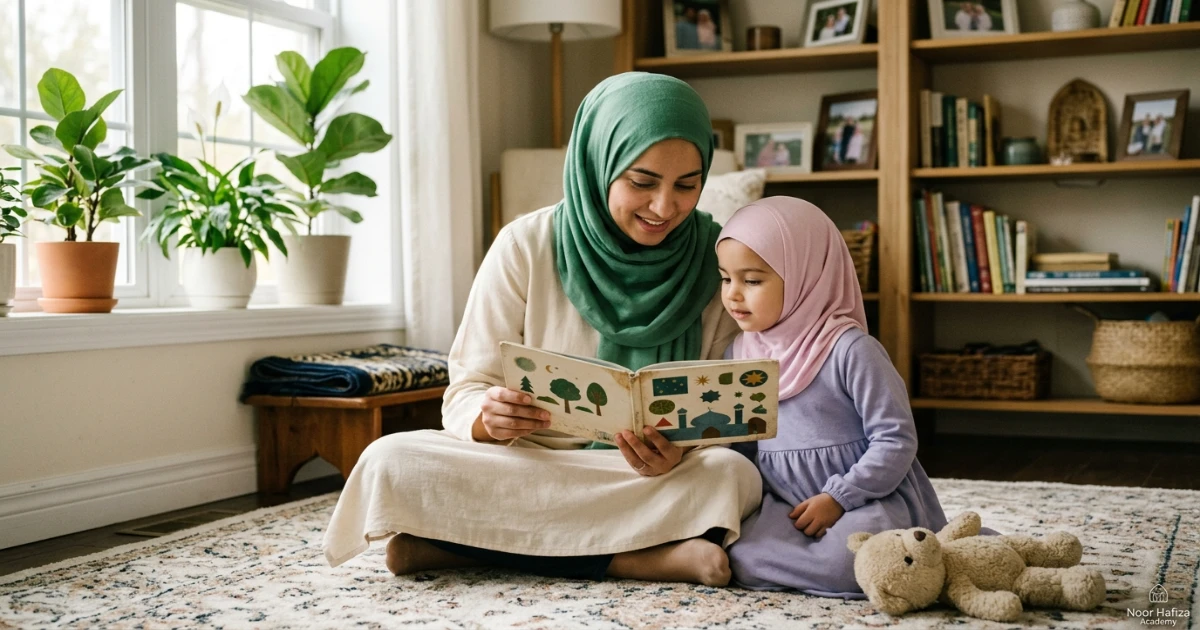
Seerah for kids becomes much more effective when the teaching matches the child’s age. A five-year-old does not need a dense historical lecture, and a teenager usually needs more than a simplified story with one moral sentence at the end. Young children benefit from short stories, names, places, family relationships, kindness, courage, and memorable moments. Primary-age children can begin following a simple sequence of events and understanding why certain moments mattered. Preteens and teenagers can explore context, difficult choices, leadership, patience, justice, community building, and how lessons from the Seerah connect with school, friendships, family life, and personal character. The goal is not only to memorize dates and names, but to help children know who Prophet Muhammad ﷺ was, understand major stages of his life, appreciate his character, and see how the Seerah relates to their own lives.
How should you teach Seerah to children by age?
For ages 4–6, use very short stories, simple language, names, places, family relationships, and one clear character lesson at a time. For ages 7–10, add a basic timeline, cause-and-effect, short activities, and questions such as “What happened next?” or “What can we learn from this?” For ages 11–13, introduce more context, challenges, leadership, social relationships, and comparison of choices. Teenagers can discuss deeper themes such as responsibility, patience, justice, community, conflict, leadership, mercy, and how the Seerah connects with modern life. At every age, keep the Prophet Muhammad ﷺ central as a real person in history, not only a collection of isolated stories.
What is Seerah for kids?
Seerah is the study of the life of Prophet Muhammad ﷺ. For children, it includes learning about his early life, family, character, revelation, the early Muslim community, migration, major challenges, relationships, leadership, mercy, patience, and the growth of the Muslim community.
A child-friendly Seerah course should be more than a list of dates. It should help the child understand what happened, who was involved, why it mattered, and what kind of person the Prophet ﷺ was in different situations. Repeating major themes at increasing depth is often better than trying to “finish” the entire Seerah once.
Children remember better when events have sequence, people have relationships, and each lesson connects to what came before.
How to teach Seerah to ages 4–6
Young children need warmth, repetition, and simple stories. At this age, the goal is familiarity and love rather than historical detail. Keep lessons short enough that the child finishes wanting another story rather than feeling tired.
Short stories
Use one small event at a time and keep the explanation simple.
People & relationships
Help children know family members, companions, and basic relationships.
Character lessons
Focus on kindness, honesty, patience, courage, and mercy.
Repeat often
Young children benefit from hearing favorite stories more than once.
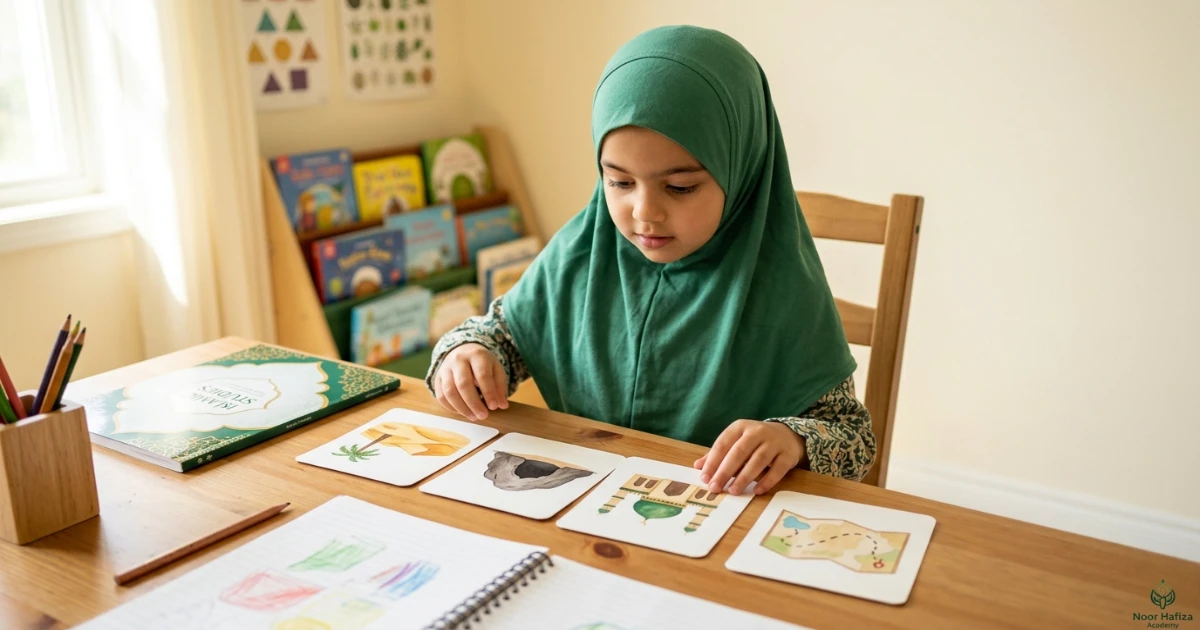
Avoid turning every story into a quiz. Ask gentle questions such as “Who was kind here?” or “What happened after that?” The goal is to help the story feel familiar. Simple crafts, picture-free sequence cards, or drawing places such as a desert journey route can support recall without distracting from the story itself.
How to teach Seerah to ages 7–10
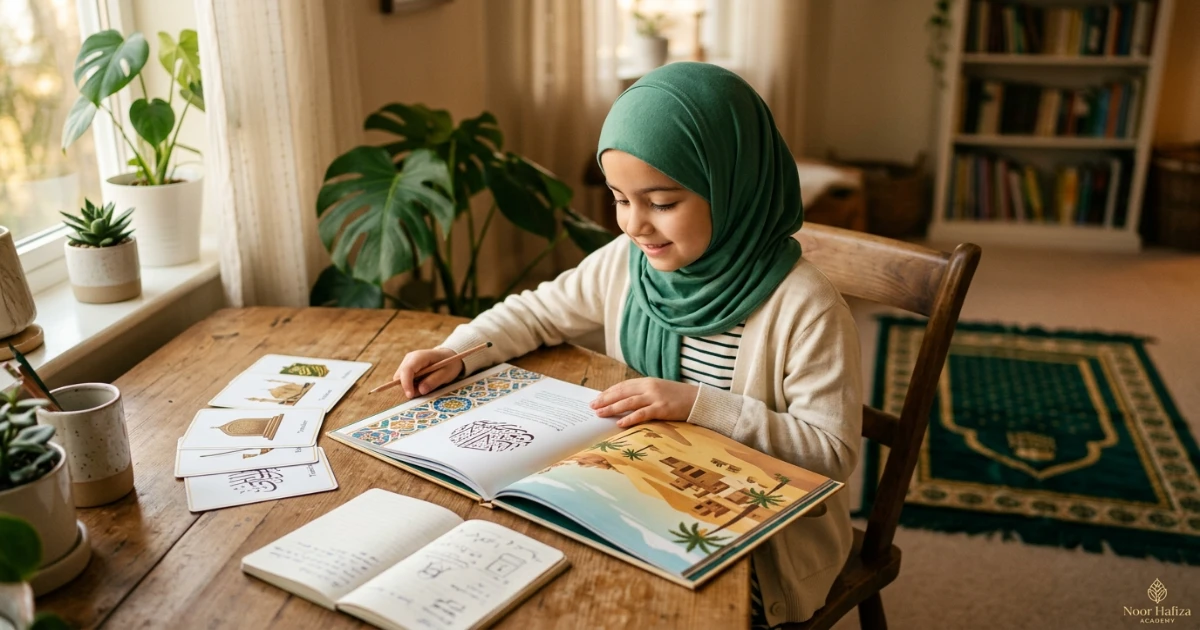
Primary-age children can follow a basic timeline and begin understanding cause and effect. They can connect one event to another and remember more names and places. This is a good stage to move from “story only” toward “story plus sequence.”
Tell the event clearly in sequence and keep unnecessary detail limited.
Place the event in relation to what came before and after.
Ask one or two practical questions linked to the child’s life.
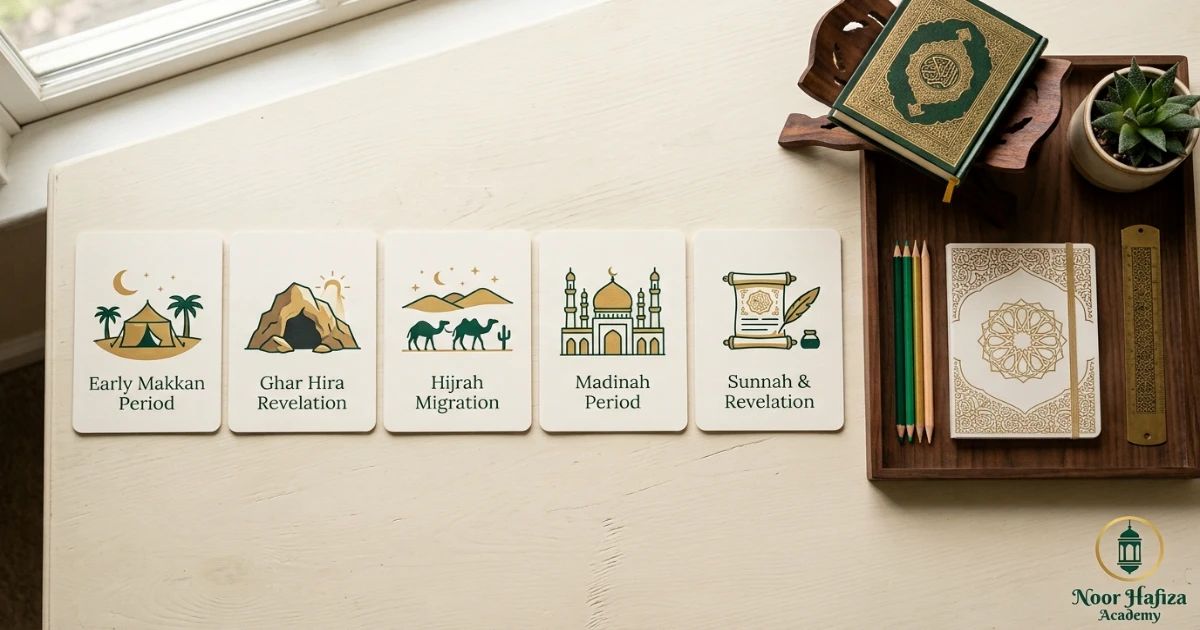
At this age, children can begin learning larger stages such as life in Makkah, the beginning of revelation, the early believers, migration, Madinah, and major turning points. A simple wall timeline or notebook timeline can help them see that the events belong to one continuing life story.
How to teach Seerah to preteens
Preteens can handle more complexity. They can discuss why people made different choices, how communities responded to pressure, and what leadership looked like in difficult situations. They can also compare events rather than treating each lesson separately.
Explain the social and emotional pressure around the event.
Discuss decisions rather than presenting events as inevitable.
Connect themes to school, friendships, family, and responsibility.
Preteens can start comparing themes across the Seerah: patience in Makkah, community building in Madinah, mercy after conflict, keeping promises, trusting Allah while planning carefully, and dealing with opposition without losing principles.
How to teach Seerah to teenagers
Teenagers are ready for depth. They can discuss leadership, social pressure, moral courage, justice, responsibility, conflict, trust, community, and long-term consequences. They may also notice apparent tensions between events and ask harder questions.
A strong teacher should welcome serious questions and answer carefully rather than treating curiosity as disrespect. Teens benefit when the teacher separates established facts, scholarly interpretation, and simplified popular storytelling.
| Teen Seerah theme | Discussion angle | Modern connection | Teacher goal |
|---|---|---|---|
| Leadership | Decision-making under pressure | School, teams, responsibility | Think beyond slogans |
| Patience | Endurance without passivity | Setbacks and goals | Distinguish patience from doing nothing |
| Mercy | Strength with compassion | Conflict and forgiveness | Connect behavior to character |
| Community | Rights and responsibilities | Family, school, society | Build mature reflection |
A simple Seerah timeline for kids
Children do not need every date to understand the Seerah. A simple timeline gives them a mental map that can be expanded over time. Dates can be introduced gradually when they genuinely help the learner understand sequence.
| Stage | What children learn | Good question | Age emphasis |
|---|---|---|---|
| Early life | Family, childhood, character | What kind of person was he before revelation? | All ages |
| Beginning of revelation | First revelation and early mission | How did the message begin? | 7+ |
| Makkah years | Early Muslims and opposition | How did believers respond to pressure? | 7+ |
| Hijrah | Migration and trust | Why was leaving Makkah significant? | 7+ |
| Madinah | Community building and leadership | How was a new community organized? | 10+ |
| Final years | Completion of mission and legacy | What values continued after his life? | 10+ |
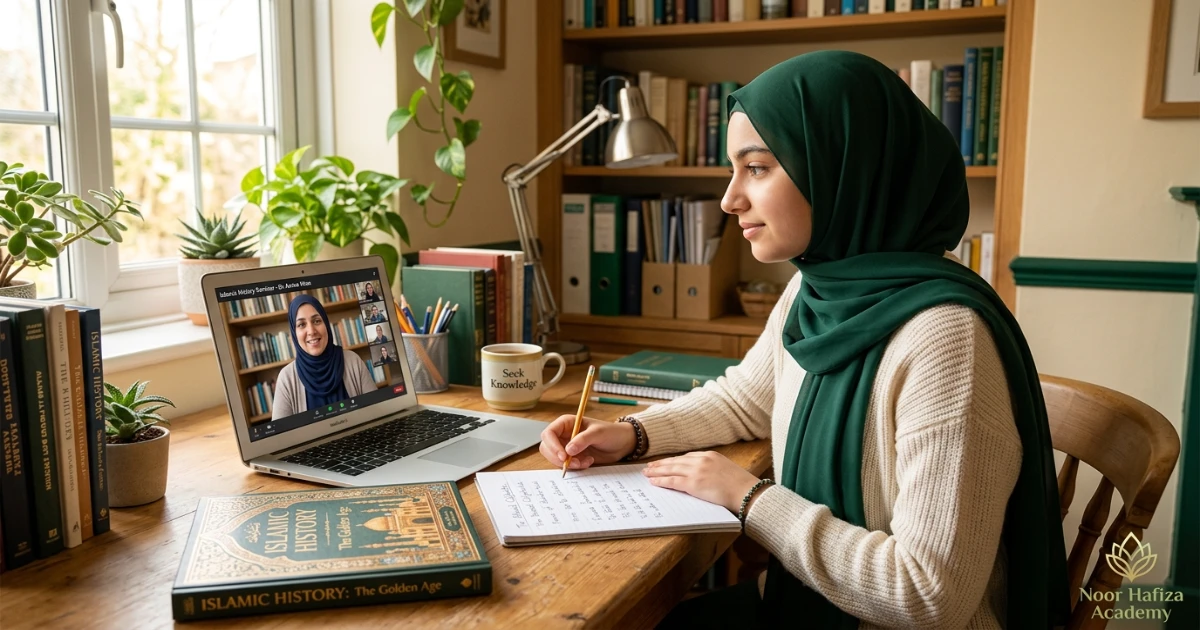
Use Seerah to teach character, not only history
Seerah gives children real examples of patience, honesty, courage, mercy, trust, forgiveness, responsibility, and leadership. These lessons become stronger when connected to specific events rather than presented only as abstract words.
Patience
Discuss staying principled during difficulty rather than simply “waiting.”
Honesty
Connect truthfulness to trust, responsibility, and reputation.
Mercy
Show how compassion can appear even when a person has power.
Courage
Teach that courage can include speaking truth, enduring pressure, and doing what is right.
Avoid reducing every event to a single slogan. Older children can often discover several values in the same event and explain why those values mattered in context.
Seerah activities that work better than worksheets alone
Worksheets can help, but Seerah benefits from activities that make sequence, decisions, and themes visible. Use activities to support understanding rather than fill time.
| Age | Activity | Purpose | Keep it simple |
|---|---|---|---|
| 4–6 | Story retelling | Recall and language | One scene |
| 7–10 | Timeline cards | Sequence | 5–7 events |
| 11–13 | Decision scenario | Reasoning | One dilemma |
| Teen | Discussion / reflection journal | Application and analysis | One theme |
Maps can also help older children understand journeys, distance, and community context. Keep any visual representation respectful and avoid depicting the Prophet Muhammad ﷺ himself.
How to handle difficult or sensitive Seerah topics with children
Some Seerah topics include persecution, conflict, death, betrayal, and hardship. These should be introduced according to age and emotional readiness. Young children usually need only the basic idea that the Prophet ﷺ and early Muslims faced difficulty and stayed patient and principled.
Older children can learn more detail, but teachers should avoid dramatic storytelling that focuses more on fear or violence than on context and meaning. Explain why the event mattered, who was affected, and what decisions followed.
It means choosing the right level of detail while keeping the core event truthful and understandable.
Teach children to distinguish reliable Seerah from popular stories
Some Seerah stories are widely repeated in children’s books, videos, or talks even when the historical basis is debated or the details vary between sources. Parents and teachers should avoid presenting every popular anecdote with the same level of certainty.
For young children, this simply means using carefully selected teaching materials. For teenagers, it can become a useful lesson in scholarship: some events are strongly established, some details are reported through different narrations, and not every inspirational story has the same evidentiary strength.
A simple family Seerah routine
Read or tell one story and stop before the children lose attention.
Place the event in the larger story once a week.
Choose one behavior such as honesty, patience, or mercy.
The family does not need to complete the entire Seerah quickly. Revisiting major events over several years allows children to notice new lessons as their understanding matures.
Common mistakes when teaching Seerah to kids
Too many dates
The child remembers numbers but loses the story and meaning.
One teaching style for every age
Young children are overwhelmed or teenagers become bored.
Random stories without sequence
Children know isolated events but not how the Seerah fits together.
Only moral lessons
The historical event disappears and the child does not know what actually happened.
Only history facts
The child learns events but cannot connect them to character or life.
Over-dramatizing hardship
Fear or graphic detail becomes more memorable than the lesson.
Never revisiting old lessons
The child forgets major events because the curriculum always moves forward.
Discouraging questions
Older children stop engaging because serious curiosity is treated as disrespect.
12 Seerah questions parents and teachers can use
Choose questions that match the child’s age
- What happened first in this story?
- Who was involved?
- What made this situation difficult?
- What choice did the Prophet ﷺ make?
- What does this event teach us about his character?
- How did other people respond?
- What changed after this event?
- What could a child your age learn from this?
- Where does this event fit in the Seerah timeline?
- What would have made this decision hard?
- Which value—patience, honesty, mercy, courage, trust—stands out here?
- What question would you like to ask about this event?
What a good online Seerah class for kids should include
An online Seerah lesson should not be a long lecture with slides. Children learn better when the teacher uses short explanation, questions, timeline references, age-appropriate activities, and clear links to character. The teacher should also know when to simplify and when to invite deeper questions.
The child should understand what happened without being overloaded.
Students should have chances to answer, predict, and explain.
The lesson should connect to behavior, values, or understanding.
Seerah and Islamic Studies for kids at Noor Hafiza Academy
Noor Hafiza Academy offers live online Quran and Islamic learning for children, girls, women, adults, new Muslims, returning readers, teenagers, siblings, and homeschool families with female Quran teachers. Families can ask about Islamic Studies lessons that include Seerah, daily duas, Salah, manners, basic beliefs, and practical Muslim life according to age and level.
A suitable Seerah plan may include short stories for younger children, simple timelines for primary-age learners, discussion and character lessons for preteens, and deeper reflection for teenagers. Current teacher qualifications, course content, age groups, schedules, lesson length, trial arrangements, fees, privacy practices, safeguarding policies, and enrollment terms should be confirmed directly.
Share the child’s age, current Islamic Studies background, preferred schedule, and whether the main goal is Seerah, manners, Salah, daily duas, or a broader Islamic Studies curriculum.
FAQs about Seerah for kids
What is Seerah for kids?
What age should children start learning Seerah?
How should Seerah be taught to a 5-year-old?
How should Seerah be taught to primary school children?
How should Seerah be taught to teenagers?
Should children memorize Seerah dates?
How can I make Seerah interesting for kids?
How do I teach difficult Seerah events to young children?
What character lessons can children learn from Seerah?
Should children learn Seerah in order?
Can Seerah be taught effectively online?
What should I send when asking about Seerah classes for my child?
Teach Seerah in a way that grows from simple stories into thoughtful understanding and character
Share the child’s age, current Islamic Studies background, preferred schedule, and whether the main focus is Seerah, manners, Salah, daily duas, or a broader curriculum.